
Deadlink is a fast arena FPS built around short repeat runs, and its published requirements ask for a dedicated graphics card even at the minimum tier: a GeForce GTX 680 with 2 GB of video memory or a Radeon HD 7970, alongside 6 GB of RAM and 15 GB of storage. The recommended tier lifts the graphics line to a GeForce GTX 1060 6GB or a Radeon RX 590, and the memory line to 16 GB. Your real decision is how far above that published graphics line to sit, and which listed screen refresh figure suits the pace of play.
This guide is for players replacing an aging desktop, students who want one machine for classes and quick arena sessions, and returning FPS players who skipped the last few hardware generations. Every pick below was chosen from the names and specifications printed on its own product listing, then checked against the published Deadlink requirements rather than against generic gaming labels.
Quick Picks
As an Amazon Associate we earn from qualifying purchases
| Product | Best for | Key spec from title |
|---|---|---|
| HP Victus 15 | Long sessions at a desk with wired networking | RTX 5060, 32GB DDR5 RAM |
| Lenovo Legion 5 Gen 10 | Players who want the sharpest listed display | RTX 5060, WQXGA OLED 500nits |
| Acer Nitro V 15 | Players who want the fastest listed panel | RTX 4060, 180Hz display |
| MSI Katana 15 | A dedicated card with a 144Hz panel | RTX 4050, 1TB NVMe SSD |
| ASUS Zenbook 14 OLED | Carrying the laptop all day | Ryzen 7 8840HS, Radeon 780M |
How to Choose
Platform and the Published Requirements
Steam publishes Deadlink for Windows only. The store page carries a single Windows requirements block and no macOS or Linux block at all, so there is no native Mac or Linux edition to plan around, and every laptop in this guide runs Windows 11 Home as listed. The minimum tier names Windows 10 64-bit, an AMD FX-8350 or Intel Core i5-3570 processor, 6 GB of RAM, DirectX 11 and 15 GB of storage. The recommended tier names a Ryzen 5 2600 or Core i7-4770, 16 GB of RAM and DirectX 12, with the same 15 GB storage figure.
Graphics Cards Against the Published Line
The published minimum names a GeForce GTX 680 with 2 GB of video memory or a Radeon HD 7970, and the recommended tier names a GeForce GTX 1060 6GB or a Radeon RX 590. Read the picks against those names. The Victus and the Legion 5 list a GeForce RTX 5060, the Nitro V 15 lists an RTX 4060, and the Katana 15 lists an RTX 4050 with 6 GB of GDDR6 memory. The Zenbook 14 lists integrated Radeon 780M graphics instead of a dedicated card, so on paper it sits below the dedicated cards the published line names.
Memory and Storage Against the Published Line
The published memory line is the widest gap between tiers: 6 GB of RAM at minimum and 16 GB at recommended. Every laptop here lists at least 16 GB, and the Victus lists 32 GB, so all five clear the recommended figure as printed. Storage is simpler. Deadlink asks for 15 GB of available space, and the listings here word their drives as a 512 GB or 1 TB SSD, with the Legion 5 and Katana 15 naming NVMe or PCIe Gen4 drives in their listing text. Any of them holds the game many times over.
Display Size, Refresh Rate and Weight
Deadlink moves quickly, so the refresh figure printed in each listing matters more here than in a slow strategy title. The Nitro V 15 lists a 180Hz panel, the Legion 5 lists 165Hz on a 2560 x 1600 OLED screen, and the Victus and Katana 15 both list 144Hz at 1920 x 1080. The Zenbook 14 lists a 60Hz OLED panel, the clearest cut back in this group. Listed weights run from 2.65 lbs for the Zenbook and 4.66 lbs for the Nitro up to roughly 5 lbs for the Legion 5, which decides how often each machine leaves the desk.
The 5 Best Options
HP Victus 15
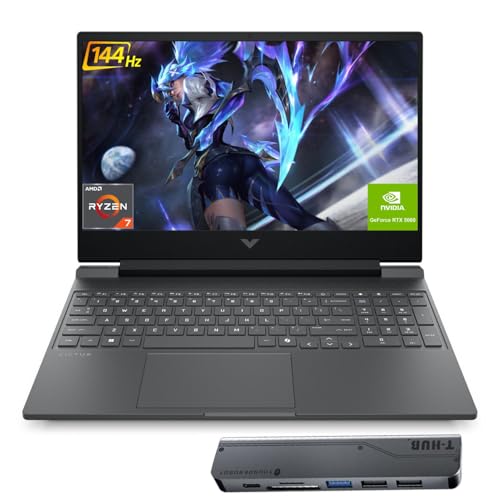
The Victus 15 is the pick for players who want the most listed headroom in this group without moving to a larger machine. Its listing pairs an AMD Ryzen AI 7 350 processor with a dedicated GeForce RTX 5060, 32 GB of DDR5 memory and a 1 TB SSD, which puts its printed figures above the recommended Deadlink line on graphics, memory and storage at once. The 15.6-inch screen lists a 144Hz refresh figure, the keyboard is RGB backlit, and the bundle adds a Thunderobot 7-in-1 USB-C hub and an RJ-45 Ethernet port for a wired desk setup.
Specs
- Processor: AMD Ryzen AI 7 350, up to 5.0 GHz
- Graphics: NVIDIA GeForce RTX 5060, dedicated
- Memory: 32 GB DDR5 at 4800 MHz
- Storage: 1 TB SSD
- Display: 15.6-inch FHD 1920 x 1080, 144Hz
- Keyboard: RGB backlit
- Networking: RJ-45 Ethernet port
- Included: Thunderobot 7-in-1 USB-C hub bundle
- Operating system: Windows 11 Home
- Color: Black, series TPN-Q279
Best for: players who want listed headroom on graphics, memory and storage in one 15.6-inch machine.
Watch out for: the listing does not print a video memory figure for the RTX 5060, so check the full listing details if that number matters to you.
ASIN: B0G1N8R9Z4
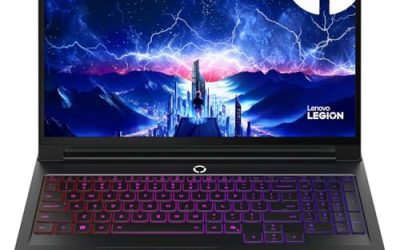
Lenovo Legion 5 Gen 10

The Legion 5 Gen 10 suits players who care about the screen as much as the graphics card. Its listing names a GeForce RTX 5060 Laptop GPU with 8 GB of GDDR7 memory, a Ryzen 7 260 processor, 16 GB of DDR5-5600 memory and a 1 TB PCIe Gen4 SSD. The 15.1-inch OLED panel lists 2560 x 1600 resolution, 500 nits and a 165Hz refresh figure, which is the sharpest display specification in this group. An 80 Wh battery, Wi-Fi 7 and a USB4 port round out a listing aimed at a desk that also travels.
Specs
- Processor: AMD Ryzen 7 260, 3.80 GHz up to 5.10 GHz
- Graphics: NVIDIA GeForce RTX 5060 Laptop GPU, 8 GB GDDR7
- Memory: 16 GB DDR5-5600 SODIMM, up to 32 GB
- Storage: 1 TB SSD M.2 2242 PCIe Gen4
- Display: 15.1-inch WQXGA OLED 2560 x 1600, 500 nits, non-touch, 165Hz
- Battery: 80 Wh
- Connectivity: Wi-Fi 7, Bluetooth 5.4, Ethernet, USB4 port, HDMI 2.1
- Keyboard: 24-zone RGB backlit
- Camera: 5MP with dual microphone and E-shutter
Best for: players who want the sharpest listed screen, a 2560 x 1600 OLED at 165Hz.
Watch out for: the item details list a weight of 3.22 kg while the product description says approximately 5 lbs, so plan around the heavier figure when packing a bag.
ASIN: B0FXMY8FYW
Acer Nitro V 15

The Nitro V 15 is built around the fastest listed panel in this guide. Acer’s listing names an Intel Core i9-13900H processor, a GeForce RTX 4060 Laptop GPU, 16 GB of DDR5 memory and a 1 TB PCIe Gen 4 SSD behind a 15.6-inch Full HD IPS screen with a 180Hz refresh figure. It also lists Thunderbolt 4, an Ethernet port and dual fans, and at 4.66 lbs as listed it is lighter than the other dedicated-graphics picks here. Two memory slots and two M.2 slots give it the clearest upgrade path in the group.
Specs
- Processor: Intel Core i9-13900H
- Graphics: NVIDIA GeForce RTX 4060 Laptop GPU
- Memory: 16 GB DDR5, two slots, maximum 32 GB
- Storage: 1 TB PCIe Gen 4 SSD, two M.2 slots
- Display: 15.6-inch FHD IPS, 180Hz
- Ports: Thunderbolt 4, HDMI 2.1, Ethernet RJ-45
- Wireless: Wi-Fi 6
- Cooling: dual fans
- Keyboard: backlit
- Weight: 4.66 lbs
- Operating system: Windows 11 Home
Best for: players who put the 180Hz panel and a lighter 4.66 lb chassis first.
Watch out for: its 16 GB of listed memory matches the recommended figure exactly, so heavy multitasking alongside the game leaves less spare room than the 32 GB Victus.
ASIN: B0D8JTYXQM
MSI Katana 15

The Katana 15 is the straightforward middle option: a listed GeForce RTX 4050 with 6 GB of GDDR6 memory in the bullet text, an Intel Core i7-13620H processor, 16 GB of DDR5-4800 memory and a 1 TB NVMe SSD. Its printed graphics figure sits between the two published tiers, above the GTX 680 named at minimum and below the GTX 1060 6GB named at recommended, so it fits players who want a dedicated card and a 144Hz Full HD IPS panel without chasing the highest listed specifications in this guide.
Specs
- Processor: Intel Core i7-13620H
- Graphics: NVIDIA GeForce RTX 4050, 6 GB GDDR6 per the listing bullet text
- Memory: 16 GB DDR5-4800
- Storage: 1 TB NVMe SSD
- Display: 15.6-inch Full HD IPS, 144Hz
- Ports: USB Type-C
- Operating system: Windows 11 Home
- Color: Black, model B13VEK-277US
Best for: players who want a dedicated card and a 144Hz panel at the middle of this group.
Watch out for: the listing’s technical details table prints a 16 GB graphics card RAM size while its own bullet text says the RTX 4050 carries 6 GB of GDDR6, so confirm the figure with the seller.
ASIN: B0BZBN3857
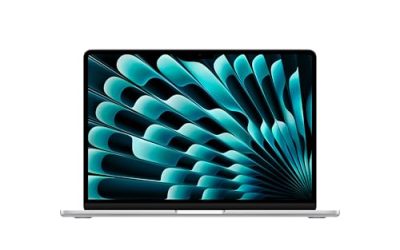
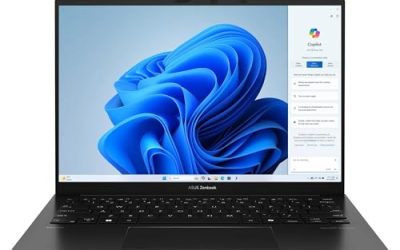
ASUS Zenbook 14 OLED

The Zenbook 14 OLED is the portability pick, and it comes with an honest compromise. ASUS lists a Ryzen 7 8840HS processor, 16 GB of LPDDR5X memory and a 512 GB SSD in a Jade Black shell that weighs 2.65 lbs as listed, with a 14-inch WUXGA OLED touchscreen and a 75 Wh battery. Its Radeon 780M graphics are integrated rather than a dedicated card, and the published Deadlink line names dedicated cards at both tiers, so this is the machine for players who accept modest settings in exchange for the lightest bag in the group.
Specs
- Processor: AMD Ryzen 7 8840HS, up to 5.1 GHz
- Graphics: AMD Radeon 780M, integrated
- Memory: 16 GB LPDDR5X, onboard
- Storage: 512 GB M.2 NVMe PCIe 4.0 SSD
- Display: 14-inch WUXGA OLED 1920 x 1200 touchscreen as listed, 60Hz
- Wireless: Wi-Fi 6E
- Battery: 75 Wh
- Weight: 2.65 lbs
- Color: Jade Black, model UM3406HA-WS74T
- Operating system: Windows 11 Home
Best for: players who carry their laptop daily and accept the integrated-graphics compromise.
Watch out for: its graphics are integrated, below the dedicated cards the published requirements name, and ASUS’s own spec sheet for this model lists a non-touch panel while the listing describes a touchscreen, so confirm the panel before ordering.
ASIN: B0DFWZ77LB
Which One Fits Your Situation
Playing at a Desk Most Evenings
If Deadlink sessions happen at the same desk every night, the Legion 5 Gen 10 is the natural fit: its listing leads with the sharpest panel here, a 2560 x 1600 OLED at 165Hz, plus an Ethernet port and an 80 Wh battery for the odd trip away. The Victus 15 is the alternative when memory headroom matters more, since it lists 32 GB of DDR5 and the same RTX 5060 name.
Carrying the Laptop Between Classes or Sites
If the laptop travels in a backpack every day, the Zenbook 14 OLED is the lightest listed option at 2.65 lbs, with a 75 Wh battery and a compact 14-inch shell. Accept the trade plainly: its graphics are integrated, below the dedicated cards the published line names. If that trade is too much, the Nitro V 15 is the lightest dedicated-graphics pick here at 4.66 lbs as listed.
Chasing the Highest Listed Refresh Figure
If the panel figure is your first filter, the Nitro V 15 tops this group with a 180Hz listing, followed by the Legion 5 at 165Hz on its OLED screen. The Victus 15 and Katana 15 both list 144Hz at 1920 x 1080, and the Zenbook 14 lists 60Hz. Every figure here is the one printed in the product listing, so compare them as listed numbers rather than as promises.
Keeping a Big Library Installed
Deadlink itself asks for only 15 GB, but a wider library adds up quickly. Four of these five laptops list a 1 TB SSD, and the Nitro V 15 adds a second M.2 slot for later expansion. The Zenbook 14 lists 512 GB, which fills fastest. The Victus 15 pairs its 1 TB drive with 32 GB of memory, the most combined headroom printed in this group.
Common Mistakes
- Buying a laptop with only integrated graphics and expecting it to match a published line that names dedicated cards at both tiers.
- Assuming Deadlink has a Mac or Linux edition because other shooters do; Steam publishes a Windows block only.
- Shopping to the 6 GB minimum memory figure when the recommended tier prints 16 GB.
- Ignoring the refresh figure in the listing, then blaming the game for a 60Hz panel.
- Trusting a single spec-table line without cross-checking it; one listing here prints two different graphics memory figures for the same machine.
Frequently Asked Questions
Does Deadlink run on Mac or Linux laptops?
No native Mac or Linux edition is published. The Steam store page for Deadlink carries one Windows requirements block, naming Windows 10 64-bit at both the minimum and recommended tiers, and no macOS or Linux block appears beside it. That is why every laptop in this guide is a Windows machine, and why Mac owners need a separate Windows PC for this game.
How much RAM and storage does Deadlink ask for?
The published minimum asks for 6 GB of RAM and the recommended tier asks for 16 GB, with 15 GB of storage at both tiers. Every laptop in this guide lists at least 16 GB of memory, and the drives run from the Zenbook’s 512 GB SSD to the 1 TB SSDs in the other four listings, so storage is not the tight figure here.
Is the Zenbook’s integrated graphics a problem for Deadlink?
On paper, yes, it is the compromise in this group. The published requirements name dedicated cards at both tiers, a GTX 680 at minimum and a GTX 1060 6GB at recommended, while the Zenbook 14 lists integrated Radeon 780M graphics. It stays in this guide as the portability pick for players who value the 2.65 lb weight and accept modest settings.
Which listed screen suits fast arena play best?
Going by the figures printed in the listings, the Nitro V 15 lists the highest refresh figure at 180Hz, the Legion 5 lists 165Hz on a 2560 x 1600 OLED panel, and the Victus 15 and Katana 15 list 144Hz. The Zenbook 14 lists 60Hz. Treat those as listing figures to compare, and pick the panel that matches how you play.
More from Amazon
Programs that pair well with the guide above. Offers and eligibility are set by Amazon and may change.
A free business account with business pricing and bulk-buying tools for work, shop or home office.
Create a business accountFree shipping on eligible items, Prime Video and more. Eligible new members can start with a free trial.
Start a Prime free trialAudiobooks and podcasts to listen to on the go. Eligible new members can start with a free trial.
Try Audible freeAd-free music streaming. Eligible new subscribers can start with a free trial.
Try Music Unlimited freeAs an Amazon Associate we earn from qualifying purchases.
Write Your Review
No reviews yet. Be the first to share your experience!