
Exo One asks very little of a laptop on paper. The published minimum names a GeForce 650 with 1 GB of memory, 4 GB of RAM and 5 GB of storage, and the recommended tier only climbs to a GeForce 1060 and 8 GB of RAM. So the real decision is not raw graphics power. It is whether you want a light machine that travels well for a slow, gliding game, or a larger gaming laptop whose screen and headroom also suit the rest of your library.
This roundup serves players choosing their only laptop, players adding a travel machine, and anyone replacing an older notebook before starting the journey. Every pick below clears the published recommended line on the figures its listing prints, and each one was chosen from the names and specifications on its own product page, so the memory, storage, display and weight figures quoted here are the figures printed there.
Quick Picks
As an Amazon Associate we earn from qualifying purchases
| Product | Best for | Key spec from title |
|---|---|---|
| HP Victus 15 | One machine for this game and a wider library | RTX 5060, 32GB DDR5 RAM, 1TB SSD |
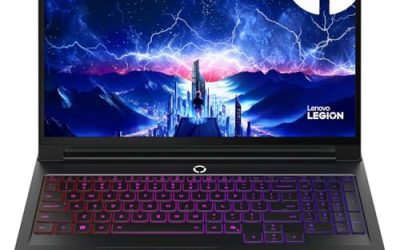
| Lenovo Legion 5 Gen 10 | The richest screen for the game’s skies | RTX 5060, WQXGA OLED 500nits |
| Acer Nitro V 15 | A big library with room to add storage | RTX 4060, 15.6″ FHD IPS 180Hz |
| MSI Katana 15 | A first gaming laptop kept simple | RTX 4050, 16GB DDR5, 1TB NVMe SSD |
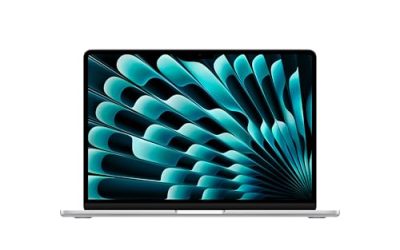
| ASUS Zenbook 14 OLED | Playing away from a desk | Ryzen 7 8840HS, Radeon 780M integrated |
How to Choose
Start With the Platform and the Published Requirements
Exo One is a Windows-only release as published. The store page prints one requirements block for Windows and no macOS or Linux block at all, so there is no native Mac edition to plan around, and every laptop below runs Windows 11 Home as listed. The minimum tier asks for a 64-bit system running Windows 7 or higher, a Core i5 at 2 GHz or AMD equivalent, 4 GB of RAM, a GeForce 650 with 1 GB of memory, DirectX 11 and 5 GB of storage. One caution: the store page also notes the Steam client itself supports only Windows 10 and later, whatever the older minimum line says.
Match the Graphics Card to the Published Line
Both published tiers name dedicated NVIDIA cards: a GeForce 650 at minimum and a GeForce 1060 or higher in the recommended tier. The Victus, Legion and Nitro listings each name an RTX 5060 or RTX 4060, and the Katana names an RTX 4050 with 6 GB of GDDR6, so all four sit above the recommended card name with dedicated memory of their own. The Zenbook is the exception. Its Radeon 780M is integrated graphics, which sits outside the published wording entirely, so treat it as the portability pick for this light title rather than a match for the printed line.
Check Memory and Storage Against the Printed Figures
The published line asks for 4 GB of RAM at minimum and 8 GB in the recommended tier, which every machine here doubles or better: the Legion, Nitro and Katana listings print 16 GB, and the Victus prints 32 GB. Storage is lighter still, at 5 GB of available space in both tiers. Each pick ships with an SSD as listed, from the Zenbook’s 512 GB drive up to the 1 TB drives in the other four, so the game itself takes a tiny share. The Nitro listing also names a second M.2 slot, which matters if your library keeps growing.
Weigh the Screen, the Battery and the Carrying Weight
Screens split into two camps here. The Victus, Nitro and Katana use 15.6-inch Full HD panels at 144Hz or 180Hz as listed, the Legion uses a sharper 15.1-inch WQXGA OLED at 500 nits, and the Zenbook uses a 14-inch WUXGA OLED at 60Hz as listed. For carrying, the Zenbook listing prints about 2.82 pounds and a 75 Wh battery with up to 17 hours as listed, figures none of the gaming models headline. That is where lighter gaming machines usually give ground: smaller batteries, dimmer panels and fewer ports than the bigger chassis allow.
The 5 Best Options
HP Victus 15
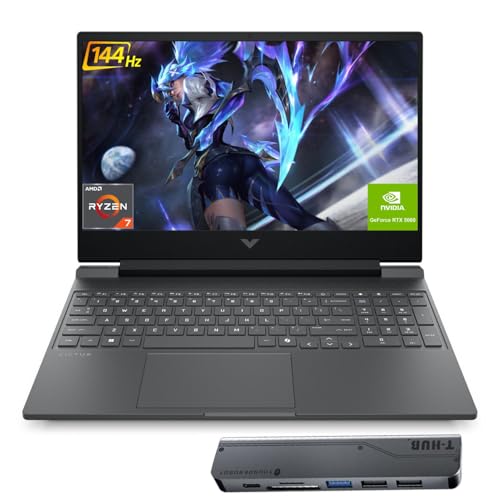
The Victus 15 suits players who want one Windows machine for Exo One and a wider library besides. Its listing names a Ryzen AI 7 350 running up to 5.0 GHz, an RTX 5060 described as dedicated graphics, 32 GB of DDR5 memory and a 1 TB SSD, each figure comfortably beyond the published recommended tier, which stops at a Core i7, 8 GB of RAM and a GeForce 1060. The 15.6-inch 144Hz panel and the hub bundled in the listing make it an easy fit for a desk that also handles school or office work.
Specs
- Processor: AMD Ryzen AI 7 350, up to 5.0 GHz as listed
- Graphics: NVIDIA GeForce RTX 5060, dedicated, as listed
- Memory: 32 GB DDR5 at 4800 MHz as listed
- Storage: 1 TB SSD, PCIe x4 interface as listed
- Display: 15.6-inch FHD 1920×1080, 144Hz
- Keyboard: RGB backlit, as listed
- Ports: RJ-45 Ethernet; bundled Thunderobot 7-in-1 USB-C hub as listed
- Operating system: Windows 11 Home
- Color and series: Black, series TPN-Q279 as listed
Best for: A single laptop that covers this game plus a growing general library.
Watch out for: The listing does not print the RTX 5060’s video-memory figure, so confirm the exact configuration on the product page before ordering.
ASIN: B0G1N8R9Z4
Lenovo Legion 5 Gen 10

The Legion 5 Gen 10 is the pick for players who care most about how the game’s skies and cloud layers look. Its 15.1-inch WQXGA OLED panel is listed at 2560×1600 and 500 nits, the sharpest screen in this roundup, and the hardware behind it is the strongest pairing here: a Ryzen 7 260 alongside an RTX 5060 Laptop GPU with 8 GB of GDDR7 memory as listed. With 16 GB of DDR5 memory and a 1 TB SSD, it clears the published recommended figures on every line while adding USB4 and HDMI 2.1 for a desk setup.
Specs
- Processor: AMD Ryzen 7 260, 3.80 GHz up to 5.10 GHz as listed
- Graphics: NVIDIA GeForce RTX 5060 Laptop GPU, 8 GB GDDR7
- Memory: 16 GB DDR5-5600 SODIMM
- Storage: 1 TB SSD M.2 2242 PCIe Gen4
- Display: 15.1-inch WQXGA OLED, 2560×1600, 500 nits, non-touch, as listed
- Keyboard: 24-zone RGB backlit, as listed
- Ports: USB4, HDMI 2.1 and Ethernet (RJ-45) as listed
- Operating system: Windows 11 Home
Best for: Players who want the best-looking version of the journey on a laptop screen.
Watch out for: The listing prints a 7.09-pound item weight, which reads high for this class, so check the weight on the product page if you plan to carry it daily.
ASIN: B0FXMY8FYW
Acer Nitro V 15

The Nitro V 15, in the ANV15-51-99XD configuration, fits players who keep many games installed at once. The listing pairs an Intel Core i9-13900H with an RTX 4060 Laptop GPU, both well above the names in the published recommended tier, and its 15.6-inch FHD IPS panel runs at 180Hz as listed. Memory is 16 GB of DDR5 across two slots with a 32 GB maximum as listed, and storage is a 1 TB PCIe Gen 4 SSD with a second M.2 slot named in the listing, so adding room later is part of the plan rather than a workaround.
Specs
- Processor: Intel Core i9-13900H
- Graphics: NVIDIA GeForce RTX 4060 Laptop GPU
- Memory: 16 GB DDR5, two slots, 32 GB maximum as listed
- Storage: 1 TB PCIe Gen 4 SSD, two M.2 slots as listed
- Display: 15.6-inch FHD IPS, 180Hz as listed
- Connectivity: Thunderbolt 4, Wi-Fi 6 and Ethernet (RJ-45)
- Keyboard: Backlit, as listed
- Cooling: Dual fans, as listed
- Operating system: Windows 11 Home
Best for: A desk-based machine with a large installed library and upgrade room.
Watch out for: The listing does not print the RTX 4060’s video-memory figure, so verify the exact configuration on the product page before ordering.
ASIN: B0D8JTYXQM
MSI Katana 15

The Katana 15 B13VEK-277US is the straightforward choice for a first gaming laptop. Its listing names an Intel Core i7-13620H, an RTX 4050 with 6 GB of GDDR6 in its bullet text, 16 GB of DDR5-4800 memory and a 1 TB NVMe SSD, a set of figures that clears the published recommended tier, which names a Core i7, 8 GB of RAM and a GeForce 1060. The 15.6-inch Full HD IPS panel runs at 144Hz as listed, and the specification stays easy to read, with no bundled extras to sort through before the first session.
Specs
- Processor: Intel Core i7-13620H
- Graphics: NVIDIA GeForce RTX 4050, 6 GB GDDR6 per the listing bullet text
- Memory: 16 GB DDR5-4800
- Storage: 1 TB NVMe SSD
- Display: 15.6-inch Full HD IPS, 144Hz
- Ports: USB Type-C, as listed
- Operating system: Windows 11 Home
- Color and model: Black, B13VEK-277US
Best for: A first gaming laptop that covers the published line without extras.
Watch out for: The listing’s technical-details table prints a graphics-memory figure that conflicts with the 6 GB GDDR6 in its own bullet text, so go by the bullet text and confirm on the page.
ASIN: B0BZBN3857
ASUS Zenbook 14 OLED

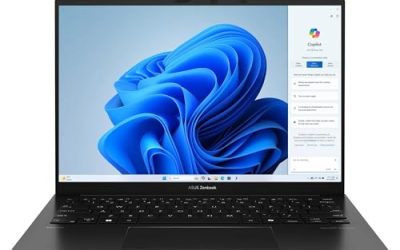
The Zenbook 14 OLED UM3406HA is the travel pick, and it comes with an honest caveat. Its Radeon 780M graphics are integrated, so this machine sits outside the published wording, which names dedicated cards in both tiers; it belongs here for a light title played at modest settings, not as a match for the printed line. What it offers instead is the 14-inch WUXGA OLED screen, a listed weight of about 2.82 pounds and a 75 Wh battery listed at up to 17 hours, figures the gaming laptops above do not approach.
Specs
- Processor: AMD Ryzen 7 8840HS, up to 5.1 GHz as listed
- Graphics: AMD Radeon 780M integrated, 12 RDNA 3 compute units as listed
- Memory: 16 GB LPDDR5X
- Storage: 512 GB M.2 NVMe PCIe 4.0 SSD
- Display: 14-inch WUXGA OLED touchscreen, 1920×1200, as listed
- Color and brightness: 100% DCI-P3, 500-nit peak HDR, as listed
- Wireless: Wi-Fi 6E
- Battery: 75 Wh, up to 17 hours as listed
- Weight: About 2.82 lbs as listed
- Operating system: Windows 11 Home; color Jade Black; model UM3406HA-WS74T
Best for: Playing this light title on the move, away from a desk.
Watch out for: The integrated graphics sit outside the published wording, and the listing describes a touchscreen while the maker’s spec sheet for this model lists a non-touch panel, so confirm the panel on the product page.
ASIN: B0DFWZ77LB
Which One Fits Your Situation
Your Only Laptop, Used for Everything
Choose the Legion 5 Gen 10 if one machine has to cover work, study and play. Its OLED screen is the strongest here for reading and media as well as games, the RTX 5060 carries 8 GB of GDDR7 as listed, and the 1 TB SSD swallows a mixed library. The Victus is the alternative when 32 GB of memory matters more than the panel.
Playing on Trains, Planes and Couches
Choose the Zenbook 14 OLED. At about 2.82 pounds as listed, with a 75 Wh battery listed at up to 17 hours, it is the only pick here built around carrying. Accept the trade plainly: its integrated graphics sit outside the published wording, so keep settings modest and treat it as the travel option rather than your main gaming machine.
A Desk Setup With a Big Library
Choose the Nitro V 15. The listing names two M.2 slots and memory expandable to 32 GB, so storage and RAM can grow with your library instead of forcing a replacement. The i9-13900H and RTX 4060 pairing sits well above the published recommended names, and the wired Ethernet port suits a fixed desk with a router nearby.
A First Gaming Laptop for a Younger Player
Choose the Katana 15. The specification is short and easy to check, the RTX 4050 and 16 GB of memory clear the published recommended tier, and the 1 TB SSD leaves room for school files alongside games. Read the bullet text for the graphics memory figure rather than the technical-details table, which prints a conflicting number.
Common Mistakes
- Assuming a Mac edition exists because other indie games publish one; this store page prints a Windows block only.
- Reading the Windows 7 minimum at face value when the same page notes the Steam client supports only Windows 10 and later.
- Comparing graphics names alone and skipping the memory and storage figures printed in each listing.
- Trusting the Katana listing’s technical-details table over its bullet text, where the two print different graphics-memory figures.
- Buying the Zenbook as a main gaming machine for demanding 3D titles, when its integrated graphics sit outside this game’s published wording.
Frequently Asked Questions
Does Exo One run on a Mac?
No native Mac edition is published. The store page prints a single Windows requirements block and no macOS or Linux block, so plan on a Windows laptop such as the five above. The minimum tier names Windows 7 or higher, while the recommended tier names Windows 10, and every pick here ships with Windows 11 Home as listed.
How much RAM and storage does Exo One need?
The published minimum asks for 4 GB of RAM and 5 GB of available storage, and the recommended tier raises memory to 8 GB with the same 5 GB of storage. Every laptop in this roundup lists at least 16 GB of memory and a 512 GB SSD, so the game takes only a small share of either figure.
Is integrated graphics enough for Exo One?
The published line names dedicated cards in both tiers, a GeForce 650 at minimum and a GeForce 1060 in the recommended tier, so integrated graphics sit outside the wording as printed. The Zenbook’s Radeon 780M is included as a portability pick for this light title at modest settings, not as a match for the printed line.
Which pick is best for playing away from home?
The Zenbook 14 OLED, on the figures its listing prints: about 2.82 pounds, a 75 Wh battery and up to 17 hours as listed. Its 14-inch OLED screen also suits the game’s slow, scenic flights. Keep the graphics caveat in mind and confirm the panel type on the product page before ordering.
More from Amazon
Programs that pair well with the guide above. Offers and eligibility are set by Amazon and may change.
A free business account with business pricing and bulk-buying tools for work, shop or home office.
Create a business accountFree shipping on eligible items, Prime Video and more. Eligible new members can start with a free trial.
Start a Prime free trialAudiobooks and podcasts to listen to on the go. Eligible new members can start with a free trial.
Try Audible freeAd-free music streaming. Eligible new subscribers can start with a free trial.
Try Music Unlimited freeAs an Amazon Associate we earn from qualifying purchases.
Write Your Review
No reviews yet. Be the first to share your experience!