
The real decision for anyone shopping for Anger Foot begins with the platform: Steam sells the game for Windows only, and its published recommended block names dedicated graphics cards, a GeForce GTX 1080 or Radeon RX 5700, so the first check is a dedicated card against that line, then the screen’s refresh figure as the listing states it. The minimum block also names an integrated part, which changes what a light laptop can honestly be picked for.
This guide serves players replacing an older gaming laptop, players who want one machine for long desk sessions and travel, and players who prefer a light laptop and accept modest settings. The five picks come from current product listings, and every figure quoted here, from graphics card and memory to storage, panel and weight, is taken from the names and specs on those listings themselves.
Quick Picks
As an Amazon Associate we earn from qualifying purchases
| Product | Best for | Key spec from title |
|---|---|---|
| HP Victus 15 | Long desk sessions with a large library installed | RTX 5060 with 32 GB DDR5 RAM |
| Lenovo Legion 5 Gen 10 | The sharpest screen for fast scenes | RTX 5060 8 GB GDDR7, WQXGA OLED |
| Acer Nitro V 15 | The highest refresh figure in this group | Core i9-13900H, RTX 4060, 180Hz |
| MSI Katana 15 | Stepping up from an older entry-level gaming laptop | RTX 4050 6 GB GDDR6, 16 GB DDR5 |
| ASUS Zenbook 14 OLED | Carrying all day, playing in short sessions | Radeon 780M integrated graphics, OLED touch |
How to Choose
Start With the Platform and the Published Blocks
Steam sells Anger Foot for Windows only. The store page flags Windows as the sole platform, the macOS and Linux flags read false, and the requirement blocks under those two headings are empty, so pages elsewhere that list Mac or Linux versions conflict with the store page itself. The published Windows block asks for a 64-bit system: minimum Windows 10, a Core i5-4670K or FX-4350, 8 GB of memory and a GeForce GTX 660, Radeon HD 7850 or HD Graphics 630 with 15 GB of storage; recommended Windows 11 and a GeForce GTX 1080 or Radeon RX 5700. The publisher’s own notes tie the minimum block to low settings and the recommended block to high settings.
Graphics Cards Against the Published Line
Read every card against two names: the GeForce GTX 660 and Radeon HD 7850 at minimum, and the GeForce GTX 1080 and Radeon RX 5700 at recommended. The Victus and the Legion carry a current dedicated GeForce RTX 5060, and the Nitro a dedicated GeForce RTX 4060, all newer dedicated designs than the recommended names. The Katana’s dedicated GeForce RTX 4050 sits above the minimum names and below the recommended class. The Zenbook’s Radeon 780M is integrated; the minimum block does name an integrated part, but the recommended block names dedicated cards only, so it is framed here as the modest-settings pick.
Memory and Storage Against the Published Line
The published block asks for 8 GB of memory at both tiers, so memory is the easy check: the Katana, Nitro, Legion and Zenbook each list 16 GB, and the Victus lists 32 GB. Storage asks for 15 GB, which every pick clears many times over on an SSD; the real question is the rest of your library, where the 1 TB drives in the Victus, Legion, Nitro and Katana leave more headroom than the Zenbook’s 512 GB. Note the Zenbook’s LPDDR5X memory is fixed onboard as the maker lists it, while the Nitro’s two memory slots accept up to 32 GB as listed.
Panel, Refresh Figure and Weight
For a game built on fast reactions, the panel figures as listed are worth comparing directly. The Nitro lists the highest refresh figure here, 180Hz on a 15.6-inch FHD IPS panel; the Legion pairs a 165Hz figure with a sharper 2560×1600 OLED screen; the Victus and Katana list 144Hz FHD panels; and the Zenbook’s OLED runs at 60Hz as listed, the trade for its size. Weight spreads just as widely in the listings: about 2.65 lbs for the Zenbook, against printed item weights of 7.09 pounds for the Legion and 10 pounds for the Victus that read high for their class. Lower-specced configurations in these ranges usually cut back on storage, panel speed or graphics first.
The 5 Best Options
HP Victus 15
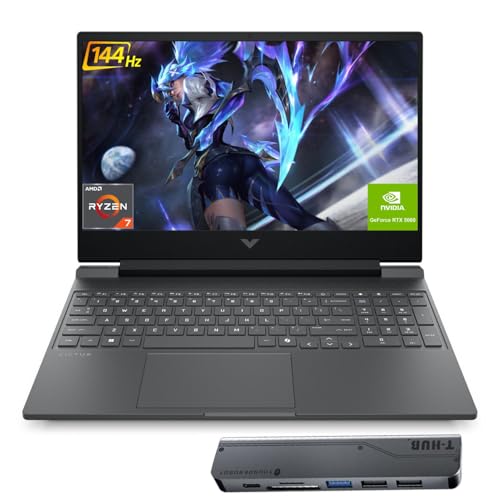
The Victus 15 is the roomiest pick here for a player who keeps a wide library installed. Its listing pairs a Ryzen AI 7 350 with a dedicated GeForce RTX 5060, 32 GB of DDR5 memory and a 1 TB SSD, which is four times the published memory figure and far beyond the 15 GB the game itself needs. The 15.6-inch 144Hz panel suits fast scenes on paper, wired Ethernet is built in, and the listing bundles a 7-in-1 USB-C hub. It is a desk-first machine rather than a light carry.
Specs
- Processor: AMD Ryzen AI 7 350, up to 5.0 GHz as listed
- Graphics: NVIDIA GeForce RTX 5060, dedicated
- Memory: 32 GB DDR5 at 4800 MHz as listed
- Storage: 1 TB SSD, PCIe x4 interface as listed
- Display: 15.6-inch FHD, 1920×1080, 144Hz
- Keyboard: RGB backlit
- Networking: RJ-45 Ethernet port
- Included: bundled Thunderobot 7-in-1 USB-C hub as listed
- Operating system: Windows 11 Home
- Color: Black, series TPN-Q279
Best for: Players who keep a large library installed and play at a desk with a wired connection.
Watch out for: The listing does not print a video-memory figure for the RTX 5060, and its printed item weight of 10 pounds reads high for the class, so check both on the maker’s page.
ASIN: B0G1N8R9Z4
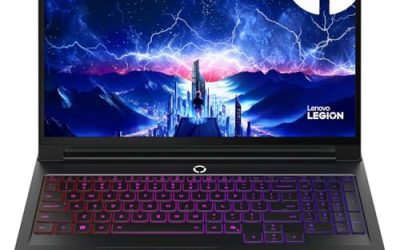
Lenovo Legion 5 Gen 10

The Legion 5 Gen 10 suits the player who reads the screen as closely as the spec sheet. Its listing names a Ryzen 7 260, a dedicated GeForce RTX 5060 with 8 GB of GDDR7 memory, and a 15.1-inch WQXGA OLED panel at 2560×1600 with a 165Hz refresh figure as listed. Memory is 16 GB of DDR5-5600 and storage a 1 TB SSD, both comfortably past the published line. USB4, HDMI 2.1 and Ethernet cover desk connections, and the 24-zone RGB backlit keyboard is part of the listing.
Specs
- Processor: AMD Ryzen 7 260, 3.80 GHz up to 5.10 GHz
- Graphics: NVIDIA GeForce RTX 5060 Laptop GPU, 8 GB GDDR7
- Memory: 16 GB DDR5-5600 (SODIMM)
- Storage: 1 TB SSD M.2 2242 PCIe Gen4 TLC
- Display: 15.1-inch WQXGA OLED, 2560×1600, 500 nits, non-touch, 165Hz
- Keyboard: 24-zone RGB backlit
- Ports: USB4, HDMI 2.1, Ethernet (RJ-45)
- Operating system: Windows 11 Home
- Item weight: 7.09 pounds as listed
Best for: Players who want the sharpest, fastest panel in this group on a current dedicated card.
Watch out for: The listing’s technical table prints an item weight of 7.09 pounds, which reads high for this class; confirm the figure on the maker’s page if you will carry it daily.
ASIN: B0FXMY8FYW
Acer Nitro V 15

The Nitro V 15 fits the player who wants a high refresh figure and room to grow. Its listing names an Intel Core i9-13900H and a dedicated GeForce RTX 4060 Laptop GPU behind a 15.6-inch FHD IPS panel with a 180Hz refresh figure as listed, the highest in this group. The 16 GB of DDR5 memory sits in two slots with a 32 GB maximum as listed, and the 1 TB Gen 4 SSD leaves a second M.2 slot free. Thunderbolt 4, Wi-Fi 6 and Ethernet round out the connections.
Specs
- Processor: Intel Core i9-13900H
- Graphics: NVIDIA GeForce RTX 4060 Laptop GPU, dedicated
- Display: 15.6-inch FHD IPS, 180Hz as listed
- Memory: 16 GB DDR5, two slots, 32 GB maximum as listed
- Storage: 1 TB PCIe Gen 4 SSD, two M.2 slots as listed
- Ports: Thunderbolt 4, HDMI 2.1, Ethernet (RJ-45)
- Wireless: Wi-Fi 6
- Cooling: dual fans as listed
- Keyboard: backlit
- Operating system: Windows 11 Home
Best for: Players who want the highest refresh figure here plus a spare M.2 slot for later storage.
Watch out for: The listing does not print a video-memory figure for the RTX 4060; check the maker’s page for that figure before ordering.
ASIN: B0D8JTYXQM
MSI Katana 15

The Katana 15 is the step-up pick for a player moving on from an older entry-level gaming laptop. Its listing names an Intel Core i7-13620H and a dedicated GeForce RTX 4050 with 6 GB of GDDR6 memory in the bullet text, above the dedicated cards named in the published minimum block and below the recommended tier’s names. Memory is 16 GB of DDR5-4800 with a 1 TB NVMe SSD, and the 15.6-inch Full HD IPS panel carries a 144Hz refresh figure as listed.
Specs
- Processor: Intel Core i7-13620H
- Graphics: NVIDIA GeForce RTX 4050, 6 GB GDDR6 per the listing bullet text
- Memory: 16 GB DDR5-4800
- Storage: 1 TB NVMe SSD
- Display: 15.6-inch Full HD IPS, 144Hz
- Ports: USB Type-C
- Wireless: Intel Wi-Fi 6 AX201, Bluetooth 5.2
- Operating system: Windows 11 Home
- Color: Black, model B13VEK-277US
Best for: Players stepping up from an older entry-level gaming laptop to a current dedicated card.
Watch out for: The listing’s technical-details table prints a 16 GB graphics-memory figure that conflicts with the 6 GB GDDR6 in its own bullet text; go by the bullet text and the maker’s page.
ASIN: B0BZBN3857
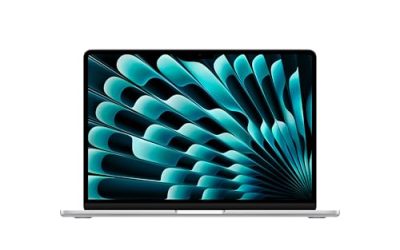
ASUS Zenbook 14 OLED

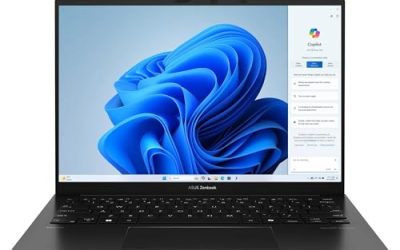
The Zenbook 14 OLED is the portability pick, and its trade is stated plainly: the Radeon 780M is integrated graphics, not a dedicated card. The published minimum block does name an integrated part, the Intel HD Graphics 630, and the 780M is a much newer integrated design, but the recommended block names dedicated cards only, so this machine is for modest settings and short sessions. In return the listing offers a 14-inch OLED touchscreen, a 75 Wh battery and a weight of about 2.65 lbs.
Specs
- Processor: AMD Ryzen 7 8840HS, up to 5.1 GHz as listed
- Graphics: AMD Radeon 780M integrated, 12 RDNA 3 compute units as listed
- Memory: 16 GB LPDDR5X
- Storage: 512 GB M.2 NVMe PCIe 4.0 SSD
- Display: 14-inch WUXGA OLED touchscreen, 1920×1200, as listed
- Display figures: 100% DCI-P3, 500-nit peak HDR, 60Hz as listed
- Wireless: Wi-Fi 6E
- Battery: 75 Wh, up to 17 hours as listed
- Weight: about 2.65 lbs
- Color: Jade Black
- Operating system: Windows 11 Home
Best for: Players who carry the laptop all day and play in short sessions at modest settings.
Watch out for: Integrated graphics sit below the dedicated cards the recommended block names; also, the listing describes a touchscreen while the maker’s spec sheet for this model lists a non-touch panel, so check which panel ships.
ASIN: B0DFWZ77LB
Which One Fits Your Situation
Long Sessions at a Desk
Pick the HP Victus 15. Its 32 GB of memory and 1 TB SSD hold a wide library without juggling installs, the wired Ethernet connection suits a fixed desk, and the listing bundles a 7-in-1 USB-C hub for peripherals. The printed 10-pound item weight matters little when the machine rarely moves, and the 144Hz panel matches the fast pace of the game on paper.
The Sharpest Screen for Fast Scenes
Pick the Lenovo Legion 5 Gen 10. Its 15.1-inch OLED panel lists a 2560×1600 resolution, 500 nits and a 165Hz refresh figure, the sharpest combination in this group, and the dedicated RTX 5060 with 8 GB of GDDR7 memory sits on the right side of the published recommended line. If you prefer a larger Full HD panel, the Nitro’s 180Hz figure is the alternative to weigh.
Stepping Up From an Older Gaming Laptop
Pick the MSI Katana 15. It replaces an aging entry-level machine with a current dedicated card, the RTX 4050 with 6 GB of GDDR6 as the listing’s bullet text states it, plus 16 GB of DDR5 memory and a 1 TB SSD. That clears the published minimum block with room to spare and lands below the recommended names, which suits a player content with mid settings.
Short Sessions Away From the Desk
Pick the ASUS Zenbook 14 OLED. At about 2.65 lbs with a 75 Wh battery listed at up to 17 hours, it is the one machine here built for a bag rather than a desk. Be clear about the trade before choosing it: the integrated Radeon 780M is the modest-settings route into this game, not a match for the dedicated cards the recommended block names.
Common Mistakes
- Buying a Mac or Linux laptop for this game: Steam sells Anger Foot for Windows only, and the empty macOS and Linux blocks on the store page outweigh tracker listings that claim otherwise.
- Shopping against the minimum block alone: the publisher’s own notes tie that block to low settings, while the recommended block is the line these picks are measured against.
- Trusting every figure in a listing table: the Katana’s table and bullet text disagree on graphics memory, and some listings omit the GPU memory figure entirely.
- Assuming integrated graphics cover high settings: the recommended block names dedicated cards only, so an integrated pick is a modest-settings choice.
- Filling a small SSD without a plan: the game needs 15 GB, but a 512 GB drive shared with a wider library runs short quickly.
Frequently Asked Questions
Can I play Anger Foot on a Mac or Linux laptop?
Not with a native edition. The Steam store page flags the game as Windows only, with the macOS and Linux flags set to false and no requirements published under those headings. Some tracker sites list other platforms, but the store page is the source that governs, so every pick in this guide is a Windows laptop.
How much memory and storage does Anger Foot need?
The published block asks for 8 GB of memory at both the minimum and recommended tiers, and 15 GB of available storage. Every laptop here lists at least 16 GB of memory and at least a 512 GB SSD, so the published figures are cleared with headroom; the bigger storage question is the rest of your library.
Do I need a dedicated graphics card for Anger Foot?
The minimum block names two dedicated cards, the GeForce GTX 660 and Radeon HD 7850, and also an integrated part, the HD Graphics 630. The recommended block names dedicated cards only. Four picks here carry dedicated cards; the Zenbook’s integrated Radeon 780M is included as the light, modest-settings option, with that limit stated plainly.
Which pick is easiest to carry every day?
The ASUS Zenbook 14 OLED, by a wide margin in the listings: about 2.65 lbs, a 14-inch screen and a 75 Wh battery listed at up to 17 hours. The trade is graphics, since its Radeon 780M is integrated. The four gaming laptops are larger 15-inch machines, and two of their listings print item weights that read high for the class.
More from Amazon
Programs that pair well with the guide above. Offers and eligibility are set by Amazon and may change.
A free business account with business pricing and bulk-buying tools for work, shop or home office.
Create a business accountFree shipping on eligible items, Prime Video and more. Eligible new members can start with a free trial.
Start a Prime free trialAudiobooks and podcasts to listen to on the go. Eligible new members can start with a free trial.
Try Audible freeAd-free music streaming. Eligible new subscribers can start with a free trial.
Try Music Unlimited freeAs an Amazon Associate we earn from qualifying purchases.
Write Your Review
No reviews yet. Be the first to share your experience!