
I Was a Teenage Exocolonist is a story-first life-sim, and its published requirements are light: 4 GB of memory at minimum and graphics described by capability rather than by a named card. The real decision is platform and portability. Steam publishes native Windows, macOS and Linux builds, and the macOS block names Apple Silicon outright, so Mac buyers are not limited to workarounds. The honest target is the recommended line: 8 GB of memory and, on Windows, a GTX 970 class card.
This guide serves three groups: Mac players who want the native build, Windows players who want one laptop for this game and heavier titles, and travelers who play in short sessions. The five picks come from the names and specifications on the product listings: two MacBook Airs, a Snapdragon Windows ultraportable, a Zenbook whose integrated graphics are framed honestly against the published line, and a Victus with a dedicated card.
Quick Picks
As an Amazon Associate we earn from qualifying purchases
| Product | Best for | Key spec from title |
|---|---|---|
| MacBook Air 13 M4 | Native Mac play in the lightest bag | M4 chip with 16GB Unified Memory |
| MacBook Air 15 M4 | A bigger screen for long reading sessions | 15.3-inch Liquid Retina Display, 512GB SSD |
| Lenovo Yoga Slim 7x | A sharp OLED screen on Windows | Snapdragon X Elite, 32GB LPDDR5X, 1TB SSD |
| ASUS Zenbook 14 OLED | A light Windows laptop with an OLED panel | Ryzen 7-8840HS, 16GB LPDDR5X, 512GB SSD |
| HP Victus 15 | Headroom for heavier games as well | RTX 5060, Ryzen AI 7 350, 32GB DDR5 |
How to Choose
Platforms and the Published Requirements
Steam publishes three requirement blocks for this game: Windows, macOS and SteamOS + Linux. The Windows minimum asks for Windows 7 (SP1+), 10 or 11, an x86 or x64 processor with SSE2 support, 4 GB of memory, DX10, DX11 or DX12 capable graphics and 2 GB of storage. The macOS minimum runs on Catalina 10.15+ and names the processor as “Apple Silicon, x64 architecture with SSE2”, with Metal capable Intel and AMD GPUs. The recommended macOS tier asks for Big Sur 11.0+ and “Apple M1 or above”. Steam also notes its client supports only Windows 10 and later from January 1st, 2024.
Graphics Cards Against the Published Line
The published minimum names no specific card: Windows asks only for DX10, DX11 or DX12 capable graphics, and macOS asks for Metal capable Intel and AMD GPUs. The recommended Windows tier names the Nvidia GTX 970 4GB and AMD R9 290 4GB. The M4 chip in both MacBook Airs is Metal capable, and Apple Silicon is the processor family the macOS block names outright. The Victus carries a dedicated RTX 5060, above the recommended names. The Zenbook’s Radeon 780M is integrated and sits below the named GTX 970 class, and the Yoga’s Adreno graphics are also integrated.
Memory and Storage Against the Published Line
Memory is simple here: the published minimum is 4 GB on every platform, and the recommended figure is 8 GB. Every laptop in this guide lists 16 GB or more, so none of them asks you to settle for the minimum. Storage follows the same pattern: 2 GB at minimum and 5 GB recommended, against SSDs of 256 GB to 1 TB across the five picks. Each listing states an SSD rather than a spinning drive. On the two MacBook Airs the memory is unified and fixed at purchase, so choose the configuration you need on day one.
Screen Size, Weight and Battery Figures
The game’s watercolor artwork and long text passages reward screen quality more than raw size. The picks run from the 13.6-inch Liquid Retina panel in the smaller MacBook Air to the 15.6-inch 144Hz panel in the Victus, with two OLED panels between them. Listed weights start at 2.73 pounds for the 13-inch Air and rise with screen size. Battery figures as listed reach up to 18 hours on both MacBook Airs and up to 17 hours on the Zenbook, while the Yoga lists a 70Wh battery. Budget models usually cut back on panel quality, storage and battery size first.
The 5 Best Options
MacBook Air 13 M4

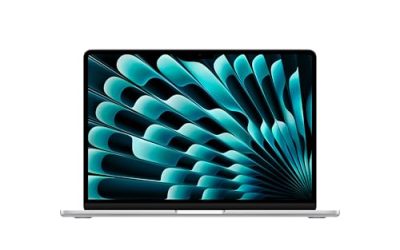
The native Mac choice for most players. The published macOS block names Apple Silicon at minimum and Apple M1 or above at recommended, and the M4 chip sits above both wordings, with 16 GB of unified memory against the 8 GB recommended figure. At 2.73 pounds as listed, it is the easiest pick to carry between home, school and work, and the 13.6-inch Liquid Retina screen keeps the game’s watercolor scenes and long dialogue passages sharp. It has no fan, so it stays silent during quiet story scenes.
Specs
- Processor: Apple M4 chip
- Memory: 16GB unified memory
- Storage: 256GB SSD
- Display: 13.6-inch Liquid Retina, 2560 x 1664, 500 nits as listed
- Graphics: Integrated, Metal capable
- Camera: 12MP Center Stage camera
- Security: Touch ID
- Ports: Two Thunderbolt 4 ports, MagSafe charging port, 3.5 mm headphone jack
- Wireless: Wi-Fi 6E, Bluetooth 5.3
- Battery: Up to 18 hours as listed
- Weight and color: 2.73 pounds, Midnight (model MW123LL/A)
Best for: Mac players who want the native build in the lightest package here.
Watch out for: The 256 GB SSD is the smallest storage in this guide and the memory cannot be upgraded later, so check your library size before ordering.
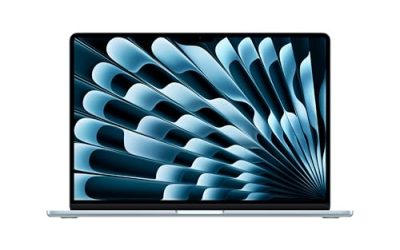
MacBook Air 15 M4

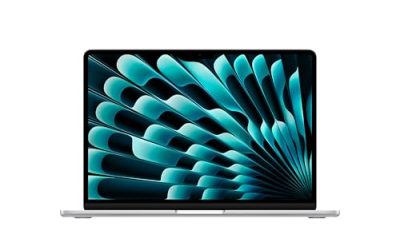
Pick this one when the story gets long sessions at a desk or on a sofa. It runs the same native macOS build as the 13-inch model, with the same M4 chip and 16 GB of unified memory, but the 15.3-inch Liquid Retina display gives dialogue, menus and the colony management screens more room. The listing pairs it with a 512 GB SSD, double the smaller model’s storage, and the battery figure as listed is up to 18 hours. It stays fanless and silent, at 3.3 pounds as listed.
Specs
- Processor: Apple M4 chip
- Memory: 16GB unified memory
- Storage: 512GB SSD
- Display: 15.3-inch Liquid Retina supporting 1 billion colors
- Graphics: Integrated, Metal capable
- Camera: 12MP Center Stage camera
- Security: Touch ID
- Ports: Two Thunderbolt 4 ports, MagSafe charging port, headphone jack
- Wireless: Wi-Fi 6E, Bluetooth 5.3
- Battery: Up to 18 hours as listed
- Weight and color: 3.3 pounds, Midnight
Best for: Mac players who read for hours at a desk and want the larger screen.
Watch out for: Memory and storage are fixed at purchase, and there is no fan, so confirm the 16 GB configuration suits your wider library before ordering.
Lenovo Yoga Slim 7x

The Windows pick for readers who prize the screen. Its 14.5-inch 3K OLED touch panel is the sharpest display in this guide as listed, and 32 GB of memory with a 1 TB SSD dwarf the published 8 GB and 5 GB recommended figures. The honest catch is the processor: the Yoga runs Windows 11 Pro on ARM on a Snapdragon X Elite, while the published Windows block names x86 and x64 processors, so the game runs through the Windows translation layer rather than a native ARM build.
Specs
- Processor: Snapdragon X Elite X1E-78-100, 12 cores up to 3.4 GHz
- Graphics: Integrated Qualcomm Adreno GPU
- Memory: 32GB LPDDR5X-8448MT/s, soldered
- Storage: 1TB SSD M.2 2242 PCIe Gen4
- Display: 14.5-inch 3K OLED touch, 2944 x 1840, 1000 nits, 90Hz as listed
- Battery: 70Wh
- Camera: 1080P FHD IR hybrid camera with e-shutter
- Wireless: Wi-Fi 7, Bluetooth 5.4
- Operating system: Windows 11 Pro (Windows on ARM)
- Weight and color: 2.82 lbs, Cosmic Blue
Best for: Windows readers who want the sharpest OLED screen and travel light.
Watch out for: Windows on ARM runs this x86-published game through translation, and the ports are USB-C only, so check your other programs and peripherals before ordering.
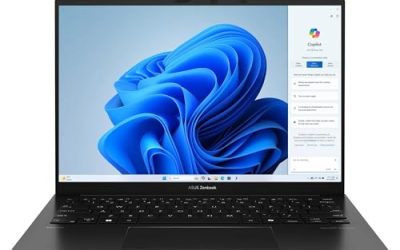
ASUS Zenbook 14 OLED

The light Windows laptop with a conventional x86 processor. The Ryzen 7 8840HS clears the published processor wording easily, and 16 GB of memory doubles the recommended figure. Its graphics need honest framing: the Radeon 780M is integrated, so it sits below the GTX 970 and R9 290 class named in the recommended tier, even though it meets the minimum’s DX12 capable wording. For a 2D story game bought mainly for its writing, the trade brings a 14-inch OLED panel and up to 17 hours of battery as listed.
Specs
- Processor: AMD Ryzen 7 8840HS, 8 cores, 16 threads as listed
- Graphics: Radeon 780M integrated graphics, 12 RDNA 3 compute units as listed
- Memory: 16GB LPDDR5X RAM
- Storage: 512GB Gen 4 SSD
- Display: 14-inch WUXGA OLED touchscreen, 1920 x 1200, 500-nit peak HDR, 100% DCI-P3, 60Hz as listed
- Wireless: Wi-Fi 6E
- Ports: Thunderbolt 4 as listed
- Battery: 75Wh, up to 17 hours as listed
- Weight and color: About 2.82 pounds as listed, Jade Black
- Operating system: Windows 11 Home
Best for: Windows players who want an OLED screen in a light x86 laptop.
Watch out for: The integrated Radeon 780M sits below the recommended GTX 970 class named by the publisher, and the listing describes a touchscreen while the maker’s spec sheet for this model lists a non-touch panel, so confirm the panel before ordering.
HP Victus 15
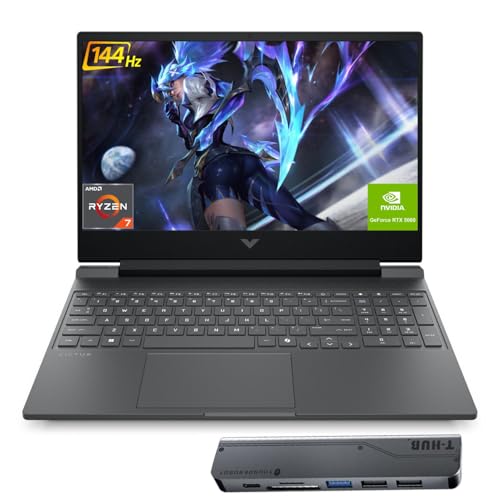
The pick for players whose library goes well beyond one story game. Its dedicated RTX 5060 sits above the GTX 970 and R9 290 named in the recommended tier, and the listing pairs it with 32 GB of DDR5 memory and a 1 TB SSD, four times the recommended memory and far beyond the 5 GB storage figure. The 15.6-inch 144Hz screen and full keyboard suit long sessions at a desk. It runs the Windows build natively on an x86 processor, with no translation layer involved.
Specs
- Processor: AMD Ryzen AI 7 350, up to 5.0 GHz as listed
- Graphics: NVIDIA GeForce RTX 5060, dedicated
- Memory: 32GB DDR5 RAM at 4800 MHz as listed
- Storage: 1TB SSD, PCIe x4 interface as listed
- Display: 15.6-inch FHD, 1920 x 1080, 144Hz
- Keyboard: RGB backlit keyboard
- Ports: RJ-45 Ethernet
- Included accessory: Bundled Thunderobot 7-in-1 USB-C hub as listed
- Operating system: Windows 11 Home
- Color and series: Black, series TPN-Q279
Best for: Windows players who also run demanding 3D games on the same machine.
Watch out for: The listing does not print the RTX 5060’s video memory figure, and its 10-pound item weight reads high for this class, so confirm both on the product page before ordering.
Which One Fits Your Situation
Reading for Hours at a Desk
Choose the MacBook Air 15 M4. The native macOS build runs on its M4 chip, and the 15.3-inch Liquid Retina screen gives the game’s long dialogue passages, journal entries and colony screens the most room of any pick here. The 512 GB SSD also leaves space for a wider library alongside the game’s 5 GB recommended figure.
Playing in Short Sessions While Traveling
Choose the MacBook Air 13 M4. At 2.73 pounds as listed, with up to 18 hours of battery on the listing, it suits trains, cafes and lunch breaks, and it runs the native macOS build the publisher describes for Apple Silicon. The smaller screen still shows text clearly at 2560 x 1664.
One Laptop for This and Heavier Games
Choose the HP Victus 15. Exocolonist alone asks little, but the dedicated RTX 5060, 32 GB of memory and 1 TB SSD give the same machine room for demanding 3D titles in your library. It runs the Windows build natively, and the 15.6-inch 144Hz screen suits a desk setup at home.
Windows in a Thin Chassis
Choose the Lenovo Yoga Slim 7x for the sharpest screen, a 14.5-inch 3K OLED panel at 2.82 pounds. Accept the trade plainly: it runs Windows on ARM, so this x86-published game plays through the translation layer. If that trade bothers you, the ASUS Zenbook 14 OLED keeps a conventional x86 processor in a similarly light body.
Common Mistakes
- Assuming the game is Windows-only and missing the native macOS build that Steam publishes for Apple Silicon machines.
- Treating the 4 GB minimum memory figure as the target instead of the 8 GB recommended figure.
- Reading the minimum graphics wording, DX10 capable, as the whole story and ignoring the GTX 970 class card named at the recommended tier.
- Filling a small SSD to the edge and leaving no room beyond the game’s 5 GB recommended storage figure.
- Buying a Windows on ARM laptop without checking that the published Windows requirements name x86 and x64 processors.
Frequently Asked Questions
Does the game run natively on Macs?
Yes. Steam publishes a macOS block for the game: the minimum asks for Catalina 10.15+ and names “Apple Silicon, x64 architecture with SSE2”, while the recommended tier asks for Big Sur 11.0+ and “Apple M1 or above”. Both MacBook Airs in this guide run that native build, and Steam publishes Windows and Linux blocks as well.
How much memory and storage does the game need?
The published minimum is 4 GB of memory and 2 GB of storage on every platform. The recommended figures rise to 8 GB of memory and 5 GB of storage. Every laptop in this guide lists at least 16 GB of memory and a 256 GB SSD, so each one clears the recommended line with room to spare.
Is integrated graphics enough for this game?
By the published wording, the minimum asks only for DX10, DX11 or DX12 capable graphics on Windows and Metal capable GPUs on macOS, which the integrated graphics in the MacBook Airs, Zenbook and Yoga all meet. The recommended tier names the GTX 970 4GB class; the Zenbook’s integrated Radeon 780M sits below that class, while the Victus’s dedicated RTX 5060 sits above it.
Does the game work on a Snapdragon Windows laptop?
The Yoga Slim 7x runs Windows 11 Pro on ARM, and no native ARM build is published: the Windows block names x86 and x64 processors with SSE2 support. The game therefore runs through the Windows translation layer on this machine. It is the one pick here with that caveat, so weigh it if you prefer native builds only.
More from Amazon
Programs that pair well with the guide above. Offers and eligibility are set by Amazon and may change.
A free business account with business pricing and bulk-buying tools for work, shop or home office.
Create a business accountFree shipping on eligible items, Prime Video and more. Eligible new members can start with a free trial.
Start a Prime free trialAudiobooks and podcasts to listen to on the go. Eligible new members can start with a free trial.
Try Audible freeAd-free music streaming. Eligible new subscribers can start with a free trial.
Try Music Unlimited freeAs an Amazon Associate we earn from qualifying purchases.
Write Your Review
No reviews yet. Be the first to share your experience!