
Key takeaways
- Compare the best laptops for Cooking Simulator with verified picks matched to the game's published PC requirements and display checks for buyers.
Cooking Simulator, from Big Cheese Studio, drops you into a physics-driven virtual kitchen where every pan, knife, and ingredient reacts to your hands. Career mode builds a kitchen career from the ground up, while Sandbox mode hands you the full tool set with no structure at all. It is a home game through and through: the cooking on screen is a game mechanic built for entertainment, not a lesson in real kitchen work.
As an Amazon Associate, we earn from qualifying purchases.
The good news is that the published hardware bar is modest. Every pick below clears the game’s recommended line on paper while adding the screen, memory, and storage headroom that make long sessions feel smooth. None can change how the physics behave or how the game judges your work.
How to Choose a Laptop for Cooking Simulator
Start with the platform fact that shapes this guide: Cooking Simulator is a Windows-only game. The Steam store page (app 641320) publishes a single Windows requirements block, with no macOS or Linux block, so there is no native Mac or Linux edition. Every laptop below runs Windows 11 Home, and the Steam client itself has supported only Windows 10 and later since January 2024.
The published minimum line asks for Windows 7 x64, an Intel Core i5 3550 or AMD FX-8350, 6 GB of memory, a GeForce GTX 660 Ti or Radeon R9 270X, DirectX 11, and 6 GB of storage. The recommended line steps up to Windows 10 x64, a Core i5 4570 or Ryzen 7 1700X, 16 GB of memory, and a GeForce GTX 1060 6GB or Radeon RX 480 8GB. Those are old desktop parts, so the checks are simple: 16 GB of memory or more, a dedicated graphics card where possible, and an SSD with room beyond the small install.
Display quality matters more than raw power here. The kitchen is full of small visual cues — liquid levels, the color of a searing surface, timers and order tickets — so a bright, sharp, fast panel helps you read the scene at a glance. The in-game points system responds only to your own input; no laptop here can raise your in-game results.
HP Victus 15
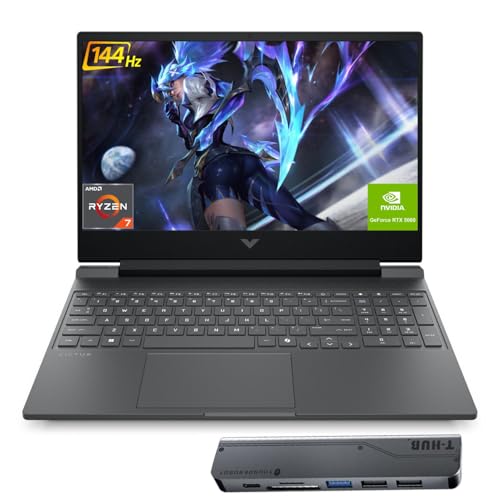
The Victus 15 is the strongest all-round pick here. Its Ryzen AI 7 350 and dedicated GeForce RTX 5060 sit far above the game’s recommended line on paper, so physics-heavy kitchen scenes have plenty of headroom even when the counter fills with pans and ingredients. The 32 GB of memory is double the recommended figure, leaving room for a browser, a chat app, and the game at once.
The 15.6-inch Full HD panel refreshes at 144 Hz, keeping quick turns between stove, board, and plating station fluid. A 1 TB SSD swallows the small install many times over, the backlit keyboard carries a numeric keypad, and the listing bundles a 7-in-1 USB-C hub.
Specs
- Processor: AMD Ryzen AI 7 350, up to 5.0 GHz as listed
- Graphics: NVIDIA GeForce RTX 5060, 8 GB GDDR7, dedicated
- Memory: 32 GB DDR5
- Storage: 1 TB SSD
- Display: 15.6-inch FHD, 144 Hz as listed
- Keyboard: RGB backlit, with numeric keypad
- Ports: RJ-45 Ethernet; bundled Thunderobot 7-in-1 USB-C hub as listed
- Operating system: Windows 11 Home
- Color and model: Black, TPN-Q279
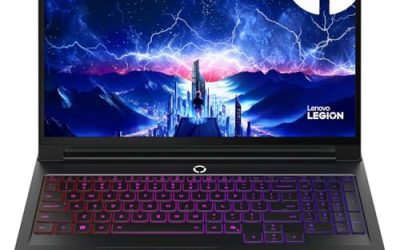
Lenovo Legion 5 Gen 10

The Legion 5 Gen 10 pairs the same class of graphics with the sharpest screen in this guide. Its Ryzen 7 260 and GeForce RTX 5060 Laptop GPU clear the recommended line with room to spare, and its 16 GB of DDR5-5600 memory matches the recommended figure exactly.
The 15.1-inch WQXGA OLED display runs at 2560×1600 with a 165 Hz refresh and 500 nits of brightness as listed, making small details — liquid levels, surface color, ticket text — easy to read at a glance. USB4, HDMI 2.1, Ethernet, and a 24-zone RGB backlit keyboard cover desk and evening use.
Specs
- Processor: AMD Ryzen 7 260, 3.8 GHz up to 5.1 GHz as listed
- Graphics: NVIDIA GeForce RTX 5060 Laptop GPU, 8 GB GDDR7
- Memory: 16 GB DDR5-5600
- Storage: 1 TB SSD, M.2 PCIe Gen4
- Display: 15.1-inch WQXGA OLED, 2560×1600, 500 nits, non-touch, 165 Hz as listed
- Ports: USB4, HDMI 2.1, Ethernet (RJ-45)
- Keyboard: 24-zone RGB backlit, as listed
- Operating system: Windows 11 Home
Acer Nitro V 15

The Nitro V 15 (ANV15-51-99XD) builds its case on a strong processor and a fast screen. The Intel Core i9-13900H sits well above the published processor lines, and the GeForce RTX 4060 Laptop GPU clears the recommended GTX 1060 line on paper, leaving ample headroom for crowded scenes.
Its 15.6-inch FHD IPS panel refreshes at 180 Hz as listed, the fastest figure in this guide. Memory is 16 GB of DDR5 across two slots (32 GB maximum as listed) and storage a 1 TB PCIe Gen 4 SSD with two M.2 slots as listed, so both can grow later. Thunderbolt 4 and Wi-Fi 6 suit players who like upgrade paths.
Specs
- Processor: Intel Core i9-13900H
- Graphics: NVIDIA GeForce RTX 4060 Laptop GPU
- Memory: 16 GB DDR5, two slots, 32 GB maximum as listed
- Storage: 1 TB PCIe Gen 4 SSD, two M.2 slots as listed
- Display: 15.6-inch FHD IPS, 180 Hz as listed
- Ports: Thunderbolt 4, HDMI 2.1, Ethernet (RJ-45)
- Wireless: Wi-Fi 6
- Keyboard: backlit
- Operating system: Windows 11 Home
MSI Katana 15

The Katana 15 (B13VEK-277US) is the straightforward mid-guide pick. Its Core i7-13620H is far newer than the published processor lines, and its GeForce RTX 4050 with 6 GB of GDDR6 clears the minimum graphics line comfortably and lands around the recommended line on paper.
The rest of the sheet is practical: 16 GB of DDR5-4800 memory matches the recommended figure, the 1 TB NVMe SSD leaves plenty of room beyond the 6 GB install, and the 15.6-inch Full HD IPS panel refreshes at 144 Hz. A USB Type-C port and Windows 11 Home complete a no-fuss package in black.
Specs
- Processor: Intel Core i7-13620H
- Graphics: NVIDIA GeForce RTX 4050, 6 GB GDDR6
- Memory: 16 GB DDR5-4800
- Storage: 1 TB NVMe SSD
- Display: 15.6-inch Full HD IPS, 144 Hz
- Ports: USB Type-C, as listed
- Operating system: Windows 11 Home
- Color and model: Black, B13VEK-277US
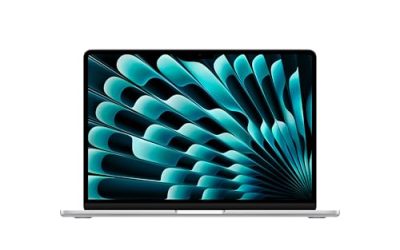
ASUS Zenbook 14 OLED

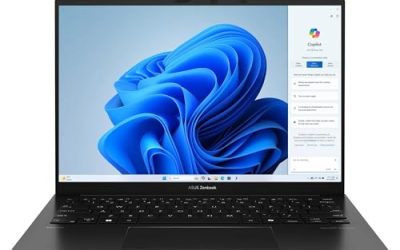
The Zenbook 14 OLED (UM3406HA-WS74T) is the slim travel option, with an honest caveat: its Radeon 780M graphics are integrated, so they sit below every dedicated card in this guide. On paper the 780M stands above the published GTX 660 Ti minimum line but below the GTX 1060 recommended line, so treat this as the pick for shorter sessions at modest settings, not a desk-bound main machine.
What it offers instead is portability and a lovely screen. The 14-inch WUXGA OLED touchscreen renders the kitchen with deep contrast, the Ryzen 7 8840HS handles the processor side with ease, and 16 GB of LPDDR5X memory matches the recommended figure. A 512 GB SSD and a 75 Wh battery make it the easiest machine here to carry on trips.
Specs
- Processor: AMD Ryzen 7 8840HS, up to 5.1 GHz as listed
- Graphics: AMD Radeon 780M, integrated
- Memory: 16 GB LPDDR5X
- Storage: 512 GB M.2 NVMe PCIe 4.0 SSD
- Display: 14-inch WUXGA OLED touchscreen, 1920×1200
- Wireless: Wi-Fi 6E
- Battery: 75 Wh
- Operating system: Windows 11 Home
- Color and model: Jade Black, UM3406HA-WS74T
Comparison Table
| Product | Best for | Key spec |
|---|---|---|
| HP Victus 15 | All-round headroom | RTX 5060 with 32 GB DDR5 |
| Lenovo Legion 5 Gen 10 | Sharpest display | 15.1-inch WQXGA OLED, 165 Hz |
| Acer Nitro V 15 | Upgrade paths | 180 Hz panel, two M.2 slots |
| MSI Katana 15 | Straightforward balance | RTX 4050 with 1 TB SSD |
| ASUS Zenbook 14 OLED | Travel sessions | Radeon 780M in a slim 14-inch body |
FAQ
Does Cooking Simulator run on a Mac or Linux laptop?
No. The Steam store page publishes a single Windows requirements block, with no macOS block and no Linux block, so there is no native Mac or Linux edition. Every pick in this guide runs Windows 11 Home, and the Steam client itself has required Windows 10 or later since January 2024.
How much memory and storage does the game actually need?
The published minimum asks for 6 GB of memory and 6 GB of storage; the recommended line raises memory to 16 GB. Every laptop here carries at least 16 GB of memory and at least 512 GB of SSD storage, so each meets the recommended memory figure and holds the small install with room for other games and files.
Will a faster laptop improve my in-game results?
No. Hardware cannot change the game’s physics, its timing windows, or the points it awards for a finished dish; those come from your own practice with the controls. A stronger laptop only keeps the scene smooth and loading short. The cooking is a game mechanic for home entertainment, and this guide offers no guidance for real kitchen work.
Conclusion
Cooking Simulator asks little of modern hardware, so the real decision is about the screen, the memory, and portability. The Victus 15 brings the most headroom, the Legion 5 Gen 10 the finest display, the Nitro V 15 room to grow, the Katana 15 a simple balance, and the Zenbook 14 OLED a slim body in place of graphics muscle. Match the pick to how you play, and the kitchen will run smoothly.
More from Amazon
Programs that pair well with the guide above. Offers and eligibility are set by Amazon and may change.
A free business account with business pricing and bulk-buying tools for work, shop or home office.
Create a business accountFree shipping on eligible items, Prime Video and more. Eligible new members can start with a free trial.
Start a Prime free trialAudiobooks and podcasts to listen to on the go. Eligible new members can start with a free trial.
Try Audible freeAd-free music streaming. Eligible new subscribers can start with a free trial.
Try Music Unlimited freeAs an Amazon Associate we earn from qualifying purchases.
Write Your Review
No reviews yet. Be the first to share your experience!