
Valorant rewards clean aim and quick reactions, and your laptop plays a real part in how smooth each round feels. A fast screen helps you track movement during site takes, a strong processor keeps the game steady when utility fills the screen, and solid cooling keeps long ranked sessions smooth. Valorant runs well on a wide range of gaming hardware, so you have plenty of strong choices.
The five laptops below were picked for the details that matter in a tactical shooter: high refresh displays as listed by each maker, capable graphics and processors, and cooling systems built for hours of play. Every refresh figure here comes from the product listing, so check the exact configuration before you buy. As an Amazon Associate, we earn from qualifying purchases.
How to Choose a Laptop for Valorant
Start with the screen: in a game of quick peeks and fast flicks, the refresh figure on the listing matters more than raw resolution for most players. Panels listed at 144Hz or 165Hz redraw the image far more often than a 60Hz screen, which helps motion look clearer when you swing a corner. Where a maker lists a response time, a lower figure means pixels change shade faster, reducing ghosting behind moving targets. Treat these numbers as listing facts, not promises: a high refresh panel only shows what the hardware feeds it.
Next, look at the processor and graphics chip. Valorant leans heavily on the processor, so a modern multi-core chip from Intel or AMD is the heart of a good pick, backed by a dedicated graphics card with headroom to spare. Sixteen gigabytes of memory is a comfortable baseline for gaming alongside voice chat and a browser.
Cooling decides how the laptop feels in hour three of a session, and twin fans, extra intake vents, and heat pipe designs help hold steady performance. Finally, think about where you play: a lighter 15-inch machine with a wired Ethernet port travels well to a LAN event, while a bigger 16-inch model gives you a larger screen and stronger cooling at a desk.
ASUS ROG Strix G16 (G614JV-AS74)

The Strix G16 pairs an Intel Core i7-13650HX processor with an NVIDIA GeForce RTX 4060 laptop GPU running at 140W Max TGP as listed, a combination with plenty of headroom for a fast-paced shooter. Its 16-inch FHD panel is listed at 165Hz with full sRGB coverage, a big, quick view for holding angles.
Cooling is a strong point: ASUS lists ROG Intelligent Cooling with liquid metal on the processor and a third intake fan for sustained performance over long sessions. With 16GB of DDR5 memory, a 1TB PCIe Gen4 SSD, and Wi-Fi 6E, this is a desk-first machine that can still move rooms when needed.
Specs
- Processor: Intel Core i7-13650HX
- Graphics: NVIDIA GeForce RTX 4060 Laptop GPU, 140W Max TGP as listed
- Display: 16-inch FHD (1920 x 1200), 165Hz, 100% sRGB
- Memory: 16GB DDR5-4800
- Storage: 1TB PCIe Gen4 SSD
- Wireless: Wi-Fi 6E
- Operating system: Windows 11 Home
- ASIN: B0CRDCXRK2
Lenovo Legion 5 Gen 10

Lenovo’s Legion 5 Gen 10 is the travel-friendly pick here, with an AMD Ryzen 7 260 processor and NVIDIA GeForce RTX 5060 graphics with 8GB of GDDR7 memory. The 15.1-inch WQXGA OLED display is listed at 165Hz with 500 nits of brightness and full DCI-P3 coverage, so colors look rich while motion stays quick.
It is one of the lighter machines here, easy to carry to a LAN event or a friend’s desk, and it keeps a wired Ethernet connection for stable play away from home. A 5MP camera with an electronic shutter and an 80Wh battery round out the package.
Specs
- Processor: AMD Ryzen 7 260, up to 5.1GHz as listed
- Graphics: NVIDIA GeForce RTX 5060, 8GB GDDR7
- Display: 15.1-inch WQXGA (2560 x 1600) OLED, 165Hz, 500 nits
- Memory: 16GB DDR5-5600
- Storage: 1TB SSD
- Battery: 80Wh
- Camera: 5MP with electronic shutter
- ASIN: B0FXMY8FYW
Acer Nitro V 15 (ANV15-41-R5N6)

The Nitro V 15 is a straightforward, upgrade-friendly option. It runs an AMD Ryzen 5 7535HS processor with an NVIDIA GeForce RTX 4050 laptop GPU, and its 15.6-inch FHD IPS display is listed at 144Hz. That pairing suits Valorant’s modest demands well, and the panel speed makes fast peeks feel responsive.
Acer lists two memory slots supporting up to 32GB and two M.2 slots, so the 8GB of memory and 512GB SSD can grow with you. Dual fans handle cooling, and a wired Ethernet (RJ-45) port plus USB4 Type-C make plugging in at a desk or LAN table easy.
Specs
- Processor: AMD Ryzen 5 7535HS
- Graphics: NVIDIA GeForce RTX 4050 Laptop GPU
- Display: 15.6-inch FHD IPS, 144Hz
- Memory: 8GB DDR5, two slots supporting up to 32GB as listed
- Storage: 512GB PCIe Gen 4 SSD
- Ports: USB4 Type-C, HDMI 2.1, Ethernet (RJ-45)
- Wireless: Wi-Fi 6
- ASIN: B0CX2PS48B
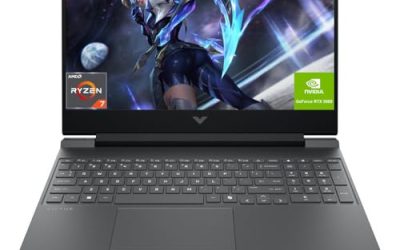
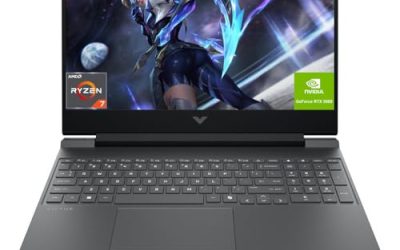
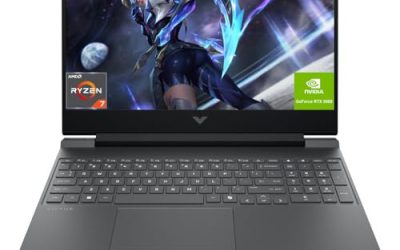
HP Victus 15

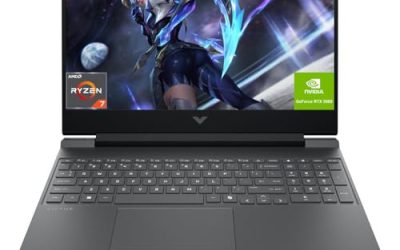
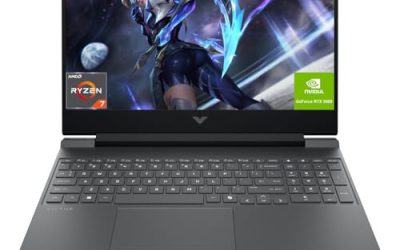
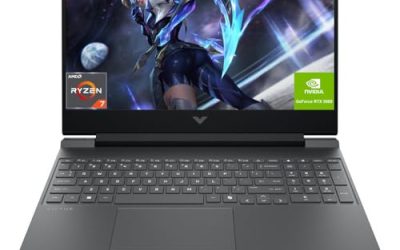
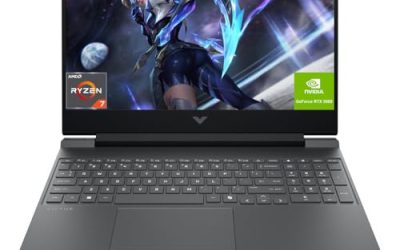
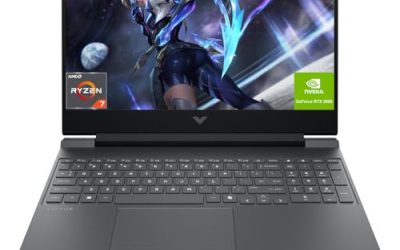
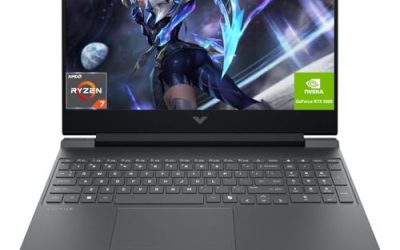
The HP Victus 15 takes a different route with an AMD Ryzen 5 7535HS processor and AMD Radeon RX 6550M graphics. Its 15.6-inch FHD anti-glare display is listed at 144Hz, a strong match for a shooter where spotting movement early matters, and the anti-glare finish helps in bright rooms.
This configuration comes with 16GB of DDR5 memory and a roomy 1TB SSD, so the game, your clips, and other titles fit without juggling space. A backlit keyboard with a numeric keypad, Wi-Fi 6, and an SD card reader make it a practical all-rounder for game nights and work days alike.
Specs
- Processor: AMD Ryzen 5 7535HS, up to 4.55GHz as listed
- Graphics: AMD Radeon RX 6550M
- Display: 15.6-inch FHD, 144Hz, anti-glare
- Memory: 16GB DDR5
- Storage: 1TB PCIe NVMe SSD
- Keyboard: Backlit with numeric keypad
- Wireless: Wi-Fi 6
- ASIN: B0DB96MQKR
ASUS TUF Gaming A15 (FA507NV-EH74)

The TUF Gaming A15 is built for players who want strong hardware in a tough shell. It combines an AMD Ryzen 7 7735HS processor with an NVIDIA GeForce RTX 4060 laptop GPU at 140W Max TGP as listed, and its 15.6-inch FHD display runs at 144Hz with full sRGB coverage and Adaptive Sync for smooth, tear-free motion.
A pair of 84-blade Arc Flow fans handles cooling, and a MUX Switch with Advanced Optimus routes frames directly from the graphics card to the display. With 16GB of DDR5 memory, a 1TB PCIe SSD, Wi-Fi 6, and a wired Ethernet port, it suits a desk setup or a weekend at a friend’s place.
Specs
- Processor: AMD Ryzen 7 7735HS, up to 4.7GHz as listed
- Graphics: NVIDIA GeForce RTX 4060 Laptop GPU, 140W Max TGP as listed
- Display: 15.6-inch FHD, 144Hz, 100% sRGB, Adaptive Sync
- Memory: 16GB DDR5-4800
- Storage: 1TB PCIe SSD
- Cooling: Dual 84-blade Arc Flow fans
- Wireless: Wi-Fi 6
- ASIN: B0CJSY4PLN
Comparison Table
| Product | Best for | Key spec |
|---|---|---|
| ASUS ROG Strix G16 | Desk play with a big, fast screen | 16-inch 165Hz panel, RTX 4060 at 140W |
| Lenovo Legion 5 Gen 10 | Travel and LAN trips | 15.1-inch OLED at 165Hz, RTX 5060 |
| Acer Nitro V 15 | Upgrading over time | 144Hz panel, two memory slots and two M.2 slots |
| HP Victus 15 | Everyday all-round use | 144Hz anti-glare panel, 1TB SSD |
| ASUS TUF Gaming A15 | Strong graphics in a tough build | RTX 4060 at 140W, MUX Switch |
FAQ
Do I need a dedicated graphics card for Valorant?
Valorant is a light game by modern standards, and many players run it on modest hardware. A dedicated card like the ones here gives headroom for higher settings while voice chat and other apps run in the background, and pairs well with a high refresh screen.
Is 144Hz enough, or should I look for 165Hz?
Both are a big step up from 60Hz. A 144Hz panel already makes motion much clearer, and 165Hz adds a small extra margin. Pick based on the whole package — processor, cooling, size, and ports — rather than chasing the refresh figure alone.
Should I use Wi-Fi or Ethernet for ranked matches?
A wired Ethernet connection is the steadier choice whenever one is available, since it avoids the interference that can affect wireless play. Several laptops here include an RJ-45 port for that reason, and a USB Ethernet adapter works well on models without one.
Conclusion
Every laptop here pairs a high refresh screen with hardware that suits Valorant’s style of play. Pick the Strix G16 for a big desk screen, the Legion 5 Gen 10 for travel, the Nitro V 15 for upgrade room, the Victus 15 as a roomy all-rounder, or the TUF Gaming A15 for strong graphics in a rugged frame. Check the exact configuration on the listing, plug in with Ethernet when you can, and queue up.
More from Amazon
Programs that pair well with the guide above. Offers and eligibility are set by Amazon and may change.
A free business account with business pricing and bulk-buying tools for work, shop or home office.
Create a business accountFree shipping on eligible items, Prime Video and more. Eligible new members can start with a free trial.
Start a Prime free trialAudiobooks and podcasts to listen to on the go. Eligible new members can start with a free trial.
Try Audible freeAd-free music streaming. Eligible new subscribers can start with a free trial.
Try Music Unlimited freeAs an Amazon Associate we earn from qualifying purchases.
Write Your Review
No reviews yet. Be the first to share your experience!