
Python shows up in almost every corner of computing work. One morning it is a short script that renames a folder of files; by the afternoon it is a notebook full of charts, a small web app on a local server, or a data project with thousands of rows to clean. A good Python laptop moves between all of those jobs without slowing you down.
The five laptops below were chosen for what you feel every day: processors that chew through scripts and test runs, memory for notebooks, browsers, and editors open side by side, sharp screens for reading code, and fast storage for projects and virtual environments. Each pick takes a different route, from a light travel machine to a heavy lifter.
As an Amazon Associate, we earn from qualifying purchases.
How to Choose a Laptop for Python Programming
Start with the processor. Python leans on a single core, so strong per-core speed keeps scripts, imports, and test runs feeling snappy. Extra cores earn their place when you run a local server or spin up containers.
Memory is the next decision. Sixteen gigabytes is a workable floor for scripts, notebooks, and web development. If your data projects load large tables or you keep many containers open, step up to 32GB; the 48GB MacBook Pro goes further still. Storage matters too: environments and data files add up quickly, so the 1TB drives on most picks give room to grow.
For the screen and keyboard, go by what each listing states: panels here range from a 14-inch WUXGA IPS screen to a 3K OLED, and the keyboards are the backlit designs their listings describe. Battery figures are quoted only as the makers state them, so treat them as a guide rather than a promise. Finally, count the ports: two Thunderbolt ports are enough with a dock, while the T14 Gen 5 adds HDMI and a wired network jack.
Apple MacBook Air 13 (M4)

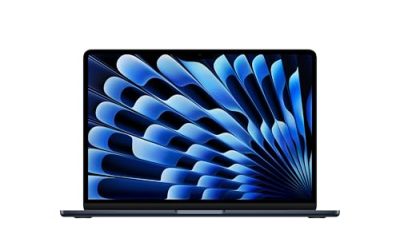
The MacBook Air 13 is the pick for Python work that travels. At 2.73 lb as listed, it nearly disappears in a bag, yet the M4 chip handles scripts, notebooks, and a local server without fuss. The fanless design keeps it silent in meetings, and the 13.6-inch Liquid Retina display keeps code crisp hour after hour.
The trade-offs are memory and storage: the listed configuration carries 16GB of unified memory and a 256GB SSD, fine for scripts, notebooks, and web projects, but heavy data work will fill both quickly. You also get two Thunderbolt ports, Touch ID for quick sign-in, and a 12MP Center Stage camera for calls. Apple states battery life of up to 18 hours.
Specs
- Processor: Apple M4 chip
- Memory: 16GB unified memory
- Storage: 256GB SSD
- Display: 13.6-inch Liquid Retina display
- Camera: 12MP Center Stage camera
- Security: Touch ID fingerprint sensor
- Weight: 2.73 lb as listed
- Battery: Up to 18 hours as Apple states
- ASIN: B0DZD9S5GC
Lenovo ThinkPad T14 Gen 5

The ThinkPad T14 Gen 5 is the office-ready all-rounder of this group. Its AMD Ryzen 7 PRO 8840U brings eight cores to builds, test runs, and background services, and the listed configuration pairs it with 32GB of DDR5 memory and a 1TB SSD. That mix leaves real headroom for notebooks, containers, and an editor full of open files.
Connectivity is the T14’s strong suit: the listing names two Thunderbolt 4 ports, HDMI, and an RJ-45 Ethernet jack, so it docks neatly at a desk. The 14-inch WUXGA IPS touchscreen gives code extra vertical room, the fingerprint reader speeds up sign-ins, and the 52.5Wh battery is sized for a working day. Its AMD Radeon 780M integrated graphics handle display work, which is all plain Python asks of a graphics chip.
Specs
- Processor: AMD Ryzen 7 PRO 8840U, 8 cores, up to 5.1 GHz as listed
- Memory: 32GB DDR5
- Storage: 1TB PCIe NVMe SSD
- Display: 14-inch WUXGA (1920 x 1200) IPS touchscreen
- Graphics: AMD Radeon 780M integrated graphics
- Ports: 2 x Thunderbolt 4, HDMI, RJ-45 Ethernet as listed
- Battery: 52.5Wh as listed
- ASIN: B0DGKBYSL2
Dell XPS 13 9350

The XPS 13 9350 is the Windows ultraportable of the group, built around Intel’s Core Ultra 7 258V with 32GB of LPDDR5X memory and a 1TB SSD. Notebooks, virtual environments, and a browser full of documentation sit comfortably side by side, and fast storage keeps project loads and package installs moving.
Its 13.4-inch 3K OLED touchscreen is the sharpest screen here, a real help during long editing sessions, and at 2.7 lb as listed it travels easily between home and office. Two Thunderbolt 4 ports are the whole port selection, so plan on a dock at a fixed desk. The memory is soldered, which makes 32GB the one to choose from day one; the listing also names Wi-Fi 7 and a fingerprint reader.
Specs
- Processor: Intel Core Ultra 7 258V
- Memory: 32GB LPDDR5X
- Storage: 1TB SSD
- Display: 13.4-inch 3K OLED touchscreen
- Wireless: Wi-Fi 7 as listed
- Ports: 2 x Thunderbolt 4
- Security: Fingerprint reader as listed
- Weight: 2.7 lb as listed
- ASIN: B0F1FDRLZ1
Apple MacBook Pro 14 (M4 Pro)

The MacBook Pro 14 is the heavy lifter for Python work that pushes a laptop hard. The listed configuration pairs the M4 Pro chip, with its 14-core CPU and 20-core GPU, with 48GB of unified memory and a 1TB SSD. Large data tables, long-running notebooks, and a wall of containers all get room to breathe under sustained loads.
The 14.2-inch Liquid Retina XDR display is bright and sharp for all-day code reading, and the Pro adds ports the Air leaves out, including HDMI and an SDXC card slot. It is the easiest pick here to settle at a desk with an external monitor. Choose it when your projects have outgrown lighter machines.
Specs
- Processor: Apple M4 Pro chip, 14-core CPU, 20-core GPU
- Memory: 48GB unified memory
- Storage: 1TB SSD
- Display: 14.2-inch Liquid Retina XDR display
- Ports: 3 x Thunderbolt 4, HDMI, SDXC card slot
- Color: Space Black
- Operating system: macOS
- ASIN: B0DTMBKJ3N
Lenovo ThinkPad X1 Carbon Gen 13

The X1 Carbon Gen 13 is the Windows travel pick: a slim 14-inch business laptop built for people who code on the move. It runs an Intel Core Ultra 7 265U with 32GB of memory and a 1TB Gen4 NVMe SSD, plenty for notebooks, web projects, and open tools.
The 14-inch WUXGA touchscreen is listed at 100% sRGB, comfortable for long editing days, and the FHD+ IR camera handles sign-ins and calls. Windows 11 Pro is on board for office networks. Choose it for ThinkPad manners, a touchscreen, and 32GB of memory in a package made for travel.
Specs
- Processor: Intel Core Ultra 7 265U
- Memory: 32GB LPDDR5X
- Storage: 1TB PCIe Gen4 NVMe SSD
- Display: 14-inch WUXGA (1920 x 1200) touchscreen, 100% sRGB as listed
- Camera: FHD+ IR camera as listed
- Operating system: Windows 11 Pro
- ASIN: B0FS9WHNQJ
Comparison Table
| Product | Best for | Key spec |
|---|---|---|
| Apple MacBook Air 13 (M4) | Light travel coding | M4 chip, 2.73 lb as listed |
| Lenovo ThinkPad T14 Gen 5 | Office all-rounder | Ryzen 7 PRO 8840U, 32GB memory |
| Dell XPS 13 9350 | Sharpest small screen | 13.4-inch 3K OLED, 32GB memory |
| Apple MacBook Pro 14 (M4 Pro) | Heaviest local workloads | M4 Pro, 48GB unified memory |
| Lenovo ThinkPad X1 Carbon Gen 13 | Windows travel pick | Core Ultra 7 265U, 32GB memory |
FAQ
How much memory do I need for Python?
Sixteen gigabytes covers scripts, notebooks, and web development comfortably. Step up to 32GB if you load large data tables or keep many tools and containers open at once. The 48GB MacBook Pro configuration suits the heaviest local workloads.
Is macOS or Windows better for Python?
Python runs well on both, with the same editors, notebooks, and package tools on each side. Choose by the rest of your work: macOS gives you a Unix-style terminal out of the box, while Windows machines like the ThinkPads add ports such as Ethernet and HDMI.
Do I need a dedicated graphics card for Python?
For scripts, notebooks, and web apps, no: integrated graphics drive the displays and leave the processor free for your code. A dedicated card only enters the picture for GPU-accelerated data libraries, and none of these five picks is built around one.
Conclusion
Match the laptop to the heaviest Python work you do. The MacBook Air 13 and X1 Carbon Gen 13 suit code that travels, the ThinkPad T14 Gen 5 and XPS 13 9350 anchor a desk with memory to spare, and the MacBook Pro 14 stands ready when data projects grow large.
More from Amazon
Programs that pair well with the guide above. Offers and eligibility are set by Amazon and may change.
A free business account with business pricing and bulk-buying tools for work, shop or home office.
Create a business accountFree shipping on eligible items, Prime Video and more. Eligible new members can start with a free trial.
Start a Prime free trialAudiobooks and podcasts to listen to on the go. Eligible new members can start with a free trial.
Try Audible freeAd-free music streaming. Eligible new subscribers can start with a free trial.
Try Music Unlimited freeAs an Amazon Associate we earn from qualifying purchases.
Write Your Review
No reviews yet. Be the first to share your experience!