
Path of Achra asks almost nothing of a laptop on paper, and that is exactly what makes choosing one tricky. Steam lists the game for Windows only, with a minimum of 512 MB RAM and a recommended tier of just 1 GB RAM, 512 MB of storage and Open GL 3.3+ graphics. No processor is named on either tier. The real decision is therefore not whether a laptop clears the published block, since every pick here clears it many times over, but which machine suits the rest of your library and your desk.
This guide is for roguelike players who want a dependable Windows laptop for long Path of Achra sessions plus room for heavier games later. The five picks run from the HP Victus 15 with its Ryzen AI 7 350 and 32 GB of memory to the ASUS Zenbook 14 OLED, a light 14-inch machine built around integrated Radeon 780M graphics.
Quick Picks
As an Amazon Associate we earn from qualifying purchases
| Product | Best for | Key spec from title |
|---|---|---|
| HP Victus 15 | Long sessions with a big game library alongside | Ryzen AI 7 350, 32 GB DDR5 |
| Lenovo Legion 5 Gen 10 | A sharper screen for text-heavy play | 15.1-inch WQXGA OLED, RTX 5060 |
| Acer Nitro V 15 | An Intel build with wired networking built in | Core i9-13900H, RTX 4060 |
| MSI Katana 15 | A straightforward dedicated-graphics setup | Core i7-13620H, RTX 4050 |
| ASUS Zenbook 14 OLED | Carrying the game between rooms and trips | Ryzen 7 8840HS, Radeon 780M |
How to Choose
Read the published block as written
Steam publishes a short block for this game, and it pays to read it literally. The minimum asks for Windows Vista, 512 MB RAM, Open GL 3.3+ graphics and 512 MB of storage, while the recommended tier changes only the memory line, to 1 GB RAM. Neither tier names a processor, and no Mac or Linux block exists. Treat that sparse shape as the whole requirement: do not borrow figures from other games or fan pages. One modern wrinkle matters, though. Since January 1st, 2024, the Steam Client itself supports only Windows 10 and later, so every pick here runs Windows 11.
Memory and storage headroom
The published memory figures belong to another era. Against a 1 GB recommended line, the smallest memory configuration in this roundup carries 16 GB, and the Victus carries 32 GB, so memory is a solved question for this title. What the extra capacity actually buys is everything around the game: a browser full of wiki pages, a chat client and a second game waiting in the library. Storage tells the same story. The game needs 512 MB, while these laptops ship with 512 GB or 1 TB solid-state drives, leaving room for a whole shelf of roguelikes.
Dedicated or integrated graphics
Graphics is where the five picks split into two camps. The published line asks only for Open GL 3.3+ support, a baseline that integrated graphics passed long ago, so the Zenbook 14 OLED and its Radeon 780M answer the requirement as written while keeping the machine light. The other four carry dedicated NVIDIA cards, from the Katana’s RTX 4050 to the RTX 5060 pair in the Victus and Legion. Those cards are not there for this game alone; they decide how much of your wider library, from newer roguelikes to demanding releases, the same laptop can handle.
Screen and keyboard for long runs
A run in this game is a long stretch of reading: dense ability text, elemental power descriptions and grid positions all reward a clear screen. The Legion’s 15.1-inch WQXGA OLED panel gives the sharpest text of the five, while the 144Hz and 180Hz IPS panels on the Victus, Katana and Nitro trade some sharpness for size and smoothness in other games. The Zenbook’s 14-inch OLED sits between those poles and suits smaller desks. Keyboard layout matters too, since movement and abilities sit on the keys for hours; the four 15-inch models add numeric keypads the Zenbook leaves out.
The 5 Best Options
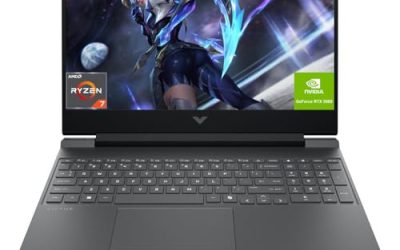
HP Victus 15
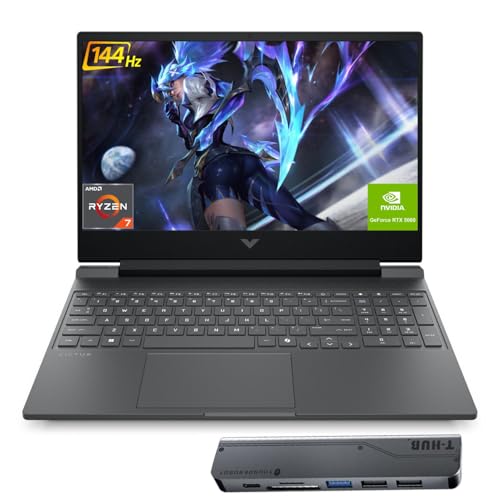
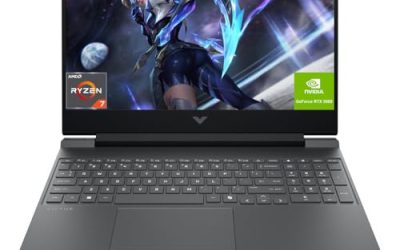
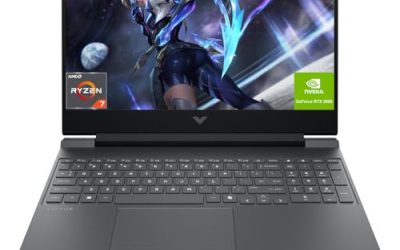
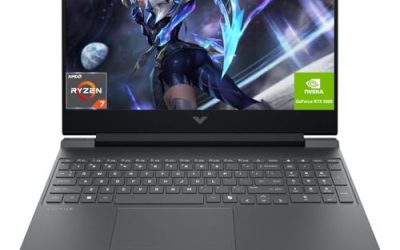
The Victus is the headroom pick. Its listing pairs a Ryzen AI 7 350, running up to 5.0 GHz as listed, with 32 GB of DDR5 memory and a 1 TB solid-state drive, several dozen times the game’s published 1 GB recommended memory line. The 15.6-inch FHD 144Hz panel and the bundled Thunderobot 7-in-1 USB-C hub suit a fixed desk where the laptop stays plugged in, while the RTX 5060 keeps the rest of a growing roguelike library in reach on the same machine.
Specs
- Processor: AMD Ryzen AI 7 350, up to 5.0 GHz as listed
- Graphics: NVIDIA GeForce RTX 5060 (the listing’s technical table names the GPU without a graphics-memory figure)
- Memory: 32 GB DDR5
- Storage: 1 TB SSD
- Display: 15.6-inch FHD 1920×1080, 144Hz
- Keyboard: RGB backlit, with RJ-45 Ethernet port
- Operating system: Windows 11 Home
- Model: TPN-Q279, Black
- Bundle: Thunderobot 7-in-1 USB-C hub included as listed
Best for: A desk-bound player who wants one laptop for this game and a large library besides.
Watch out for: The listing’s technical table names the RTX 5060 without printing a graphics-memory figure, so confirm the full configuration on the page before ordering; the hub bundle also varies by seller.
ASIN: B0G1N8R9Z4
Lenovo Legion 5 Gen 10

The Legion is the screen pick. Its 15.1-inch WQXGA OLED panel, listed at 2560×1600 and 500 nits, renders the game’s dense text and grids with the crispest edges of the five, which matters over long sessions. Underneath sit a Ryzen 7 260, an RTX 5060 Laptop GPU with 8 GB of GDDR7 memory as listed, 16 GB of DDR5-5600 memory and a 1 TB SSD. USB4 and HDMI 2.1 ports, listed on the page, make it the easiest pick to dock at a desk with an external monitor.
Specs
- Processor: AMD Ryzen 7 260, 3.80 GHz up to 5.10 GHz as listed
- Graphics: NVIDIA GeForce RTX 5060 Laptop GPU, 8 GB GDDR7
- Memory: 16 GB DDR5-5600 SODIMM
- Storage: 1 TB SSD M.2 2242 PCIe Gen4 TLC
- Display: 15.1-inch WQXGA OLED 2560×1600, 500 nits, non-touch as listed
- Ports: USB4, HDMI 2.1, Ethernet (RJ-45) as listed
- Keyboard: 24-zone RGB backlit
- Operating system: Windows 11 Home
Best for: Players who read a lot of ability text and want the sharpest panel of the five.
Watch out for: The listing’s item weight of 7.09 pounds reads as a packaged figure rather than the machine alone, and this model name is sold in other memory configurations, so check the configuration summary before ordering.
ASIN: B0FXMY8FYW
Acer Nitro V 15

The Nitro is the Intel pick. Its listing leads with a Core i9-13900H and an RTX 4060 Laptop GPU, a pairing far beyond anything the published block describes, and adds a 15.6-inch FHD IPS panel listed at 180Hz. Memory is 16 GB of DDR5 across two slots, with the listing stating a 32 GB maximum, and storage is a 1 TB PCIe Gen 4 SSD with two M.2 slots. Thunderbolt 4 and a wired Ethernet port round out a machine aimed at a permanent desk setup.
Specs
- Processor: Intel Core i9-13900H
- Graphics: NVIDIA GeForce RTX 4060 Laptop GPU (the headline text names the GPU without a graphics-memory figure)
- Memory: 16 GB DDR5, two slots, 32 GB maximum as listed
- Storage: 1 TB PCIe Gen 4 SSD, two M.2 slots as listed
- Display: 15.6-inch FHD IPS, 180Hz as listed
- Ports: Thunderbolt 4, HDMI 2.1, Ethernet (RJ-45) as listed
- Connectivity: Wi-Fi 6 as listed
- Operating system: Windows 11 Home
- Model: ANV15-51-99XD, Black
Best for: An Intel-first buyer setting up a wired desk station.
Watch out for: The headline listing text names the RTX 4060 without printing a graphics-memory figure, so confirm the graphics specification on the page before ordering.
ASIN: B0D8JTYXQM
MSI Katana 15

The Katana is the straightforward dedicated-graphics pick. The listing pairs a Core i7-13620H with an RTX 4050 carrying 6 GB of GDDR6 memory per its bullet text, 16 GB of DDR5-4800 memory and a 1 TB NVMe SSD behind a 15.6-inch Full HD IPS 144Hz display. Nothing in that list is trimmed for portability: at 4.96 pounds as listed, it is a desk machine first. For a game whose recommended tier stops at 1 GB of memory, it leaves generous room for everything else installed beside it.
Specs
- Processor: Intel Core i7-13620H
- Graphics: NVIDIA GeForce RTX 4050, 6 GB GDDR6 per the listing bullet text
- Memory: 16 GB DDR5-4800
- Storage: 1 TB NVMe SSD
- Display: 15.6-inch Full HD IPS 1920×1080, 144Hz
- Weight: 4.96 lbs as listed
- Operating system: Windows 11 Home
- Model: B13VEK-277US, Black
Best for: A player who wants a conventional 15.6-inch gaming laptop with dedicated graphics and room to spare.
Watch out for: The listing’s technical table prints a 16 GB graphics card ram size while its own bullet text states 6 GB GDDR6; go by the bullet figure and confirm on the page before ordering.
ASIN: B0BZBN3857
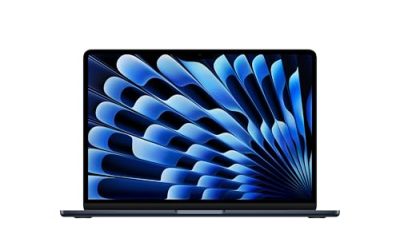
ASUS Zenbook 14 OLED

The Zenbook is the portability pick, and it needs an honest frame. Its Radeon 780M graphics are integrated, sharing the machine’s 16 GB of LPDDR5X memory rather than holding a separate pool, yet the game’s published line asks only for Open GL 3.3+ support, which this hardware answers as written. What you give up in dedicated graphics you gain in carry weight: a 14-inch WUXGA OLED touchscreen in Jade Black, a Ryzen 7 8840HS up to 5.1 GHz as listed, and a 512 GB SSD in the lightest body here.
Specs
- Processor: AMD Ryzen 7 8840HS, up to 5.1 GHz as listed
- Graphics: Integrated AMD Radeon 780M
- Memory: 16 GB LPDDR5X
- Storage: 512 GB M.2 NVMe PCIe 4.0 SSD
- Display: 14-inch WUXGA OLED touchscreen, 1920×1200 as listed
- Connectivity: Wi-Fi 6E as listed
- Model: UM3406HA-WS74T, Jade Black
Best for: A player who carries the laptop daily and plays in short sessions away from a desk.
Watch out for: The listing describes a touchscreen, while the maker’s spec sheet for the UM3406HA model line also lists a non-touch panel variant, so confirm the panel on the page before ordering; the memory is soldered, so the 16 GB configuration is fixed at purchase.
ASIN: B0DFWZ77LB
Which One Fits Your Situation
You play at one fixed desk
Choose between the Victus and the Nitro. Both stay plugged in happily, both carry 1 TB of storage for a wide library, and both add wired Ethernet for the rest of your downloads. The Victus brings more memory, 32 GB against 16 GB, plus a bundled USB-C hub; the Nitro answers with an Intel processor, a 180Hz panel and a second M.2 slot for later storage. Either covers the game’s published block many times over.
You read every ability line closely
Take the Legion 5 Gen 10. Path of Achra fills the screen with power descriptions, prayer text and grid information, and the Legion’s 2560×1600 OLED panel keeps that text crisp at small sizes. Its 16 GB of memory and 1 TB SSD match the desk picks, and the RTX 5060 with 8 GB of GDDR7 as listed leaves the same headroom for newer games when a run ends.
You split time between home and travel
Take the Zenbook 14 OLED. It is the only pick built around integrated graphics, and that is fine here because the published requirement stops at Open GL 3.3+ support. In return you get a 14-inch OLED touchscreen, a 512 GB SSD and the lightest body of the five, so the same machine handles notes, browsing and short runs on the move without a separate travel laptop.
You want one machine for a growing library
Take the Katana 15 or the Victus 15. This game’s requirements are tiny, so the honest question is what else you will install this year. Both pair dedicated NVIDIA graphics with 16 GB or more of memory and a 1 TB SSD, which covers current roguelikes and leaves space for larger releases. Check the Katana’s graphics figure conflict before ordering, since its listing prints two different numbers.
Common Mistakes
- Reading a processor into the block: Steam names no processor on either tier for this game, so any page that quotes one is filling the gap itself; judge the picks on their listed hardware instead.
- Assuming a Mac or Linux version exists: the published block is Windows-only, so a laptop for this game means a Windows laptop, whatever else the machine can run.
- Treating the Vista line as a modern requirement: the OS line is a legacy floor, and the Steam Client itself has needed Windows 10 or later since January 1st, 2024.
- Skipping the configuration check on shared model names: the Legion and Katana names cover several memory and graphics configurations, and the Katana listing even prints two graphics-memory figures; confirm the exact configuration on the page.
- Buying dedicated graphics for this game alone: the published graphics line stops at Open GL 3.3+, so a dedicated card is a choice about the rest of your library, not about this title.
Frequently Asked Questions
Does Path of Achra run on Mac or Linux laptops?
No. Steam publishes a Windows-only block for this game, with no Mac or Linux requirements listed at all. The minimum tier asks for Windows Vista, 512 MB RAM, Open GL 3.3+ graphics and 512 MB of storage, so the practical answer is a Windows laptop, and every pick in this guide runs Windows 11.
Why does the requirements block name no processor?
Because the publisher never printed one. Both tiers list only an OS line, a memory line, a graphics line and a storage line, and the recommended tier changes nothing except memory, from 512 MB to 1 GB. Nothing has been left out of this guide; the block really is that sparse, so processor choice comes down to the rest of your library.
Is the game still in Early Access?
No. The game launched into Early Access in 2023 and reached its full release in May 2024, which is the state the store page presents today. The published requirements did not grow with the release; the same short block, with its 512 MB minimum memory line and 1 GB recommended line, is the one quoted throughout this guide.
Can integrated graphics handle this game?
Against the published block, yes. The graphics line asks for Open GL 3.3+ support and nothing more, with no dedicated card named on either tier. The Zenbook’s integrated Radeon 780M answers that line as written, which is why it appears here; the dedicated cards in the other four picks are headroom for other games, not a requirement of this one.
More from Amazon
Programs that pair well with the guide above. Offers and eligibility are set by Amazon and may change.
A free business account with business pricing and bulk-buying tools for work, shop or home office.
Create a business accountFree shipping on eligible items, Prime Video and more. Eligible new members can start with a free trial.
Start a Prime free trialAudiobooks and podcasts to listen to on the go. Eligible new members can start with a free trial.
Try Audible freeAd-free music streaming. Eligible new subscribers can start with a free trial.
Try Music Unlimited freeAs an Amazon Associate we earn from qualifying purchases.
Write Your Review
No reviews yet. Be the first to share your experience!