

Key takeaways
- Keeping a record of blood pressure readings between appointments is a routine many households adopt.
Keeping a record of blood pressure readings between appointments is a routine many households adopt, and the right monitor makes that routine easier to stick with. The deciding factors are surprisingly practical: the cuff must fit the arm or wrist it will wrap around, the screen must be readable at a glance, and the memory must keep readings for each person using the device. A monitor that is awkward to use tends to end up in a drawer, which defeats the purpose of owning one.
This guide is for adults shopping for a home monitor, whether for themselves or a family member, who want to compare upper arm and wrist styles, app-connected units, and talking models. The 2026 shortlist below relies only on facts in the product titles, such as cuff range, memory, and display type. Readings from a home monitor are informational, and a doctor should interpret them and advise on any medical decision. Nothing here is medical advice, and anyone with a health concern should speak with a healthcare professional.
Quick Picks
Our top picks


As an Amazon Associate we earn from qualifying purchases at no extra cost to you.
| Product | Best for | Key spec from the title |
|---|---|---|
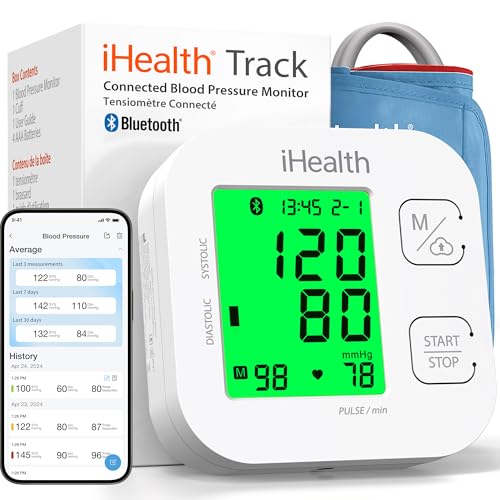
| iHealth Track Smart | App-connected tracking | Bluetooth, wide-range cuff, standard to large adult arms |
| iHealth Track Pro | Larger arms with app sync | App sync, full-view LED screen, 8.7-16.5 in cuff |
| Oklar Upper Arm Monitor | Two users, large display | 2×120 memory, large LED display, 8.7″-15.7″ cuff |
| Oklar Wrist Monitor | Portable, compact use | Rechargeable, 4.92-8.46″ cuff, 240 memory for 2 users |
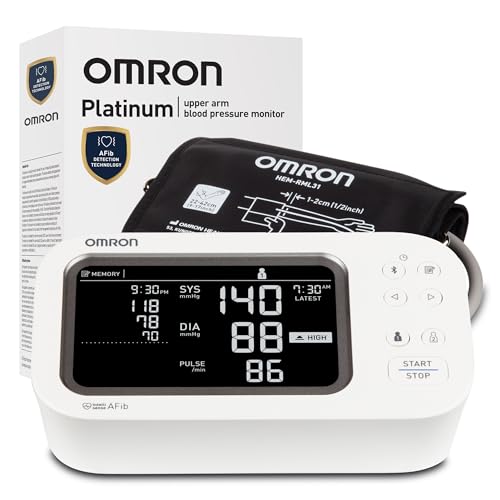
| OMRON Bronze Upper Arm | Familiar brand, simple use | Upper arm cuff, listed as clinically validated |
| Alcedo Talking Monitor | Voice readout | Talking function, large LCD, 8.7-16.5″ cuff |
How to Choose
Upper arm or wrist
Upper arm monitors are the common choice for home tracking, and they are often preferred because cuff placement is easier to get right. Wrist models are smaller and easier to carry or store, but they are more sensitive to arm and wrist position during a reading. Read the instructions for either style, because posture, cuff height, and resting beforehand all affect how consistent readings look.
Measure the arm before choosing a cuff
Cuff range is the most important fit detail. Titles list ranges such as 8.7 to 15.7 inches, 8.7 to 16.5 inches, or a wide-range cuff for standard to large adult arms. Wrap a soft tape around the middle of the upper arm and compare it to the range. A cuff that is too small or too large can distort the reading, and a wrist model has its own range, such as 4.92 to 8.46 inches.
Look at memory, users, and display
Memory listed as 2×120 means two users can each store 120 readings, while 240 for two users points to a shared pool. A large LED or LCD screen helps people with tired eyes, and a talking function reads results aloud for those with low vision. App-connected models sync readings to a phone, which makes sharing a log with a doctor easier. Check that the app supports the phone’s operating system.
What to ignore and where budget models cut corners
Marketing phrases such as clinical accuracy or doctor favorite are not substitutes for the validation information on the listing. Titles that mention FDA clearance or clinical validation are worth reading about in the product details. Budget monitors often cut corners on cuff quality, display contrast, and manual clarity. Compare the monitor against a reading taken at a clinic if the doctor suggests it, and replace the cuff if it shows wear.
The 6 Best Options
iHealth Track Smart Upper Arm Monitor
This Bluetooth upper arm monitor has a wide-range cuff designed for standard to large adult arms and is described as compatible with phones. It suits people who want readings logged automatically in an app rather than on paper. A digital log can be handy when a doctor asks for a record of recent readings, since the numbers and dates are already collected in one place. The trade-off is that older relatives may find an app harder to manage, so a family helper may need to handle the initial setup.
- Strength: Bluetooth and app logging reduce manual note-taking
- Strength: wide-range cuff covers a spread of adult arm sizes
- Trade-off: it depends on a phone and app, so the setup takes more steps
Skip it if a simple standalone unit without an app is preferred. Check the listing for supported phone systems and the exact cuff range before buying.
iHealth Track Pro Upper Arm Monitor
This model is listed with app sync, a full-view LED screen, and an 8.7 to 16.5 inch adjustable cuff for larger adult arms. It suits households that want a bigger display plus app logging. A full-view screen is a practical detail for anyone reading results from a short distance without glasses, and the wide cuff range is a reason to measure the arm before buying instead of guessing. As with every home monitor here, readings are informational and a doctor should interpret them.
- Strength: full-view LED screen makes numbers easy to read
- Strength: 8.7-16.5 inch cuff range covers larger arms
- Trade-off: the visible title does not state the memory size, so the listing needs a closer look
Skip it if an app is not wanted or if the arm falls outside the cuff range.
Oklar Upper Arm Blood Pressure Monitor
The title cites FDA clearance, a 2×120 memory, a large LED display, and an adjustable 8.7 to 15.7 inch cuff. It is built for two users who each want their own record of readings. Separate memory banks matter in a household where partners or parents share a device, because mixed-up readings are of little use when a doctor reviews the numbers. Buyers can read the product description for what the clearance wording refers to and how the user buttons switch between profiles.
- Strength: 2×120 memory suits two household members
- Strength: large LED display is easier to read
- Trade-off: the cuff tops out at 15.7 inches, so very large arms may not fit
Skip it if the arm measures larger than the listed range. Buyers can confirm the clearance details in the product description.
Oklar Wrist Blood Pressure Monitor
This rechargeable wrist monitor lists an adjustable 4.92 to 8.46 inch cuff and a 240-reading memory shared by 2 users, with FDA clearance cited in the title. It suits people who want a compact device for travel or a nightstand drawer. People who prefer not to roll up a sleeve above the elbow sometimes lean toward wrist styles, but the instructions for holding the wrist at heart level should be followed closely. A rechargeable battery also means the device should be topped up before a trip, rather than found empty when needed.
- Strength: rechargeable design avoids replacing batteries
- Strength: compact wrist cuff is easy to store and carry
- Trade-off: wrist readings are more sensitive to body position
Skip it if an upper arm cuff is preferred or if wrist size falls outside the listed range.
OMRON Bronze Upper Arm Monitor
The title describes this OMRON unit as an upper arm blood pressure monitor with a cuff for home use and calls it clinically validated. It suits buyers who prefer a long-established brand and a straightforward interface. Simple controls are a plus for people who just want to wrap the cuff, press a button, and write down the numbers, and a recognized name can make it easier to find replacement cuffs and manuals later. A doctor or pharmacist can answer questions about how to use the readings.
- Strength: familiar brand with an upper arm cuff design
- Strength: validation wording in the title points to a documented process
- Trade-off: the visible title does not list cuff range or memory
Skip it if app connectivity or a talking function is needed. Buyers should confirm the cuff size on the listing.
Alcedo Blood Pressure Monitor with Talking Function
This upper arm unit has a large LCD screen, a talking function, 2×120 memory, and a large cuff of 8.7 to 16.5 inches. It suits users with low vision who benefit from a voice readout. A spoken result can also help caregivers who are present at the time of the reading and want to confirm the numbers without leaning over the display. The large LCD is a useful backup for those who want to see the figures as well as hear them.
- Strength: talking function reads results aloud
- Strength: large LCD plus a wide cuff range
- Trade-off: voice output may not suit shared or quiet spaces
Skip it if a silent unit or an app is preferred. Anyone who uses the voice feature in a shared home should consider whether announcing results aloud fits their privacy comfort level.
Which One Fits Your Situation
A user who wants an automatic digital log
The iHealth Track Smart or Track Pro sync with an app, which helps when a doctor asks for a record of readings.
A couple sharing one monitor
The Oklar Upper Arm monitor lists 2×120 memory, so each person can keep a separate set of readings.
A person with low vision
The Alcedo talking monitor reads results aloud and has a large LCD screen.
Someone who travels often
The Oklar Wrist monitor is compact and rechargeable, though wrist posture needs care for consistent readings.
A caregiver helping a parent with larger arms
The iHealth Track Pro and Alcedo both list cuffs up to 16.5 inches, so either gives more room than a smaller cuff. Measure first, then pick between app logging and a talking readout.
Common Mistakes
- Choosing a cuff without measuring the arm first.
- Taking readings right after exercise, caffeine, or a stressful moment instead of resting first.
- Comparing readings from different devices as if they were identical.
- Using the monitor to change medication without talking to a doctor.
- Ignoring worn cuffs, low batteries, or error messages.
Related guides
- Affordable Gaming Mouse For Alienware Laptop
- Laptop Docking Stations For Dual Monitors
- Travel Backpack With Laptop Compartment
Frequently Asked Questions
Are home readings the same as clinic readings?
They can differ, since posture, timing, and stress affect results. A doctor can interpret home readings alongside clinic measurements.
How often should readings be taken?
That is a question for a healthcare professional. Many people follow a schedule set by a doctor and record readings at consistent times.
Does FDA cleared mean a monitor is right for everyone?
Not necessarily. Clearance is one piece of information, and fit, features, and personal needs also matter. A doctor can advise on suitability, and the listing should be read for the exact wording of any clearance or validation statement instead of assuming it covers every use.
How should the cuff be positioned?
Follow the manual, which usually shows the cuff placed on bare skin at heart level with the arm supported. Position affects readings, so sitting quietly with feet flat and the arm resting on a table for a few minutes beforehand is a common habit worth following, along with keeping the room quiet and avoiding talking during the measurement.
More from Amazon
Programs that pair well with the guide above. Offers and eligibility are set by Amazon and may change.
A free business account with business pricing and bulk-buying tools for work, shop or home office.
Create a business accountFree shipping on eligible items, Prime Video and more. Eligible new members can start with a free trial.
Start a Prime free trialAudiobooks and podcasts to listen to on the go. Eligible new members can start with a free trial.
Try Audible freeAd-free music streaming. Eligible new subscribers can start with a free trial.
Try Music Unlimited freeAs an Amazon Associate we earn from qualifying purchases.

Write Your Review
No reviews yet. Be the first to share your experience!