
Atomic Heart drops you into an alternate nineteen-fifties research facility where the machines have turned on their makers, explored in first person with a powered glove, improvised weapons, and a lot of close-quarters fights. It is a single-player shooter with big outdoor zones, dense indoor complexes, and plenty of effects on screen at once, so the laptop you pick matters more than for a lighter game.
This guide lines up five Windows gaming laptops for that kind of play, from a flagship sixteen-inch machine down to an everyday fifteen-inch model. As an Amazon Associate, we earn from qualifying purchases. Every specification below comes from the product listing itself, so confirm the exact configuration on the page before ordering, since sellers often list several variants under one model name.
How to Choose a Laptop for Atomic Heart
Start with the platform fact: Atomic Heart on PC is Windows-only, with no Mac version. All five picks here are Windows laptops for that reason, and a Mac would need a different route entirely rather than a native install.
The graphics card does most of the work here. Outdoor zones, particle effects, and robot encounters lean on the GPU, so a dedicated NVIDIA RTX card is the baseline for this list. More graphics memory helps at higher texture settings, which is why the top picks carry sixteen gigabytes, while the RTX 5060 models aim at their own screens’ native resolution.
Storage speed shapes how the world feels between fights. Zones stream in as you move, and a fast SSD keeps loading pauses short when you pass from outdoors into a facility. One terabyte is a sensible floor for a modern library; two terabytes gives room for several large titles at once. Sixteen gigabytes of memory covers the game itself, while thirty-two or more leaves headroom for launchers and chat apps alongside it.
Finally, look at screen and cooling together. A high refresh panel suits fast aiming, and a larger chassis moves more air in long sessions. None of that guarantees a particular frame rate, which depends on your settings, so treat the tiers below as a guide to headroom, not a promise.
Lenovo Legion Pro 7i Gen 10

The Legion Pro 7i Gen 10 is the heavy hitter of this lineup. Its listing pairs an Intel Core Ultra 9 275HX with an RTX 5080 carrying sixteen gigabytes of GDDR7 memory, the strongest graphics setup here and the natural pick for the game’s highest texture settings on the built-in screen. Sixty-four gigabytes of DDR5 memory in two slots and two terabytes of SSD storage across two drives mean the game and a large library fit without juggling space.
The sixteen-inch OLED panel runs at 2560×1600 with a 240Hz refresh figure and 500 nits as the listing states, suiting bright outdoor zones and darker interiors alike. Note that this is a seller-configured listing, so read the page configuration carefully before ordering. Wi-Fi 7, a 5MP camera with an e-shutter, and an 80Wh battery round out a machine built to live on a desk.
Specs
– CPU: Intel Core Ultra 9 275HX, P-cores up to 5.40 GHz as listed
– GPU: NVIDIA GeForce RTX 5080, 16GB GDDR7
– Memory: 64GB DDR5-6400 in two SO-DIMM slots
– Storage: 2TB SSD across two M.2 drives
– Display: 16-inch OLED, 2560×1600, 240Hz, 500 nits as listed
– Wireless: Wi-Fi 7
– Battery: 80Wh
– Operating system: Windows 11 Home
– ASIN: B0G36QXZWW
ASUS ROG Strix SCAR 18

If screen size is the priority, the Strix SCAR 18 spreads the game across an eighteen-inch ROG Nebula HDR panel at 2560×1600 with a 240Hz refresh figure and 3ms response as listed. That extra space makes distant enemies and small interface text easier to pick out, and the big chassis leaves room for a full keyboard layout.
Inside, the listing names an Intel Core Ultra 9 275HX, an RTX 5080 with sixteen gigabytes of GDDR7, thirty-two gigabytes of DDR5-5600 memory, and a two-terabyte PCIe Gen 4 SSD, with Windows 11 Pro installed. For a player who treats the laptop as a desktop replacement, this is the most spacious way to run the game on this list.
Specs
– Model: G835LW-XS97
– CPU: Intel Core Ultra 9 275HX
– GPU: NVIDIA GeForce RTX 5080, 16GB GDDR7
– Memory: 32GB DDR5-5600
– Storage: 2TB PCIe Gen 4 SSD
– Display: 18-inch ROG Nebula HDR, 2560×1600, 240Hz, 3ms as listed
– Wireless: Wi-Fi 7
– Operating system: Windows 11 Pro
– ASIN: B0DW29H85Z
ASUS ROG Zephyrus G16 (2025)

The Zephyrus G16 takes a different route: nearly flagship hardware in a slim aluminum body that weighs 4.30 lb as listed. Its GU605CR-XS97 configuration pairs an Intel Core Ultra 9 285H with an RTX 5070 Ti carrying twelve gigabytes of GDDR7, thirty-two gigabytes of LPDDR5X memory, and a two-terabyte SSD, a strong match for the game at the panel’s native resolution.
That panel is a sixteen-inch ROG Nebula OLED at 2560×1600 with a 240Hz refresh figure, 0.2ms response, and G-SYNC support as the listing states. The listing notes this is a seller-configured machine, so confirm the page details before ordering. For someone who plays at home and carries the laptop to work or class, this is the most portable serious option here.
Specs
– Model: GU605CR-XS97
– CPU: Intel Core Ultra 9 285H
– GPU: NVIDIA GeForce RTX 5070 Ti, 12GB GDDR7
– Memory: 32GB LPDDR5X
– Storage: 2TB SSD
– Display: 16-inch ROG Nebula OLED, 2560×1600, 240Hz, 0.2ms, G-SYNC as listed
– Weight: 4.30 lb as listed
– Operating system: Windows 11 Pro
– ASIN: B0G1W7V6VP
Lenovo Legion 5 Gen 10

The Legion 5 Gen 10 is the balanced middle of this guide. The listing pairs an AMD Ryzen 7 260, up to 5.1 GHz as listed, with an RTX 5060 carrying eight gigabytes of GDDR7, sixteen gigabytes of DDR5-5600 memory in slots, and a one-terabyte SSD, suiting the game at the screen’s native resolution with settings adjusted to taste.
The screen itself is a highlight: a 15.1-inch WQXGA OLED at 2560×1600 with a 165Hz refresh figure and 500 nits as listed, sharper than most panels at this tier. The listing also names a 24-zone RGB backlit keyboard and a USB4 port, and the memory slots leave an upgrade path open later.
Specs
– CPU: AMD Ryzen 7 260, up to 5.1 GHz as listed
– GPU: NVIDIA GeForce RTX 5060, 8GB GDDR7
– Memory: 16GB DDR5-5600 in SO-DIMM slots
– Storage: 1TB PCIe Gen 4 SSD
– Display: 15.1-inch WQXGA OLED, 2560×1600, 165Hz, 500 nits as listed
– Keyboard: 24-zone RGB backlit as listed
– Ports: USB4 as listed
– Operating system: Windows 11 Home
– ASIN: B0FXMY8FYW
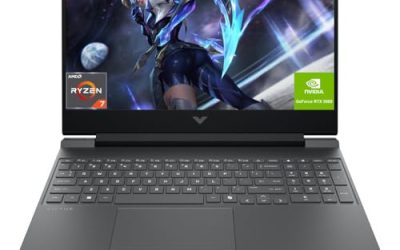
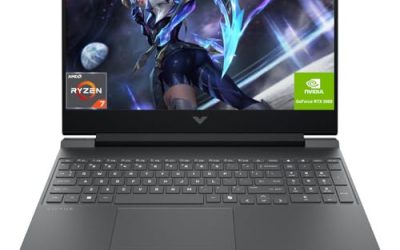
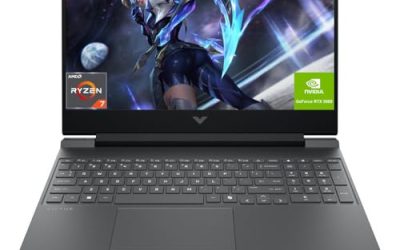
HP Victus 15

The Victus 15 is the everyday entry on this list, built around an AMD Ryzen AI 7 350, up to 5.0 GHz as listed, and an RTX 5060 with eight gigabytes of GDDR7. This listing stands out for its memory and storage pairing: thirty-two gigabytes of DDR5 and a one-terabyte SSD, generous room for the game plus a working library of other titles.
The 15.6-inch FHD screen runs at 144Hz as listed, and the listing names an RJ-45 Ethernet port for a wired connection during downloads. It also bundles a 7-in-1 USB-C hub, so check the page to confirm exactly what the bundle includes before ordering. For one straightforward machine covering this game and everyday computing, the Victus fills that role.
Specs
– CPU: AMD Ryzen AI 7 350, up to 5.0 GHz as listed
– GPU: NVIDIA GeForce RTX 5060, 8GB GDDR7
– Memory: 32GB DDR5
– Storage: 1TB SSD
– Display: 15.6-inch FHD, 144Hz as listed
– Networking: RJ-45 Ethernet as listed
– Bundle: 7-in-1 USB-C hub as listed
– Operating system: Windows 11 Home
– ASIN: B0G1N8R9Z4
Comparison Table
| Product | Best for | Key spec |
|---|---|---|
| Lenovo Legion Pro 7i Gen 10 | Highest settings on a 16-inch screen | RTX 5080 16GB, 64GB memory |
| ASUS ROG Strix SCAR 18 | The biggest built-in display | 18-inch 240Hz panel, RTX 5080 |
| ASUS ROG Zephyrus G16 (2025) | Power that still travels | RTX 5070 Ti, 4.30 lb as listed |
| Lenovo Legion 5 Gen 10 | A balanced all-round pick | RTX 5060, WQXGA OLED 165Hz |
| HP Victus 15 | Memory and storage headroom | 32GB memory, 1TB SSD |
FAQ
Does Atomic Heart run on a Mac?
No. The PC version is Windows-only, which is why every pick here is a Windows laptop. There is no native Mac install, so Mac owners would need a Windows machine or another way to play.
How much storage does the game need alongside a library?
The game takes a sizable chunk of a drive, and modern titles add up quickly. A one-terabyte SSD covers this game and a handful of others, while the two-terabyte picks leave room for a larger library installed at once.
Is sixteen gigabytes of memory enough?
For this game alone, sixteen gigabytes covers the requirement the publisher sets. Picks with thirty-two or sixty-four gigabytes leave more room for launchers, browsers, and capture tools at the same time, and the Legion 5 lets you add more later through its slots.
Conclusion
Atomic Heart asks more of a laptop than a light indie title, and these five machines scale from the Legion Pro 7i and SCAR 18 at the top down to the Victus 15 for everyday play. Match the graphics card and screen to how and where you play, confirm the exact configuration on the listing page, and any of them will carry you through the facility.
More from Amazon
Programs that pair well with the guide above. Offers and eligibility are set by Amazon and may change.
A free business account with business pricing and bulk-buying tools for work, shop or home office.
Create a business accountFree shipping on eligible items, Prime Video and more. Eligible new members can start with a free trial.
Start a Prime free trialAudiobooks and podcasts to listen to on the go. Eligible new members can start with a free trial.
Try Audible freeAd-free music streaming. Eligible new subscribers can start with a free trial.
Try Music Unlimited freeAs an Amazon Associate we earn from qualifying purchases.



Write Your Review
No reviews yet. Be the first to share your experience!