

Key takeaways
- A search for a best 500 dollar laptop is really a search for the right compromises. At this tier nothing is excellent across the board.
A search for a best 500 dollar laptop is really a search for the right compromises. At this tier nothing is excellent across the board, so the decision is which corner to cut: screen size, storage, processor class, or the operating-system mode. A buyer who picks the wrong corner ends up with a machine that feels slow within months, or one that cannot hold a semester of files. Street pricing moves constantly, and nothing in a product title can confirm what a given model costs on a given day, so this guide judges the listed models on their specifications and treats the 500-dollar figure only as the shopping tier the keyword describes.
The guide is aimed at students, parents buying a first family computer, and anyone who needs a dependable machine for email, documents, video calls, and streaming rather than gaming or video editing. Six entry-level listings are compared using only the facts printed in their titles: processor family, memory, storage type, display, and software mode. In 2026 the gap between a sensible entry laptop and a frustrating one often comes down to two numbers, memory and storage, so those get the most attention below.
Quick Picks
Our top picks
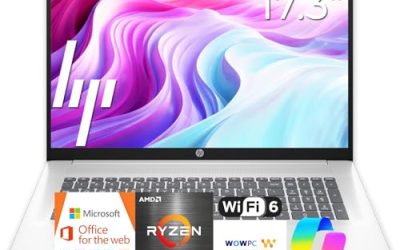
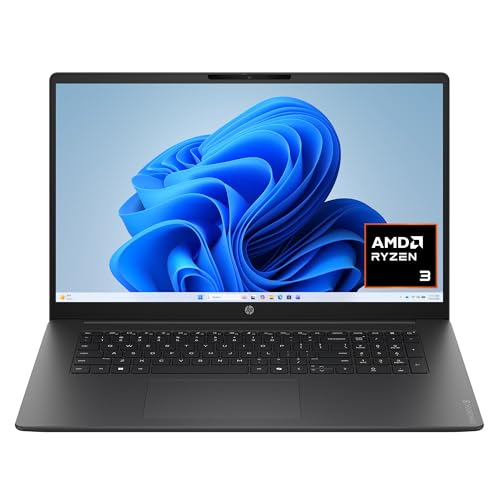 HP OmniBook 3 17.3 inch Laptop PC
- Enjoy vibrant, crystal-clear images with 178-degree wide-viewing angles
- Everyday performance you can count on
- HP Fast Charge restores battery from 0 to…
 Dell 15.6 Laptop
- Effortlessly chic
- Designed for easy learning: Energy-efficient batteries and Express…
- Stay connected to what you love: Spend more…
| Product | Key specs | |
|---|---|---|
| HP OmniBook 3 17.3 inch Laptop PC | Enjoy vibrant, crystal-clear images with 178-degree wide-viewing angles Everyday performance you can count on HP Fast Charge restores battery from 0 to… | Check price |
| Dell 15.6 Laptop | Effortlessly chic Designed for easy learning: Energy-efficient batteries and Express… Stay connected to what you love: Spend more… | Check price |
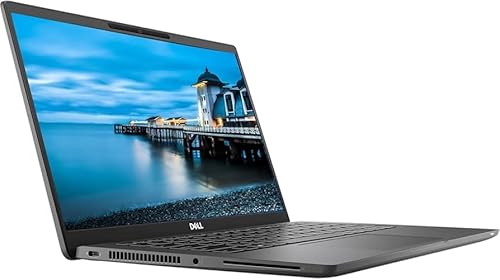 Dell Latitude 7300 Business Laptop | Check price | |
 HP 15.6 inch Laptop | Check price | |
 Dell 15.6 Laptop | Effortlessly chic Stay connected to what you love: Enjoy quality… Type with ease: Write and calculate quickly with… | Check price |
 HP Everyday Student Laptop | Check price |
As an Amazon Associate we earn from qualifying purchases at no extra cost to you.
| Product | Best for | Key spec from the title |
|---|---|---|
| HP OmniBook 3 17.3 | Big-screen home desk use | 17.3 inch FHD, Ryzen 3, 8 GB RAM, 512 GB SSD |
| Dell 15.6 Core 3 100U | Balanced all-round starter | FHD anti-glare IPS, 8 GB RAM, 512 GB SSD, Wi-Fi 6 |
| Dell 15.6 Ryzen 5 7520U | Smoother motion and multitasking | FHD 120Hz IPS, LPDDR5, 512 GB SSD |
| HP 15.6 Touchscreen Ryzen 3 7320U | Touch input on a tight plan | HD touchscreen, 8 GB RAM, 128 GB SSD, S Mode |
| HP Everyday Student Laptop | Bundled storage and Office | 500 GB external HDD plus 128 GB storage, 1-year Office 365 |
| HP Everyday Slim Laptop | Light, simple web-and-docs work | Intel N150, 128 GB SSD plus 1 TB cloud storage |
How to Choose
Memory first, then storage
Eight gigabytes of RAM is the practical floor for Windows 11 with a browser and a few tabs open. Four gigabytes is a trap, because the operating system alone claims much of it. For storage, 512 GB is comfortable for a student or family; 128 GB fills quickly once updates, apps, and a few downloads accumulate. Three of the models here list 512 GB, while the rest list 128 GB, which is the biggest practical divide in the group. Cloud storage and external drives help, but they are add-ons, not replacements for internal space.
Processor class and what it means
Ryzen 3 and Core 3 chips handle office work, streaming, and video calls well. A Ryzen 5 class chip adds headroom for heavier multitasking. Intel N-series chips such as the N150 are built for low power and thin designs; they are fine for browsing and documents but will feel slower under load. Ignore marketing phrases that stack adjectives onto a processor and read the actual model name instead.
Screen size, resolution, and panel type
Look for full HD (1920 x 1080) rather than plain HD, because text and spreadsheets look noticeably sharper. IPS panels keep colors and viewing angles stable. A 120Hz refresh rate, listed on one model here, makes scrolling and cursor movement smoother, though it is a nicety rather than a necessity. A 17.3 inch screen suits a desk; a 15.6 inch screen is the common compromise between size and portability.
Software mode and bundled extras
Windows 11 in S Mode restricts installs to the Microsoft Store, which can block a favorite browser or school app unless the buyer switches out of the mode. A bundled Office subscription has value only while it lasts, so treat it as a short-term bonus. Budget laptops cut corners on speakers, webcam quality, keyboard backlighting, and port selection, so read the full specification list before assuming any of those are included.
The 6 Best Options
HP OmniBook 3 17.3
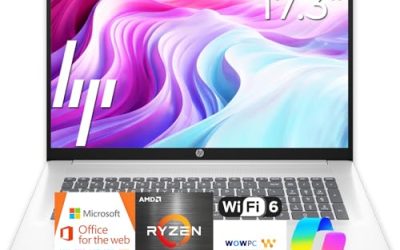
This listing pairs a 17.3 inch FHD display with an AMD Ryzen 3 processor, 8 GB of RAM, and a 512 GB SSD, running Windows 11 Home. That combination suits a household that wants one shared computer parked at a desk, where the larger panel makes spreadsheets and split-screen reading easier on the eyes. The Radeon 610M graphics named in the title point to everyday video and light photo work rather than serious gaming, which is the realistic expectation for this tier.
- Strength: the large full HD screen gives plenty of room for documents and two windows side by side.
- Strength: 512 GB of SSD storage leaves space for a full school year of files.
- Trade-off: a 17.3 inch body is bulky for backpacks and commuting.
Skip it if the laptop will travel daily or if you need a graphics chip for more than basic video and casual games.
Dell 15.6 Core 3 100U
Dell lists an Intel Core 3 100U, 8 GB of RAM, a 512 GB SSD, and an FHD anti-glare IPS display rated at 250 nits, with Wi-Fi 6 and Bluetooth. The specification mix reads like a well-rounded starter laptop, with no obvious weak link in the headline numbers. Buyers who want a predictable, unexciting machine for classes, email, and streaming will find the specification list easy to understand and compare against rivals.
- Strength: the anti-glare IPS panel helps in bright rooms and classrooms.
- Strength: Wi-Fi 6 support gives better wireless performance on modern routers.
- Trade-off: 250 nits is only moderate brightness, so outdoor use will feel dim.
Skip it if you want touch input or a high refresh rate, since neither appears in the title.
Dell 15.6 Ryzen 5 7520U
This model steps up to a Ryzen 5 7520U with Radeon 610M graphics, LPDDR5 memory, a 512 GB SSD, and an FHD 120Hz IPS screen. It is the listing in this group that leans furthest toward smooth everyday responsiveness. Anyone who keeps many browser tabs, a chat window, and a document open together is the person this configuration is aimed at.
- Strength: the 120Hz display makes scrolling and window movement look fluid.
- Strength: Ryzen 5 class silicon with fast LPDDR5 memory suits heavier multitasking.
- Trade-off: it lists Wi-Fi 5 rather than Wi-Fi 6, which is a small step back for wireless speed.
Skip it if the memory capacity matters to you, because the title does not state a gigabyte figure.
HP 15.6 Touchscreen Ryzen 3 7320U
HP pairs an HD touchscreen with a Ryzen 3 7320U, 8 GB of RAM, and a 128 GB SSD, shipping in Windows 11 Home in S Mode. The touch panel appeals to buyers who like tapping and scrolling directly, particularly in tablet-style reading. It is the most accessible way into a touch-enabled Windows laptop among these six, as long as the buyer accepts the smaller drive and the lower-resolution screen that come with it.
- Strength: touch input adds a convenient way to navigate pages and apps.
- Strength: 8 GB of RAM covers ordinary browsing and office tasks.
- Trade-off: the HD resolution and 128 GB drive are the tightest specs among the SSD-equipped models here.
Skip it if you plan to install software outside the Microsoft Store and do not want to leave S Mode, or if you store many files locally.
HP Everyday Student Laptop
This listing bundles an Intel processor, 128 GB of internal storage, and a 500 GB external hard drive, plus a one-year Office 365 subscription and Copilot features. It targets a first-time buyer who wants software and extra storage included from day one. The package is attractive for a teenager heading into high school, because documents, backups, and a familiar office suite are covered in a single purchase.
- Strength: the included external drive adds backup and archive room.
- Strength: the Office subscription helps with schoolwork right away.
- Trade-off: the title does not state the processor model or the memory amount, so performance is harder to judge.
Skip it if you want a verifiable processor name and RAM figure before you commit.
HP Everyday Slim Laptop
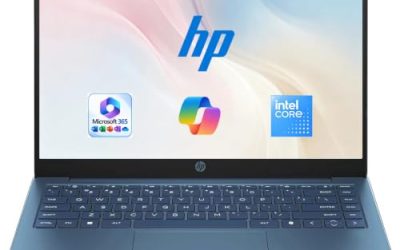
This one uses an Intel N150 CPU with 128 GB of SSD storage and 1 TB of cloud storage, plus Microsoft Office 365 included. The N150 is a low-power chip, so the appeal is simplicity and a slim build for lightweight tasks. It suits a person who mostly writes, browses, and joins video calls, and who prefers a quiet, easy-to-carry machine over raw speed.
- Strength: the cloud storage allotment adds extra space for documents and photos.
- Strength: the slim design and bundled Office suit casual writing and web work.
- Trade-off: low-power N-series processors can feel sluggish with many tabs or heavier apps.
Skip it if you work offline often, since cloud storage depends on a connection.
Which One Fits Your Situation
A shared family computer on a desk
The HP OmniBook 3 17.3 fits best here. Its large FHD screen and 512 GB SSD handle homework, bills, and streaming, and its size matters less when it never leaves the room.
A student who carries a laptop to class
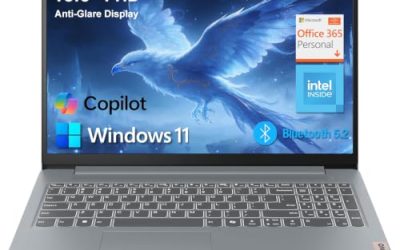
The Dell 15.6 Core 3 100U balances an anti-glare IPS screen, 8 GB of RAM, and a 512 GB SSD in a standard-size body, which makes it a sensible daily carry.
Someone who multitasks heavily
The Dell 15.6 Ryzen 5 7520U is the stronger fit, thanks to its Ryzen 5 chip, LPDDR5 memory, and 120Hz IPS display.
A buyer who wants software and storage bundled
The HP Everyday Student Laptop makes sense, since the external drive and Office subscription arrive together. A buyer who prefers touch input and keeps files in the cloud could instead look at the HP 15.6 Touchscreen Ryzen 3 7320U, as long as S Mode is acceptable.
Common Mistakes
- Buying a machine with 4 GB of RAM because the processor name sounds modern.
- Choosing a 128 GB drive without a plan for backups or cloud storage.
- Ignoring S Mode and then discovering a needed program will not install.
- Treating a bundled one-year software trial as a permanent saving.
- Assuming every listing with a long feature string has better hardware than a plainly worded one.
Related guides
- Affordable Gaming Mouse For Alienware Laptop
- Laptop Docking Stations For Dual Monitors
- Travel Backpack With Laptop Compartment
Frequently Asked Questions
Is 8 GB of RAM enough at this tier?
For browsing, documents, video calls, and streaming, yes. Heavy multitasking or large spreadsheets will benefit from more, but 8 GB is the sensible minimum for Windows 11.
Does a touchscreen matter on a budget laptop?
It is a convenience, not a performance feature. Prioritize memory, storage, and screen resolution first, then add touch if it fits.
Are external hard drives a good substitute for internal storage?
They are good for backups and archives, but apps and active files run best from the internal SSD. A small internal drive remains a limit even with an external one attached.
How should I verify the cost of a model?
Compare current listings from several sellers before buying, because prices shift often and the specification list is the only stable thing to compare. If a model drifts well above your budget, move down a tier rather than accepting a 4 GB memory configuration.


Write Your Review
No reviews yet. Be the first to share your experience!