
Strange Antiquities is a shopkeeping puzzle game from Bad Viking, the small studio behind Strange Horticulture. You work behind the counter of an artefact shop in the town of Undermere, where visitors bring in curious objects and you work out what each one is by studying its shape, materials, and markings against the reference books on your shelves. It is a slow game built around reading and comparing small details. As an Amazon Associate, we earn from qualifying purchases.
The good news is that the hardware demands are light: a quad core processor, 4 GB of memory, DirectX 11 graphics, and 3 GB of storage on Windows, with a native Mac edition as well. The five laptops below are chosen less for raw muscle and more for screen clarity and quiet manners, because you will spend your sessions reading labels and examining relics up close.
How to Choose a Laptop for Strange Antiquities
Start with the platform facts. Strange Antiquities runs natively on Windows and on macOS, and both editions are sold through the same store page. The Windows requirements list Windows 10 or above, a quad core processor, 4 GB of RAM, DirectX 11 graphics, and 3 GB of storage. The Mac requirements list an Apple M1 chip or an Intel Core M processor with 4 GB of RAM and the same storage, so the two MacBook picks below run the native Mac edition and are included fairly. The recommended Windows tier steps up to 16 GB of RAM and a GeForce GTX 1060, a bar every pick here clears.
Screen quality matters more than anything else. Identifying an artefact means reading small printed labels and telling apart objects that differ in tiny ways, so a sharp panel with honest color is worth more than a fast one. An OLED panel makes the shop’s dim corners easy to pick out, and touch input is a pleasant bonus, though a trackpad handles the clicking just as well. Storage is a non-issue at 3 GB. One honest note for the Yoga Slim 7x below: its ARM chip runs the Windows edition through the built-in translation layer, so check the store page’s current ARM guidance first.
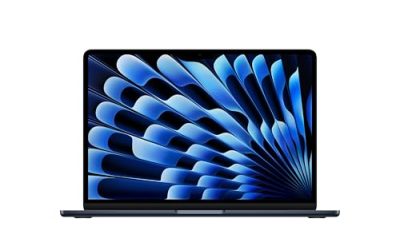
Apple MacBook Air 13 M4

The 13-inch MacBook Air is the natural first pick for the native Mac edition. Its M4 chip and 16 GB of unified memory sit far above the Mac requirements, and the fanless design means the shop stays silent while you work through a tricky identification. The 13.6-inch Liquid Retina display supports one billion colors as listed, which helps when you compare the patina on two similar relics.
Portability is the other half of the appeal. This thin, light machine slips into a small bag, and the listed battery figure of up to 18 hours covers long sessions away from a socket. The 512 GB SSD holds the game many times over. If you want the smallest, quietest way to run the Mac edition, this is it.
Specs
– Chip: Apple M4
– Memory: 16GB unified memory
– Storage: 512GB SSD
– Display: 13.6-inch Liquid Retina, supports one billion colors
– Camera: 12MP Center Stage camera
– Security: Touch ID
– Battery: up to 18 hours as listed
– Color: Sky Blue
– ASIN: B0DZD9NV7L
Apple MacBook Air 15 M4

The 15-inch MacBook Air answers the one wish the smaller model leaves open: more room on screen for the reference books. Its 15.3-inch Liquid Retina panel runs at 2880-by-1864, so the catalogue pages, your notes, and the artefact under examination all fit at once. For a game that is mostly reading, that extra space is genuinely useful.
This configuration pairs the M4 chip with 24 GB of unified memory and a 512 GB SSD, generous headroom for a title that asks for 4 GB. It keeps the fanless design, adds a 12MP Center Stage camera, and charges over MagSafe, with a listed battery figure of up to 18 hours of video streaming. Choose it if you want the biggest Mac screen here.
Specs
– Chip: Apple M4, 10-core CPU as listed
– Memory: 24GB unified memory
– Storage: 512GB SSD
– Display: 15.3-inch Liquid Retina, 2880-by-1864
– Camera: 12MP Center Stage camera
– Ports: 2x Thunderbolt 4, MagSafe charging
– Battery: 53.8Wh, up to 18 hours video streaming as listed
– Color: Sky Blue
– ASIN: B0DZD8BT7N
Lenovo Yoga Slim 7x

The Yoga Slim 7x is the Windows pick for readers who want the sharpest screen in this guide. Its 14.5-inch 3K OLED touch panel resolves 2944-by-1840 and reaches up to 1000 nits as listed, so engraved markings and faded labels stay legible in a bright room. The touchscreen suits the game’s point-and-examine rhythm well.
Inside, the Snapdragon X Elite chip pairs with 32 GB of memory and a 1 TB SSD, far beyond anything this game requests. The honest caveat is the ARM architecture: the standard Windows edition runs through the built-in translation layer, so check the store page’s current ARM guidance before buying. The chassis weighs 2.82 pounds and is 0.51 inches thin as listed.
Specs
– Processor: Snapdragon X Elite X1E-78-100, 12 cores up to 3.4 GHz as listed
– NPU: Hexagon, up to 45 TOPS as listed
– Memory: 32GB LPDDR5X, soldered
– Storage: 1TB SSD
– Display: 14.5-inch 3K OLED touch, 2944-by-1840, up to 1000 nits as listed
– Battery: 70Wh with Rapid Charge Express
– Weight: 2.82 lb, 0.51 in thin as listed
– Connectivity: Wi-Fi 7
– Operating system: Windows 11 Pro
– Color: Cosmic Blue
– ASIN: B0FBMMMMWX
ASUS Zenbook 14 OLED

The Zenbook 14 OLED is the straightforward Windows choice, with no translation layers or caveats to think about. Its AMD Ryzen 7 8840HS processor and Radeon 780M integrated graphics clear the recommended Windows tier on their own, and 16 GB of memory matches the recommended figure exactly. The 14-inch WUXGA OLED touchscreen renders the shop’s candlelit shelves with deep contrast.
ASUS lists a 75Wh battery with up to 17 hours of use, and the machine weighs about 2.82 pounds as listed. The 512 GB SSD is plenty for this 3 GB game plus a working library. Pick it if you want the Windows version with the least possible fuss.
Specs
– Processor: AMD Ryzen 7 8840HS, up to 5.1 GHz as listed
– Graphics: Radeon 780M integrated
– Memory: 16GB LPDDR5X
– Storage: 512GB M.2 NVMe PCIe 4.0 SSD
– Display: 14-inch WUXGA OLED touchscreen, 1920-by-1200
– Battery: 75Wh, up to 17 hours as listed
– Weight: about 2.82 lb as listed
– Connectivity: Wi-Fi 6E
– Operating system: Windows 11 Home
– Color: Jade Black
– ASIN: B0DFWZ77LB
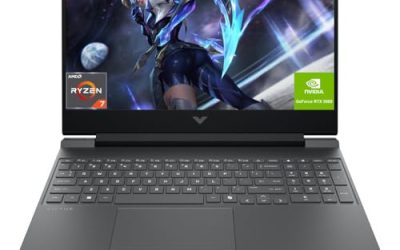
HP Victus 15

The Victus 15 is the headroom pick, for players whose library stretches beyond one quiet shop game. Its Ryzen AI 7 350 processor and dedicated RTX 5060 graphics sit far above the recommended GTX 1060 tier, and 32 GB of memory doubles the recommended figure. Strange Antiquities will barely stir this hardware, which is the point: the same machine covers heavier titles too.
The 15.6-inch FHD screen refreshes at 144Hz as listed, a figure that matters for faster games rather than this one, while the larger panel gives the reference books welcome room. An RGB backlit keyboard, an RJ-45 Ethernet port, and a bundled 7-in-1 USB-C hub are listed, though you should confirm the bundle contents on the page before ordering. With a 1 TB SSD and Windows 11 Home, it suits a desk at home.
Specs
– Processor: AMD Ryzen AI 7 350, up to 5.0 GHz as listed
– Graphics: NVIDIA GeForce RTX 5060, dedicated
– Memory: 32GB DDR5
– Storage: 1TB SSD
– Display: 15.6-inch FHD, 144Hz as listed
– Keyboard: RGB backlit as listed
– Ports: RJ-45 Ethernet; bundled 7-in-1 USB-C hub as listed
– Operating system: Windows 11 Home
– Model: TPN-Q279, Black
– ASIN: B0G1N8R9Z4
Comparison Table
| Product | Best for | Key spec |
|---|---|---|
| Apple MacBook Air 13 M4 | Portable native Mac play | 13.6-inch Liquid Retina, 16GB memory |
| Apple MacBook Air 15 M4 | A larger Mac screen for reading | 15.3-inch Liquid Retina, 2880-by-1864 |
| Lenovo Yoga Slim 7x | The sharpest Windows display | 14.5-inch 3K OLED touch, 2944-by-1840 |
| ASUS Zenbook 14 OLED | Windows play with no caveats | Ryzen 7 8840HS, 14-inch OLED touch |
| HP Victus 15 | Headroom for a wider library | RTX 5060, 32GB memory |
FAQ
Does Strange Antiquities run on a Mac?
Yes. Alongside the Windows edition, the game has a native Mac edition whose requirements list an Apple M1 chip or an Intel Core M processor, 4 GB of RAM, and 3 GB of storage. Both MacBook Air picks here run it directly.
How much memory and storage does the game need?
Very little. The minimum on both platforms is 4 GB of RAM and 3 GB of storage, while the recommended Windows tier lists 16 GB of RAM. Every laptop here meets or passes that figure.
Do I need a gaming laptop to play it?
No. The game is a mouse-driven puzzle about reading and comparing objects, and its requirements sit well below what any modern laptop offers. A gaming model like the Victus 15 only makes sense if the rest of your library needs the extra graphics hardware.
Conclusion
Strange Antiquities asks so little of hardware that the best laptop for it is the one whose screen you enjoy reading on. Pick the 13-inch MacBook Air for silent portability, the 15-inch Air for more reading room, the Yoga Slim 7x for its sharp OLED panel, the Zenbook 14 OLED for an uncomplicated Windows setup, or the Victus 15 for heavier games.
More from Amazon
Programs that pair well with the guide above. Offers and eligibility are set by Amazon and may change.
A free business account with business pricing and bulk-buying tools for work, shop or home office.
Create a business accountFree shipping on eligible items, Prime Video and more. Eligible new members can start with a free trial.
Start a Prime free trialAudiobooks and podcasts to listen to on the go. Eligible new members can start with a free trial.
Try Audible freeAd-free music streaming. Eligible new subscribers can start with a free trial.
Try Music Unlimited freeAs an Amazon Associate we earn from qualifying purchases.


Write Your Review
No reviews yet. Be the first to share your experience!