
RStudio work loads a laptop in a particular way. A single session can hold a large data frame in memory, a dozen scripts in open tabs, a plot pane redrawing charts, and an environment full of intermediate objects, all at once. A machine that feels fine for documents can start swapping and stalling once a dataset outgrows its memory.
The five laptops below were picked for that workload: memory headroom first, then fast chips, sharp screens that show code and plots side by side, and roomy fast storage for project folders. As an Amazon Associate, we earn from qualifying purchases.
How to Choose a Laptop for RStudio
Memory matters more than anything else. R holds objects in RAM, so a large data frame, its cleaned copy, and a model object can multiply memory use quickly. A 32GB configuration is the sensible target for serious analysis, and 48GB gives real headroom for very large frames or several sessions. A 16GB machine handles coursework and modest datasets, but it is the ceiling you will feel first.
The chip comes next. Data wrangling, grouped summaries, and model fitting lean on the processor, and multi-core chips help when packages run work in parallel. Integrated graphics are enough for standard plots; RStudio drawing is not a heavy graphics task for most analysts.
Screen quality shapes long sessions. A sharp panel with a tall aspect ratio shows more rows of code, and enough width lets the source pane and plots pane sit side by side without constant tab switching. Storage should be fast and roomy, since raw data files and rendered reports add up across projects. One honest note on keypads: none of the listings below names a numeric keypad, so if you key in figures all day, plan on an external pad or a larger model whose listing states one.
Apple MacBook Pro 14 (M4 Pro, 48GB)

The MacBook Pro 14 with the M4 Pro chip is the headroom pick of this group. Its 48GB of unified memory is the largest pool here, suiting analysts who keep several large frames loaded, run parallel sessions, or work with wide survey and transaction data. The listed 14-core CPU and 20-core GPU configuration handles heavy wrangling and fitting work, and R plus RStudio run natively on Apple silicon.
The 14.2-inch Liquid Retina XDR display keeps code readable at small sizes while a plot sits beside it, and the 1TB SSD gives project folders room to grow. Three Thunderbolt 5 ports, HDMI, and an SD card slot make desk setups simple. Battery figures are stated only as Apple states them.
Specs
– Chip: Apple M4 Pro, 14-core CPU, 20-core GPU
– Memory: 48GB unified memory
– Storage: 1TB SSD
– Display: 14.2-inch Liquid Retina XDR
– Ports: 3x Thunderbolt 5, HDMI, SDXC card slot, MagSafe 3
– Operating system: macOS
– Color: Space Black
– ASIN: B0DTMBKJ3N
Lenovo ThinkPad T14 Gen 5 (Ryzen 7 PRO, 32GB)

The ThinkPad T14 Gen 5 is the Windows workhorse pick. The listed configuration pairs an AMD Ryzen 7 PRO 8840U with 32GB of DDR5 memory and a 1TB SSD, covering the memory target for large data frames while staying easy to carry between office, lab, and home. The eight cores handle grouped summaries and model fitting well, and the Radeon 780M integrated graphics are plenty for plots.
The 14-inch WUXGA IPS touchscreen gives code and charts a clear, tall canvas, and the listing names Thunderbolt 4, HDMI, Wi-Fi 6E, and a fingerprint reader. The backlit keyboard and TrackPoint suit long scripting sessions. Like the others here, its listing names no numeric keypad.
Specs
– Processor: AMD Ryzen 7 PRO 8840U, 8 cores, up to 5.1 GHz as listed
– Memory: 32GB DDR5
– Storage: 1TB PCIe NVMe SSD
– Display: 14-inch WUXGA IPS touchscreen
– Graphics: AMD Radeon 780M integrated
– Ports: Thunderbolt 4, HDMI, USB-A, headphone jack as listed
– Wireless: Wi-Fi 6E, Bluetooth
– Security: fingerprint reader, backlit keyboard
– Operating system: Windows 11 Pro
– ASIN: B0DGKBYSL2
Dell XPS 13 9350 (32GB, 3K OLED)

The XPS 13 9350 is the pick for analysts who travel and still want 32GB of memory. The listed configuration runs an Intel Core Ultra 7 258V with 32GB of LPDDR5X memory and a 1TB SSD in a slim 13.4-inch frame, so a full RStudio session fits in a small bag. The chip’s efficiency cores also help it stay quiet through long knit jobs.
Its 13.4-inch 3K OLED touchscreen is the sharpest screen in this group, making dense code and fine plot detail easy to read. Wi-Fi 7 and two Thunderbolt 4 ports cover fast network access and a one-cable desk setup. The trade-off is size: the smaller screen means more tab switching than on the 14-inch picks, and the memory is fixed.
Specs
– Processor: Intel Core Ultra 7 258V
– Memory: 32GB LPDDR5X
– Storage: 1TB SSD
– Display: 13.4-inch 3K OLED touchscreen
– Ports: 2x Thunderbolt 4
– Wireless: Wi-Fi 7, Bluetooth 5.4 as listed
– Security: fingerprint reader, backlit keyboard
– Operating system: Windows 11 Pro
– ASIN: B0F1FDRLZ1
HP EliteBook 840 G11 (32GB)

The EliteBook 840 G11 is the managed-fleet pick, built for analysts working inside an organization. The listed configuration combines an Intel Core Ultra 7 155H with 32GB of DDR5 memory in two SO-DIMM slots and a 1TB PCIe Gen4 SSD, so memory can be serviced or expanded later, unlike fixed-memory machines. That matters for teams that keep laptops in service for years while datasets grow.
The 14-inch WUXGA touch display, 5MP IR camera, and fingerprint sensor cover video calls and sign-in, and the port set is the fullest here: two Thunderbolt 4 ports, two USB-A ports, HDMI 2.1, and a smart card reader. For RStudio, the story is simple: 32GB today, a clear upgrade path, and ports for any desk.
Specs
– Processor: Intel Core Ultra 7 155H, 16 cores as listed
– Memory: 32GB DDR5-5600, 2 x 16GB SO-DIMM
– Storage: 1TB PCIe Gen4 NVMe SSD
– Display: 14-inch WUXGA touch display
– Ports: 2x Thunderbolt 4, 2x USB-A, HDMI 2.1, smart card reader
– Camera: 5MP IR camera as listed
– Wireless: Wi-Fi 6E AX211, Bluetooth 5.3
– Security: fingerprint sensor, spill-resistant backlit keyboard
– Operating system: Windows 11 Pro
– ASIN: B095Z736D9
Apple MacBook Air 13 (M4, 16GB)

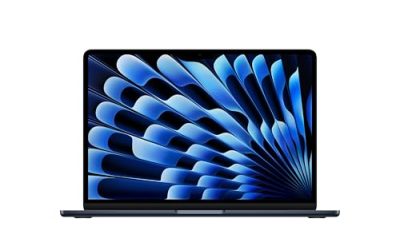
The MacBook Air 13 is the light pick for students and analysts whose datasets stay modest. The M4 chip is quick for scripting, wrangling, and everyday model fitting, and the fanless design stays silent in lectures and shared offices. It disappears into a bag in a way the Pro models do not.
Be clear about the limits of this listed configuration: 16GB of unified memory and 256GB of storage are the tightest figures in this group. Coursework, teaching data, and small research frames run fine, but large frames will push against the memory ceiling, and project folders fill the drive faster. The 13.6-inch Liquid Retina display is sharp, Touch ID handles sign-in, and battery figures are stated only as Apple states them.
Specs
– Chip: Apple M4, 10-core CPU, 10-core GPU as listed
– Memory: 16GB unified memory
– Storage: 256GB SSD
– Display: 13.6-inch Liquid Retina
– Camera: 12MP Center Stage camera
– Security: Touch ID
– Color: Midnight
– Model number: MW123LL/A
– Operating system: macOS
– ASIN: B0DZD9S5GC
Comparison Table
| Product | Best for | Key spec |
|---|---|---|
| Apple MacBook Pro 14 (M4 Pro) | Largest memory headroom | 48GB unified memory |
| Lenovo ThinkPad T14 Gen 5 | Windows data workhorse | 32GB DDR5, Ryzen 7 PRO 8840U |
| Dell XPS 13 9350 | Travel with full memory | 32GB LPDDR5X, 3K OLED screen |
| HP EliteBook 840 G11 | Teams and upgrade path | 32GB in 2 SO-DIMM slots |
| Apple MacBook Air 13 (M4) | Light coursework carry | 16GB unified memory, fanless |
FAQ
How much memory does RStudio really need?
For coursework and small datasets, 16GB works. For large data frames, several open sessions, or parallel processing, 32GB is the safer target, and 48GB gives room to grow. R holds objects in memory, so RAM is the first spec to fund.
Is a dedicated graphics card needed for R plots?
No, for standard charts and plots. Integrated graphics on every pick here draw the plots pane without trouble. A discrete GPU only matters for specialized GPU computing packages, which most RStudio work never touches.
Do any of these laptops have a numeric keypad?
None of the five listings names one. These are compact 13-inch and 14-inch machines with full-width keyboards and no separate number block. If you enter figures all day, add an external pad or choose a larger model whose listing states a keypad.
Conclusion
Pick by memory first. The MacBook Pro 14 with 48GB suits the heaviest frames, the ThinkPad T14 Gen 5, XPS 13 9350, and EliteBook 840 G11 all hit the 32GB target in different shapes, and the MacBook Air 13 covers lighter coursework in the slimmest build.
More from Amazon
Programs that pair well with the guide above. Offers and eligibility are set by Amazon and may change.
A free business account with business pricing and bulk-buying tools for work, shop or home office.
Create a business accountFree shipping on eligible items, Prime Video and more. Eligible new members can start with a free trial.
Start a Prime free trialAudiobooks and podcasts to listen to on the go. Eligible new members can start with a free trial.
Try Audible freeAd-free music streaming. Eligible new subscribers can start with a free trial.
Try Music Unlimited freeAs an Amazon Associate we earn from qualifying purchases.

Write Your Review
No reviews yet. Be the first to share your experience!