
Forager begins on one small island with little more than a pickaxe, then unfolds into a loop of gathering, crafting, farming, and building that can stretch across many evenings. You buy new plots of land, raise furnaces and farms, lay out production lines, and duck into dungeons between harvests. The art is flat, bright, and cheerful, and the published hardware demands are tiny, so choosing a laptop for this game is mostly about screen quality, storage room, and comfort during long sessions.
One point comes first: the game’s Steam page lists builds for Windows and Linux, and there is no native macOS version, so every pick in this guide is a Windows laptop. As an Amazon Associate, we earn from qualifying purchases. The five machines below pair screens that suit the game’s colorful 2D look with solid-state storage for save files and the wider library most players keep alongside a long-running base.
How to Choose a Laptop for Forager
Start with the platform. Forager’s Steam page publishes system requirements for Windows and Linux only, with no macOS build listed, so MacBooks cannot run the standard PC version natively and do not appear in this guide. The published Windows minimums are remarkably low: a 1.2 GHz processor, 1 GB of memory, graphics with 512 MB of memory, and 200 MB of storage. Every laptop below clears those figures by a wide margin on paper, so the real choices sit elsewhere.
Look at the screen next. The game draws in flat colors with small icons and busy inventory grids, and a late-game base spreads machines, farms, and storage chests across several islands. A larger or sharper panel simply shows more of that layout at once, and vivid color helps the art read clearly. Storage matters more than the game’s own footprint suggests: the install is tiny, but save files, screenshots, and the other titles in a growing library all compete for the same drive. Finally, consider the keyboard and touchpad, because sorting inventory and placing structures is pointer-heavy work, and a backlit keyboard suits evening sessions on the couch.
ASUS ROG Zephyrus G16 (2025)

The Zephyrus G16 is the premium route into Forager, built around a 16-inch WQXGA OLED panel with a 240Hz refresh figure as listed. That large, vivid screen is the main attraction here: island layouts, skill trees, and inventory grids all get room to breathe, and the flat colors of the game’s art sit well on an OLED panel.
Inside, the listing pairs an Intel Core Ultra 9 285H with 32GB of memory and a 2TB SSD, far beyond anything this game asks for, which makes the machine a better fit for players who also keep demanding titles installed. Windows 11 Pro comes preinstalled, and the RTX 5070 Ti graphics cover the rest of a varied library. Pick it for the biggest, brightest view of a sprawling base.
Specs
– Display: 16-inch WQXGA OLED, 240Hz as listed
– Processor: Intel Core Ultra 9 285H
– Graphics: NVIDIA GeForce RTX 5070 Ti, 12GB
– Memory: 32GB LPDDR5X
– Storage: 2TB SSD
– Operating system: Windows 11 Pro
– Model: GU605CR-XS97, Black
– ASIN: B0G1W7V6VP
Lenovo Legion 5 Gen 10

Lenovo’s Legion 5 Gen 10 puts a 15.1-inch WQXGA OLED screen at the center of a slightly smaller build. The listing puts the panel at 500 nits and names a 24-zone RGB backlit keyboard, a pleasant match for a game often played in the evening with the lights low.
The hardware pairs a Ryzen 7 260 processor with RTX 5060 graphics, 16GB of DDR5-5600 memory, and a 1TB SSD, leaving generous room for save files and other games. One USB-C port is listed as USB4 at 40Gbps, handy for a desk dock when the laptop comes home. It suits players who want a sharp screen and modern ports in a mid-size chassis.
Specs
– Display: 15.1-inch WQXGA OLED, 500 nits as listed, non-touch
– Processor: AMD Ryzen 7 260, up to 5.1 GHz as listed
– Graphics: NVIDIA GeForce RTX 5060, 8GB GDDR7
– Memory: 16GB DDR5-5600
– Storage: 1TB SSD, M.2 PCIe Gen4
– Keyboard: 24-zone RGB backlit as listed
– Ports: 1x USB-C (USB4 40Gbps) as listed
– Operating system: Windows 11 Home
– ASIN: B0FXMY8FYW
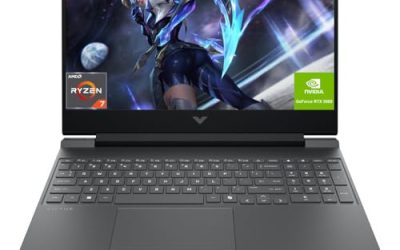
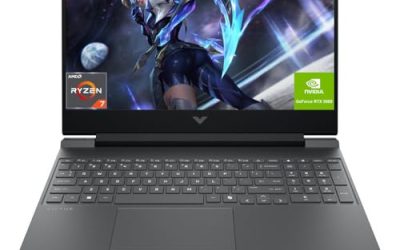
HP Victus 15

The Victus 15 is the roomy all-rounder of this group, with a 15.6-inch FHD screen listed at 144Hz and an RGB backlit keyboard. The panel size gives production lines and farm plots a comfortable amount of space, and the wired Ethernet port suits a fixed desk setup.
This configuration lists a Ryzen AI 7 350 processor, RTX 5060 graphics, 32GB of DDR5 memory, and a 1TB SSD, the joint-largest memory figure in this guide. A 7-in-1 USB-C hub is bundled in the listing, so confirm the bundle contents on the product page before ordering. It fits players who keep many games installed at once.
Specs
– Display: 15.6-inch FHD, 144Hz as listed
– Processor: AMD Ryzen AI 7 350, up to 5.0 GHz as listed
– Graphics: NVIDIA GeForce RTX 5060, 8GB GDDR7
– Memory: 32GB DDR5
– Storage: 1TB SSD
– Keyboard: RGB backlit as listed
– Networking: RJ-45 Ethernet port as listed
– Bundle: 7-in-1 USB-C hub included as listed
– Operating system: Windows 11 Home
– ASIN: B0G1N8R9Z4
Lenovo LOQ 15

The LOQ 15 keeps the formula simpler: a 15.6-inch FHD IPS panel listed at 144Hz, a backlit keyboard, and Wi-Fi 6. The screen is wide enough to take in a busy island without constant panning, and the IPS panel suits viewing from a slight angle on the couch.
Under the keyboard sit a Ryzen 7 170 processor with eight cores as listed, RTX 4050 graphics, 16GB of DDR5 memory, and a 512GB PCIe SSD. That storage figure is the smallest here, though it still dwarfs the game’s own 200 MB footprint many times over. Choose the LOQ if you want a straightforward Windows gaming laptop whose screen and storage are sized for this game and a modest library beside it.
Specs
– Display: 15.6-inch FHD IPS, 144Hz as listed
– Processor: AMD Ryzen 7 170, 8 cores as listed
– Graphics: NVIDIA GeForce RTX 4050, 6GB
– Memory: 16GB DDR5
– Storage: 512GB PCIe SSD
– Keyboard: backlit as listed
– Wireless: Wi-Fi 6 as listed
– Operating system: Windows 11
– ASIN: B0GZJXCT3P
MSI Katana 15

MSI’s Katana 15 B13VEK-277US is the Intel-based option in this lineup, pairing a Core i7-13620H processor with RTX 4050 graphics and a 15.6-inch screen. The layout is a familiar full-size gaming design with a USB Type-C port among its connections.
The listing includes 16GB of DDR5 memory and a 1TB NVMe SSD, so there is ample room for a long-running save, a screenshot folder, and a shelf of other titles. Windows 11 Home comes preinstalled. The Katana suits players who prefer an Intel machine and want storage headroom without stepping up to the larger screens above.
Specs
– Display: 15.6-inch
– Processor: Intel Core i7-13620H
– Graphics: NVIDIA GeForce RTX 4050, 6GB GDDR6
– Memory: 16GB DDR5
– Storage: 1TB NVMe SSD
– Ports: USB Type-C as listed
– Operating system: Windows 11 Home
– Model: B13VEK-277US, Black
– ASIN: B0BZBN3857
Comparison Table
| Product | Best for | Key spec |
|---|---|---|
| ASUS ROG Zephyrus G16 (2025) | Largest, most vivid screen | 16-inch WQXGA OLED, 240Hz as listed |
| Lenovo Legion 5 Gen 10 | Sharp OLED in a mid-size build | 15.1-inch WQXGA OLED, 500 nits as listed |
| HP Victus 15 | Memory and storage headroom | 32GB DDR5 memory, 1TB SSD |
| Lenovo LOQ 15 | Straightforward everyday pick | 15.6-inch FHD IPS, 144Hz as listed |
| MSI Katana 15 | Intel-based with roomy storage | Core i7-13620H, 1TB NVMe SSD |
FAQ
Does Forager run on a Mac?
Not natively. The game’s Steam page publishes requirements for Windows and Linux builds only, and no macOS version is listed, which is why this guide contains Windows laptops alone. Mac owners would need a Windows environment to play the standard PC version.
How much storage does Forager need?
Steam lists 200 MB of available space, a tiny footprint. The larger SSDs in this guide are not about the game itself; they leave room for save files, screenshots, and the other games most players keep installed next to a long-running world.
Is a gaming laptop necessary for Forager?
No. The published minimums — a 1.2 GHz processor, 1 GB of memory, and 512 MB of graphics memory — sit below what any current laptop ships with. These picks earn their place through screen size and quality, storage room, and usefulness across a wider library.
Conclusion
Forager asks very little of hardware and gives back a base that grows island by island, so the best laptop for it is the one with a screen you enjoy looking at and storage that keeps up with your library. The Zephyrus G16 offers the largest, most vivid view, the Legion 5 and Victus 15 balance screen and storage in the middle, and the LOQ 15 and Katana 15 keep things straightforward. Any of the five will settle in for a long building session.
More from Amazon
Programs that pair well with the guide above. Offers and eligibility are set by Amazon and may change.
A free business account with business pricing and bulk-buying tools for work, shop or home office.
Create a business accountFree shipping on eligible items, Prime Video and more. Eligible new members can start with a free trial.
Start a Prime free trialAudiobooks and podcasts to listen to on the go. Eligible new members can start with a free trial.
Try Audible freeAd-free music streaming. Eligible new subscribers can start with a free trial.
Try Music Unlimited freeAs an Amazon Associate we earn from qualifying purchases.

Write Your Review
No reviews yet. Be the first to share your experience!