
Esports players ask more of a laptop than most gamers. One machine has to handle daily practice at home, ride in a backpack to LAN events, and plug into a tournament station without a fuss. Fast-paced titles punish slow screens and unsteady hardware, so a proper esports laptop pairs a high refresh display with strong graphics and cooling that stays composed through a long match day.
The five laptops below were picked with competitive play in mind. Each one lists its refresh and response figures plainly, carries RTX graphics, and offers the connections a tournament desk demands, including wired Ethernet on several models.
As an Amazon Associate, we earn from qualifying purchases.
How to Choose a Laptop for Esports
Start with the screen. Refresh figures on these listings run from 144Hz to 240Hz, and response times are printed just as plainly, such as the 3ms Overdrive figure on the Predator Helios 16. A faster panel shows motion sooner and with less blur, which matters in shooters and arena titles. Resolution plays a part too: a 240Hz QHD+ screen asks more of the graphics card than a 165Hz FHD panel.
Next, look at the graphics and processor pairing. The RTX 4060 and RTX 4070 cards here come with full power figures on several models, including 140W Max TGP listings on the Strix G16 and the Blade 14, while HX-series processors bring core counts that keep voice chat and capture tools from crowding the game. Cooling matters as well: liquid metal and vapor chambers, both named on these listings, help a laptop hold its pace late in a session.
Finally, think about the road. A 14-inch aluminum machine slips into a carry-on, while 16-inch models trade portability for bigger screens. Wired Ethernet, listed on the Legion Pro 5i and the Predator Helios 16, gives you a stable link where venues provide one, and Wi-Fi 6E or Wi-Fi 7 covers the rest. No spec sheet can promise a frame figure or a match outcome; settings and the title itself decide that.
ASUS ROG Strix G16

The ROG Strix G16 (G614JV-AS74) builds its case on a full-power graphics card and a fast screen. Its NVIDIA GeForce RTX 4060 Laptop GPU runs at 140W Max TGP as listed, with a 13th Gen Intel Core i7-13650HX, 16GB of DDR5 memory, and a 1TB PCIe Gen4 SSD. The 16-inch FHD panel refreshes at 165Hz with 100% sRGB coverage and Pantone Validation.
Cooling is a headline feature. ROG Intelligent Cooling uses Thermal Grizzly Conductonaut Extreme liquid metal on the processor plus a third intake fan, a layout built for sustained sessions. A MUX Switch with Advanced Optimus routes frames efficiently, and Wi-Fi 6E keeps wireless play steady at home.
Specs
– Processor: Intel Core i7-13650HX (13th Gen)
– Graphics: NVIDIA GeForce RTX 4060 Laptop GPU, 140W Max TGP
– Display: 16-inch FHD, 165Hz, 100% sRGB, Pantone Validated
– Memory: 16GB DDR5-4800
– Storage: 1TB PCIe Gen4 SSD
– Wireless: Wi-Fi 6E
– Cooling: ROG Intelligent Cooling with liquid metal and a third intake fan
– ASIN: B0CRDCXRK2
Lenovo Legion Pro 5i Gen 8

The Legion Pro 5i Gen 8 steps up to an NVIDIA GeForce RTX 4070 with 8GB of GDDR6 memory, backed by an Intel Core i7-13700HX with 16 cores and 24 threads up to 5.0 GHz. Memory and storage are generous: 32GB of DDR5 and a 1TB PCIe NVMe SSD. The 16-inch WQXGA display refreshes at 165Hz, a sharper canvas than a standard FHD panel.
Tournament players will notice the port layout. An RJ-45 Ethernet jack sits alongside USB-C, HDMI, and USB-A connections, so a wired station setup takes seconds. Wi-Fi 6 and an RGB backlit keyboard round out a machine built for a fixed desk at home and a borrowed one at an event.
Specs
– Processor: Intel Core i7-13700HX, 16 cores / 24 threads, up to 5.0 GHz
– Graphics: NVIDIA GeForce RTX 4070, 8GB GDDR6
– Display: 16-inch WQXGA (2560 x 1600), 165Hz
– Memory: 32GB DDR5
– Storage: 1TB PCIe NVMe SSD
– Networking: RJ-45 Ethernet, Wi-Fi 6, Bluetooth 5
– Keyboard: RGB backlit keyboard
– ASIN: B0CDQRY4HX
Razer Blade 14 (2024)

The Blade 14 is the travel pick of this group. Razer fits an AMD Ryzen 9 8945HS and an NVIDIA GeForce RTX 4070 running up to 140W TGP into a CNC aluminum unibody that stays easy to carry between venues. The 14-inch QHD+ display refreshes at 240Hz, the fastest panel here, and vapor chamber cooling handles the heat.
Details suit players who live on the road: 32GB of DDR5-5600 memory in dual slots the listing says can expand further, a 1TB SSD, Wi-Fi 7, USB4 Type-C ports, and HDMI 2.1 for a bigger monitor at home.
Specs
– Processor: AMD Ryzen 9 8945HS, up to 5.2 GHz
– Graphics: NVIDIA GeForce RTX 4070, up to 140W TGP
– Display: 14-inch QHD+ HDR, 240Hz
– Memory: 32GB DDR5-5600, expandable via dual slots
– Storage: 1TB SSD
– Wireless: Wi-Fi 7
– Cooling: Vapor chamber cooling
– Build: CNC aluminum unibody, Chroma RGB keyboard
– ASIN: B0CPP5W55Q
MSI Raider GE68 HX

The Raider GE68 HX (13VF-062US) leads with processor muscle. Its Intel Core i9-13950HX brings a deep bench of cores for gaming alongside streaming and team comms, while the NVIDIA GeForce RTX 4060 with 8GB of GDDR6 handles the graphics work. The listing pairs that hardware with 32GB of memory and a 1TB SSD.
The 16-inch Full HD+ panel refreshes at 144Hz, a figure that suits the fast shooters most esports seasons revolve around. MSI builds the Raider line as a desktop-leaning machine that works well at a home station and still packs up for events.
Specs
– Processor: Intel Core i9-13950HX
– Graphics: NVIDIA GeForce RTX 4060, 8GB GDDR6
– Display: 16-inch Full HD+, 144Hz
– Memory: 32GB RAM
– Storage: 1TB SSD
– Operating System: Windows 11 Home
– ASIN: B0C6R7TY6T
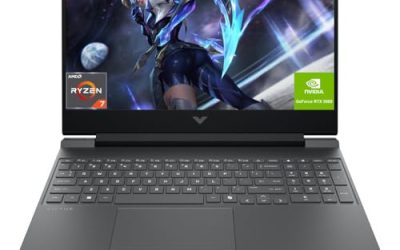
Acer Predator Helios 16
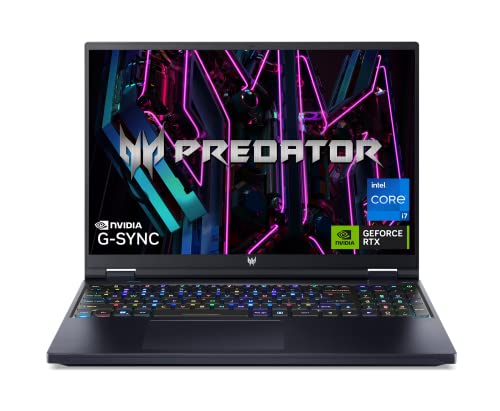
The Predator Helios 16 (PH16-71-74UU) pairs an Intel Core i7-13700HX with an NVIDIA GeForce RTX 4060 Laptop GPU and aims at screen quality. Its 16-inch WQXGA panel runs at 2560 x 1600 with a 165Hz refresh, a 3ms Overdrive response time as listed, and G-SYNC support, keeping fast motion clear during hectic team fights.
Acer loads this model with Killer networking: Wi-Fi 6E AX1675 for wireless play and an Ethernet port for a wired link at events. 16GB of DDR5 memory sits in two slots the listing says can grow to 32GB, and a 1TB PCIe Gen 4 SSD sits beside a second M.2 slot for later expansion.
Specs
– Processor: Intel Core i7-13700HX
– Graphics: NVIDIA GeForce RTX 4060 Laptop GPU
– Display: 16-inch WQXGA (2560 x 1600), 165Hz, 3ms Overdrive response, G-SYNC
– Memory: 16GB DDR5, two slots, up to 32GB
– Storage: 1TB PCIe Gen 4 SSD, second M.2 slot listed
– Wireless: Killer Wi-Fi 6E AX1675
– Networking: Ethernet port
– ASIN: B0BXMNSXDD
Comparison Table
| Product | Best for | Key spec |
|---|---|---|
| ASUS ROG Strix G16 | All-round tournament play | RTX 4060 at 140W Max TGP, 165Hz panel |
| Lenovo Legion Pro 5i Gen 8 | Wired tournament desks | RTX 4070, RJ-45 Ethernet |
| Razer Blade 14 (2024) | Travel-heavy competitors | 240Hz QHD+ panel in a 14-inch body |
| MSI Raider GE68 HX | Processor-heavy multitasking | Core i9-13950HX, 32GB memory |
| Acer Predator Helios 16 | Sharp, fast visuals | WQXGA 165Hz, 3ms response as listed |
FAQ
Is a 144Hz screen enough for esports, or should I aim for 240Hz?
Both figures appear in this roundup because both can work. A 144Hz or 165Hz panel already shows motion far more smoothly than a standard screen, and several picks pair those figures with higher resolutions. The 240Hz panel on the Blade 14 suits players who want the quickest listed refresh.
Why does an Ethernet port matter on an esports laptop?
A wired link is steadier than wireless, with fewer surprises from crowded venue networks. The Legion Pro 5i lists an RJ-45 jack and the Predator Helios 16 lists an Ethernet port, so both can plug straight into a tournament station. Where no wired option exists, the Wi-Fi 6E and Wi-Fi 7 radios on the other picks come next.
Can a 14-inch laptop serve as a main esports machine?
Yes, if the hardware inside is full strength. The Blade 14 lists an RTX 4070 at up to 140W TGP and a 240Hz display, so it gives up little to bigger machines. Many players add an external monitor at home through HDMI 2.1, then travel with the laptop alone.
Conclusion
Every laptop here lists the hardware competitive play demands: fast panels with plainly stated refresh figures, RTX graphics, strong processors, and cooling built for long sessions. Pick the Strix G16 or Legion Pro 5i as a 16-inch all-rounder, the Blade 14 for a travel-first season, the Raider GE68 HX for processor headroom, or the Predator Helios 16 for its sharp screen.
More from Amazon
Programs that pair well with the guide above. Offers and eligibility are set by Amazon and may change.
A free business account with business pricing and bulk-buying tools for work, shop or home office.
Create a business accountFree shipping on eligible items, Prime Video and more. Eligible new members can start with a free trial.
Start a Prime free trialAudiobooks and podcasts to listen to on the go. Eligible new members can start with a free trial.
Try Audible freeAd-free music streaming. Eligible new subscribers can start with a free trial.
Try Music Unlimited freeAs an Amazon Associate we earn from qualifying purchases.



Write Your Review
No reviews yet. Be the first to share your experience!