

Our Top Picks
Nine hundred dollars is where you stop choosing between the screen and the specs. At $500, exactly one new laptop cleared every bar. At $700, a current-gen machine fit with upgradeable RAM. At $800, an Ultra 7 and a 2K screen fit together. At $900, OLED fits: three of the five picks have OLED screens, including the top pick — a 15.3-inch 2.5K OLED at 165Hz, for exactly $899.99.
The honest split: $900 buys a genuinely good programming laptop, but not everything. Thirty-two gigabytes of RAM still does not fit in a trustworthy new machine, and neither does a ThinkPad with a usable configuration. Two of the five picks run Windows on ARM — fast and all-day, if your toolchain runs on ARM. Every pick has 16GB of RAM and a real NVMe SSD: no 8GB machines, no eMMC, no UFS.
All prices are November 2026 snapshots.
Our top picks
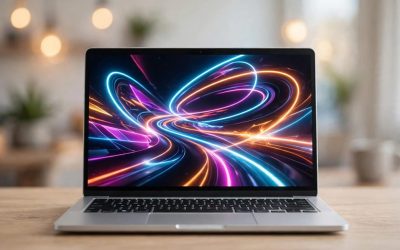
Best for: Programmers who want the best screen under $900 and whose tools run on ARM
Check price on Amazon
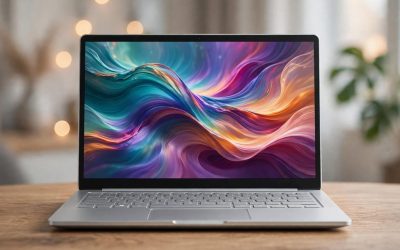
Best for: Programmers who need room for repos, containers and VMs — and would rather spend $700 than $900
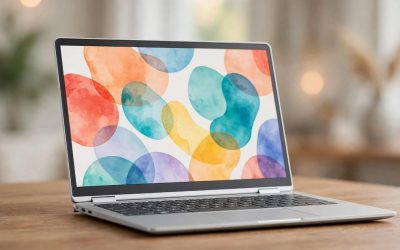
Check price on AmazonBest for: Programmers who want a well-built AMD machine with room to grow storage, and who do not need OLED
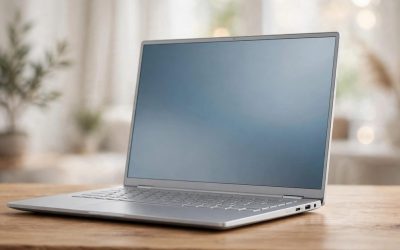
Check price on AmazonBest for: Programmers who work away from a socket all day and want the longest battery life with an OLED screen
Check price on Amazon
Best for: Programmers who want OLED with every tool running natively on x86, in the lightest machine here
Check price on AmazonQuick Picks
| Laptop | Best For | Price (Nov 2026) | CPU | RAM / Storage | Screen |
|---|---|---|---|---|---|
| Lenovo IdeaPad Slim 5x Gen 11 OLED | Best Overall | $899.99 | Snapdragon X2 Plus | 16GB / 512GB | 15.3″ 2.5K OLED 165Hz |
| ASUS Vivobook 16 (M1607GA) | Best Value | $699.99 | Ryzen AI 7 445 | 16GB / 1TB | 16″ 2K IPS |
| Lenovo IdeaPad Slim 5a 16″ AMD | Best AMD All-Rounder | $799.99 | Ryzen AI 5 430 | 16GB / 512GB | 16″ WUXGA IPS |
| HP OmniBook 5 16″ | Best Battery Life | $799.99 | Snapdragon X | 16GB / 512GB | 16″ 2K OLED |
| ASUS Vivobook S14 OLED (2026) | Best Portable OLED | $899.99 | Core Ultra 5 325 | 16GB / 512GB | 14″ OLED |
How to Choose a Laptop for Programming Under $900
CPU: current-generation silicon is finally the norm
Every pick has at least six cores, and four of the five run current-generation chips: Snapdragon X2 Plus, Ryzen AI 400 series, or Core Ultra Series 2. The two ARM picks trade x86 compatibility for battery life and silence; the three x86 picks run everything natively.
RAM: 16GB is the rule, and 32GB is still out of reach
Sixteen gigabytes is non-negotiable in 2026. The new twist at $900 is that 32GB still does not fit in a trustworthy new machine: the cheapest 32GB configurations we verified are the HP OmniBook 5 16 at $1,299.99 and the IdeaPad Slim 5a 32GB at $1,289.99.
Storage: a real SSD, and 1TB finally fits
A 512GB NVMe SSD is the floor. At $900, 1TB fits: the ASUS Vivobook 16 pairs a 1TB SSD with a 2K screen for $699.99, $200 under budget.
Keyboard and screen: OLED arrives, and it changes the value math
All five picks have full-size keyboards. Three of them have OLED screens, the single biggest change at $900: better contrast and color than any IPS panel at this price. The trade-off is burn-in risk with static UI elements — keep the taskbar auto-hidden — and the fact that two of the three OLED picks are ARM machines. If you want OLED with an x86 chip, the Vivobook S14 is your only pick here.
1. Lenovo IdeaPad Slim 5x Gen 11 OLED — Best Overall
Specs: Qualcomm Snapdragon X2 Plus X2P-42-100 (6 cores, up to 4.04 GHz, 80 TOPS NPU); 16GB LPDDR5X RAM; 512GB PCIe NVMe SSD; 15.3-inch 2.5K (2560 x 1600) OLED display, 500 nits, 165Hz, 100% DCI-P3; backlit keyboard; Windows 11 Home; Copilot+ PC.
Price checked November 2026: $899.99 at Staples ($900 at Lenovo.com) — check the current price on Amazon before buying.
The Snapdragon X2 Plus is Qualcomm’s newest laptop chip, with an 80 TOPS neural processing unit — nearly double the first generation’s 45 TOPS — and it drives a 15.3-inch 2.5K OLED panel at 165Hz and 500 nits. That combination costs $899.99: exactly at the ceiling, but the first time an OLED screen this good has fit under $900.
The ARM caveat is real. Most apps run natively or through Prism emulation, but Docker Desktop, Android Studio and some compilers need checking first, and the 16GB of RAM is soldered. The name trap is serious: the catalog lists this machine as the “IdeaPad Slim 5i 15.3 OLED” — it is not. The Slim 5i is the Intel line; this is the Slim 5x, model 83RL0000US.
Pros: 2.5K OLED at 165Hz and 500 nits — the best screen in the guide; newest Snapdragon X2 Plus with an 80 TOPS NPU; all-day battery life.
Cons: ARM — check your toolchain first; 16GB soldered; exactly at the ceiling; the IPS version is $800.
Best for: Programmers who want the best screen under $900 and whose tools run on ARM.
Flag: the IdeaPad Slim 5i 16″ topped our programming-under-$700 guide with an Intel chip — this ARM Slim 5x is a different laptop entirely.
2. ASUS Vivobook 16 (M1607GA-DS76) — Best Value
Specs: AMD Ryzen AI 7 445 (8 cores, up to 5.0 GHz, 50 TOPS NPU); 16GB DDR5 RAM; 1TB PCIe 4.0 NVMe SSD; 16-inch 2K (1920 x 1200) IPS display; backlit keyboard; Windows 11 Home.
Price checked November 2026: $699.99 at Best Buy (was $799.99) — check the current price on Amazon before buying.
This one is about the storage. The Vivobook 16 is the only pick with a 1TB SSD, at $699.99 — $200 under budget. The Ryzen AI 7 445 is a genuine 2026 chip with eight cores, and the 16-inch 2K screen gives you more vertical room for code than any 1080p panel. For local repos, Docker images and VMs, 1TB is the difference between working and constantly deleting things.
The trade-offs: IPS, not OLED; 16GB soldered; and ASUS sells at least three different Vivobook 16 machines — the F1605VA, the M1605, and this M1607GA. Only the model number tells you which one you are buying.
Pros: 1TB SSD for $699.99 — $200 under budget; current-generation Ryzen AI 7 445; 16-inch 2K screen.
Cons: IPS, not OLED; 16GB soldered; the Vivobook 16 name covers at least three different machines; about 4.2 lb, the heaviest pick here.
Best for: Programmers who need room for repos, containers and VMs — and would rather spend $700 than $900.
3. Lenovo IdeaPad Slim 5a 16″ AMD — Best AMD All-Rounder
Specs: AMD Ryzen AI 5 430 (6 cores, up to 4.5 GHz, up to 55 TOPS NPU); 16GB DDR5 RAM; 512GB PCIe NVMe SSD; 16-inch WUXGA (1920 x 1200) IPS display; Wi-Fi 7; two M.2 SSD slots; 60Wh battery with Rapid Charge Boost; Windows 11 Home; Copilot+ PC.
Price checked November 2026: $799.99 at Lenovo.com (list $1,199.99) — check the current price on Amazon before buying.
The IdeaPad Slim 5a is the quiet pick: a current-generation AMD machine with the best connectivity here and the most upgradeable storage. Two M.2 slots let you add a second SSD later. Wi-Fi 7 and Bluetooth 5.4 are standard, the aluminium chassis is MIL-STD-810H tested, and Rapid Charge Boost gives two hours of use from 15 minutes of charging.
The compromise is the screen: the $799.99 configuration ships with a WUXGA IPS panel, and OLED breaks the budget. The Ryzen AI 5 430 is also the least powerful CPU here: six cores against the Vivobook 16’s eight.
Pros: Best connectivity in the guide (Wi-Fi 7, two M.2 slots, HDMI 2.1); aluminium chassis, MIL-STD-810H tested; Rapid Charge Boost; $100 under budget.
Cons: IPS screen; slowest CPU in the guide; 16GB soldered.
Best for: Programmers who want a well-built AMD machine with room to grow storage, and who do not need OLED.
4. HP OmniBook 5 16″ — Best Battery Life
Specs: Qualcomm Snapdragon X X1-26-100 (8 cores, up to 3.0 GHz, 45 TOPS NPU); 16GB LPDDR5x RAM; 512GB PCIe Gen4 NVMe SSD; 16-inch 2K (1920 x 1200) OLED display; backlit keyboard; Windows 11 Home; Copilot+ PC.
Price checked November 2026: $799.99 (Amazon deal price $789.99) — check the current price on Amazon before buying.
HP rates this configuration at up to 34 hours of video playback — its own test of the Snapdragon X with the 2K OLED display, 16GB and 512GB. This is the same platform that produced the longest battery result PCMag has ever recorded, on the 14-inch OmniBook 5.
The price is the story: it lists at $1,289.99 at Quill and $960.85 as Amazon’s typical price, but the early Black Friday deal brought it to $789.99, and the catalog shows $799.99 — a $500 discount from list. The catch is ARM: Docker Desktop, Android Studio and some compilers need checking first, and the 16GB of RAM is soldered. The 32GB version costs $1,299.99 on HP’s store — which is how we know 32GB does not fit under $900.
Flag: the OmniBook 5 14 topped our college-under-$900 guide at $859.99. This 16-inch sibling is a different machine — check the model number (16-fb0299nr) before you buy.
Pros: Up to 34 hours of battery by HP’s rating; 16-inch 2K OLED for $799.99; $500 below list.
Cons: ARM — check your toolchain first; 16GB soldered; the 34-hour figure is a video-playback test, not a coding workload.
Best for: Programmers who work away from a socket all day and want the longest battery life with an OLED screen.
5. ASUS Vivobook S14 OLED (2026) — Best Portable OLED
Specs: Intel Core Ultra 5 325 (8 cores, up to 4.8 GHz, 48 TOPS NPU); 16GB DDR5 RAM; 512GB PCIe NVMe SSD; 14-inch OLED display; backlit keyboard; Windows 11 Home; Copilot+ PC.
Price checked November 2026: $899.99 at Staples — check the current price on Amazon before buying.
This is the only pick that pairs an OLED screen with an x86 chip. If your toolchain does not run on ARM, the two Snapdragon picks are out, and this is the only OLED left. The Core Ultra 5 325 is Intel’s newest mid-range chip, with eight cores and a 48 TOPS NPU, and the 14-inch body is the lightest here at about 3.1 lb.
Price warning: the catalog briefly showed $749.99, but the live Staples price is $899.99 — exactly at the ceiling. The S14 name is also a trap: ASUS sells an older S14 OLED with the Core Ultra 5 226V and this 2026 model with the Ultra 5 325. Different machines, different chips.
Pros: The only x86 OLED pick in the guide; newest Intel Core Ultra 5 325; lightest pick at about 3.1 lb; everything runs natively — no ARM checks needed.
Cons: $899.99 is exactly at the ceiling; 16GB soldered; the older S14 OLED is a different machine — check the model number.
Best for: Programmers who want OLED with every tool running natively on x86, in the lightest machine here.
What to Avoid
8GB RAM at any price in this guide. Eight gigabytes is not enough for a development machine in 2026, and it is still the most common configuration under $900. The Acer Swift Go 14 with a Core Ultra 5 125H and 8GB lists at $699–$745 — the same price as our 1TB pick, with half the memory.
eMMC and UFS storage sold as “SSD”. A 256GB eMMC drive is roughly five times slower than an NVMe SSD. The Lenovo IdeaPad Slim 3i 15.3″ with a Core 7 350 looks tempting at $629.99, but 256GB is too small for a development machine.
“Latest generation” claims on old chips. The Ryzen 7 7730U is Zen 3 from 2020 and the Core i7-13620H is 13th-generation Intel. Neither is current, and neither belongs in a $900 machine in November 2026.
The ThinkPad starting-price trap. The ThinkPad E14 Gen 6 starts at $699, but the usable 16GB/512GB configuration costs $1,019.99 or more. The starting price buys 8GB of RAM and a 256GB SSD — neither is enough for programming.
Same-name traps. Four in this guide alone: the IdeaPad Slim 5 (Slim 5i Intel versus Slim 5x ARM versus Slim 5a AMD), the Vivobook 16, the Vivobook S14, and the OmniBook 5. The model number is the only reliable identifier.
32GB RAM listings under $900. If a listing promises 32GB in a new machine under $900, it is refurbished, a marketplace seller, or mislabelled — the cheapest trustworthy 32GB configs we verified are $1,289.99 and $1,299.99.
FAQs
Is 16GB RAM enough for programming?
Yes, for most development work in 2026. Sixteen gigabytes comfortably runs an IDE, a browser, a local server and a database at the same time. It starts to feel tight with Docker Desktop running several containers or Android Studio’s emulator — and only a 32GB machine truly fixes that, which does not fit under $900 yet.
Can I use a laptop under $900 for Python and web development?
Absolutely. Python, JavaScript and TypeScript are light on hardware, and every pick here handles them easily; the eight-core machines also handle Java, C++ and .NET. The one workload to be careful about is mobile development: Android Studio’s emulator wants 16GB as a minimum, and iOS development needs a Mac.
Do I need a dedicated graphics card for programming?
No, not for most programming. Integrated graphics handle code editors, browsers, terminals and documentation without breaking a sweat. A dedicated GPU matters for game development, machine learning training and CUDA work — an RTX 4050 laptop does fit under $900 (the HP Victus 15, $779.99 at Walmart), but its dim 250-nit screen and poor battery make it worse value for pure coding.
Is an OLED screen worth it for coding?
Yes, with one habit change. OLED gives you perfect blacks and far better contrast than IPS, which makes long sessions easier on the eyes. The risk is burn-in from static UI elements — set the taskbar to auto-hide and use a dark theme. Three of the five picks here are OLED, so the choice is yours.
Verdict
The best laptop for programming under $900 is the Lenovo IdeaPad Slim 5x Gen 11 OLED at $899.99 — the only pick with a 2.5K OLED screen at 165Hz, the newest Snapdragon X2 Plus chip, and all-day battery life, for exactly the budget. If your tools do not run on ARM, buy the ASUS Vivobook S14 OLED instead: the same screen technology on an Intel chip. If you would rather keep $200, the ASUS Vivobook 16 at $699.99 gives you a Ryzen AI 7, a 1TB SSD and a 2K screen. Whatever you choose, check the exact model number before you buy.
As an Amazon Associate, we earn from qualifying purchases.
Suggested internal links
- Best Laptop for Programming Under $800
- Best Laptop for Programming Under $700
- Best Laptop for Programming Under $1,000
More from Amazon
Programs that pair well with the guide above. Offers and eligibility are set by Amazon and may change.
A free business account with business pricing and bulk-buying tools for work, shop or home office.
Create a business accountFree shipping on eligible items, Prime Video and more. Eligible new members can start with a free trial.
Start a Prime free trialAudiobooks and podcasts to listen to on the go. Eligible new members can start with a free trial.
Try Audible freeAd-free music streaming. Eligible new subscribers can start with a free trial.
Try Music Unlimited freeAs an Amazon Associate we earn from qualifying purchases.



Write Your Review
No reviews yet. Be the first to share your experience!