
Derail Valley drops you into a 256 km² open world of track, industries, and towns, where you walk the yards, climb into steam and diesel locomotive cabs, and haul cargo between stations on your own schedule. Altfuture built the game for both a regular monitor and PC VR, and the same progress moves between flat-screen and headset sessions. It is a home game, played for the feel of heavy machinery and open track, and nothing in it stands in for real railway training of any kind.
That dual nature shapes the laptop you want. The published requirements are modest on paper, yet the game asks for 16 GB of memory even at minimum, and VR play raises the graphics bar well above the flat-screen floor. The five picks below all run Windows and cover the published lines with room to spare.
As an Amazon Associate, we earn from qualifying purchases.
How to Choose a Laptop for Derail Valley
Start with the platform fact: Derail Valley is a Windows-only game. The Steam store page publishes a single requirements block for 64-bit Windows, with no macOS or Linux edition, so every pick here is a Windows laptop and Mac hardware is not an option for this title.
VR is supported but not required. The page lists VR support through SteamVR or Meta Quest Link, with an additional note that reads “VR optional,” and the flat-screen mode plays with keyboard and mouse. A headset is an extra you can add later; it is not part of the base purchase, and the game runs fully on a normal display.
The published minimum line asks for an Intel i5-7400 or equivalent processor, 16 GB of RAM, an Nvidia GTX 650 graphics card (GTX 970 for VR), and 6 GB of storage. The recommended block moves up to a GeForce GTX 1070-class card. Memory matters more than the small install size suggests, and the jump from the flat-screen minimum to the VR minimum is the widest gap in the block. Buy for the mode you plan to play.
Beyond the block, look at the screen and the ports. Long sessions reading gauges and trackside signs favor a clear display, and a wired network port plus plenty of USB connections helps with headsets and external drives. Every laptop below clears the memory line.
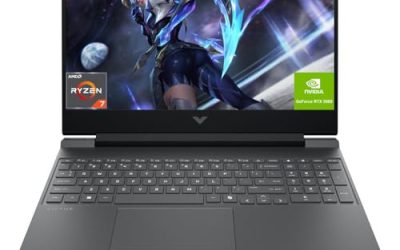
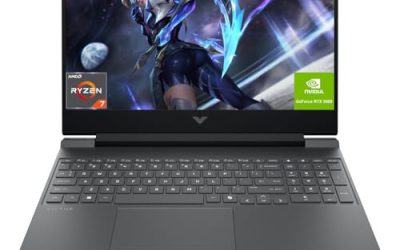
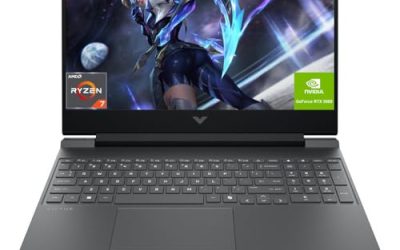
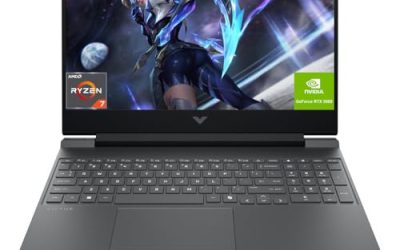
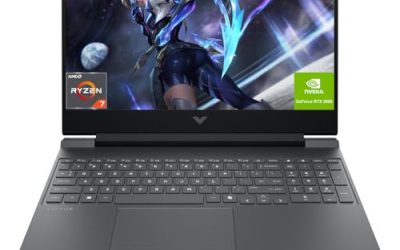
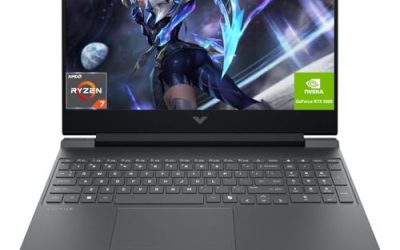
HP Victus 15
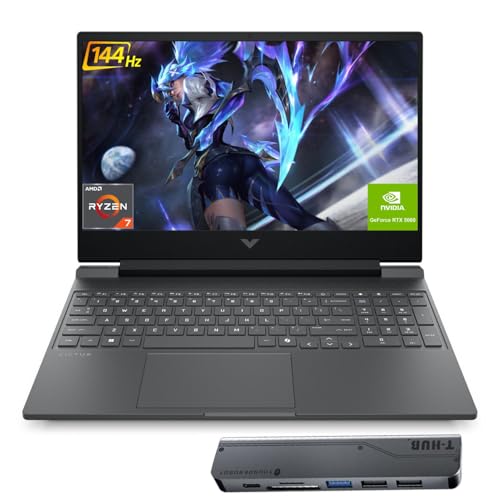
The Victus 15 is the straightforward way to cover both modes of the game. Its dedicated RTX 5060 sits far above the published flat-screen minimum and comfortably above the GTX 970 line named for VR, so one machine handles monitor play today and a headset tomorrow.
The rest of the configuration is equally roomy. With 32 GB of memory it doubles the published requirement, the 1 TB SSD swallows the 6 GB install many times over, and the 144 Hz display keeps yard movements smooth. A wired Ethernet port and the bundled USB-C hub make headset connections simple to arrange.
Specs
- Processor: AMD Ryzen AI 7 350 (up to 5.0 GHz as listed)
- Graphics: NVIDIA GeForce RTX 5060, 8 GB GDDR7, dedicated
- Memory: 32 GB DDR5
- Storage: 1 TB SSD
- Display: 15.6-inch FHD 144 Hz as listed
- Keyboard: RGB backlit keyboard with numeric keypad
- Connectivity: RJ-45 Ethernet, bundled Thunderobot 7-in-1 USB-C hub as listed
- Operating system: Windows 11 Home
- Color: Black, model TPN-Q279
- ASIN: B0G1N8R9Z4
Lenovo Legion 5 Gen 10

The Legion 5 Gen 10 pairs the same class of dedicated graphics with the sharpest screen in this guide. Its 15.1-inch WQXGA OLED panel renders cab interiors, signal lamps, and dusk runs with deep contrast, suiting a game that leans on atmosphere as much as machinery.
Performance matches the display. The RTX 5060 clears both the flat-screen and VR graphics lines, the Ryzen 7 260 sits well above the i5-7400 minimum, and 16 GB of memory meets the requirement exactly. USB4 and HDMI 2.1 give flexible options for headsets and external monitors.
Specs
- Processor: AMD Ryzen 7 260 (3.8–5.1 GHz as listed)
- Graphics: NVIDIA GeForce RTX 5060 Laptop GPU, 8 GB GDDR7
- Memory: 16 GB DDR5-5600
- Storage: 1 TB SSD M.2 PCIe Gen4
- Display: 15.1-inch WQXGA OLED 2560×1600, 500 nits, non-touch, 165 Hz as listed
- Ports: USB4, HDMI 2.1, Ethernet
- Keyboard: 24-zone RGB backlit keyboard as listed
- Operating system: Windows 11 Home
- ASIN: B0FXMY8FYW
Acer Nitro V 15 ANV15-51-99XD

The Nitro V 15 brings a Core i9 processor and an RTX 4060, a combination that clears the recommended line of the published block rather than just the minimum. For flat-screen play at raised settings and for VR sessions that ask more of the graphics card, that headroom is the point of this pick.
Storage and memory both leave room to grow. The 1 TB PCIe Gen 4 SSD sits in a chassis with two M.2 slots, and the 16 GB of DDR5 memory can be expanded to 32 GB across two slots. Thunderbolt 4, Wi-Fi 6, and a 180 Hz display round out the package.
Specs
- Processor: Intel Core i9-13900H
- Graphics: NVIDIA GeForce RTX 4060 Laptop GPU, 8 GB GDDR6
- Memory: 16 GB DDR5, two slots, 32 GB maximum as listed
- Storage: 1 TB PCIe Gen 4 SSD, two M.2 slots as listed
- Display: 15.6-inch FHD IPS 180 Hz as listed
- Ports: Thunderbolt 4, HDMI 2.1, Ethernet (RJ-45)
- Connectivity: Wi-Fi 6, backlit keyboard
- Operating system: Windows 11 Home
- ASIN: B0D8JTYXQM
MSI Katana 15 B13VEK-277US

The Katana 15 is the value-minded dedicated-graphics option here. Its RTX 4050 stands above the published flat-screen minimum and above the GTX 970 figure named for VR, so both modes are covered by hardware in the traditional 15.6-inch gaming-laptop mold.
It keeps the essentials in order: a Core i7-13620H that passes the i5-7400 minimum by a wide margin, 16 GB of DDR5 memory that meets the requirement head-on, and a 1 TB NVMe SSD that makes the 6 GB install a non-issue. The 144 Hz Full HD panel keeps motion clear as you lean out of the cab.
Specs
- Processor: Intel Core i7-13620H
- Graphics: NVIDIA GeForce RTX 4050, 6 GB GDDR6
- Memory: 16 GB DDR5-4800
- Storage: 1 TB NVMe SSD
- Display: 15.6-inch Full HD IPS 144 Hz
- Ports: USB Type-C, HDMI, Ethernet as listed for the model line
- Operating system: Windows 11 Home
- Color: Black
- ASIN: B0BZBN3857
ASUS Zenbook 14 OLED UM3406HA

The Zenbook 14 OLED is the portable pick, and it needs an honest frame: its Radeon 780M graphics are integrated, sharing system memory rather than carrying dedicated video memory, so they sit below every dedicated card in this guide. For flat-screen play at modest settings it is a workable way to run the game on a light machine; for VR, it is not the right tool, since the published VR line names a dedicated GTX 970-class card.
What it offers instead is travel weight and screen quality. At under three pounds with a 14-inch WUXGA OLED touchscreen, it is the laptop you can carry anywhere and still open the valley when you arrive. Its 16 GB of memory meets the published requirement, and the 512 GB SSD holds the install easily.
Specs
- Processor: AMD Ryzen 7 8840HS (up to 5.1 GHz as listed)
- Graphics: AMD Radeon 780M integrated
- Memory: 16 GB LPDDR5X
- Storage: 512 GB M.2 NVMe PCIe 4.0 SSD
- Display: 14-inch WUXGA OLED touchscreen, 1920×1200
- Connectivity: Wi-Fi 6E
- Battery: 75 Wh
- Operating system: Windows 11 Home
- Color: Jade Black
- ASIN: B0FW4P9BTQ
Comparison Table
| Product | Best for | Key spec |
|---|---|---|
| HP Victus 15 | Both modes with memory to spare | RTX 5060 8 GB, 32 GB DDR5 |
| Lenovo Legion 5 Gen 10 | Screen quality in and out of the cab | 15.1-inch WQXGA OLED 165 Hz |
| Acer Nitro V 15 | Headroom above the recommended line | Core i9-13900H, RTX 4060 |
| MSI Katana 15 | Dedicated graphics on a tighter budget plan | RTX 4050 6 GB, 1 TB SSD |
| ASUS Zenbook 14 OLED | Flat-screen play while traveling | Radeon 780M integrated, 75 Wh |
FAQ
Does Derail Valley run on Mac or Linux laptops?
No. The Steam store page publishes one requirements block, for 64-bit Windows only, and there is no macOS or Linux edition of the game. Every laptop in this guide runs Windows for exactly that reason, and a Mac cannot run this title natively.
Do I need a VR headset to play Derail Valley?
No. The store page lists VR support through SteamVR or Meta Quest Link and states plainly that VR is optional. The game plays fully on a regular monitor with keyboard and mouse, and progress carries between flat-screen and VR sessions, so a headset is an upgrade for later, not a requirement today.
How much memory and storage does the game actually need?
The published minimum asks for 16 GB of RAM, which is higher than many simulation titles, and only 6 GB of storage. Every pick here meets the memory line, and all five carry at least 512 GB of SSD space, so the install itself is never the constraint; the memory figure is the one to respect when comparing machines.
Conclusion
Derail Valley asks for Windows, a full 16 GB of memory, and graphics that depend on how you play: modest for the monitor, stronger for a headset. The Victus 15 and Legion 5 Gen 10 cover both modes with the most room to spare, the Nitro V 15 adds processor headroom and upgrade paths, the Katana 15 keeps dedicated graphics within a tighter plan, and the Zenbook 14 OLED trades graphics strength for portability. Match the pick to the mode you will actually use.
More from Amazon
Programs that pair well with the guide above. Offers and eligibility are set by Amazon and may change.
A free business account with business pricing and bulk-buying tools for work, shop or home office.
Create a business accountFree shipping on eligible items, Prime Video and more. Eligible new members can start with a free trial.
Start a Prime free trialAudiobooks and podcasts to listen to on the go. Eligible new members can start with a free trial.
Try Audible freeAd-free music streaming. Eligible new subscribers can start with a free trial.
Try Music Unlimited freeAs an Amazon Associate we earn from qualifying purchases.
Write Your Review
No reviews yet. Be the first to share your experience!