
Key takeaways
- Compare the best laptops for The Last Spell with verified picks matched to the game's published PC requirements and night defense display checks.
The Last Spell is a tactical RPG with roguelite elements from Ishtar Games, built around a steady rhythm: rebuild and prepare during the day, then hold the walls when the hordes arrive at night. Its pixel art presentation and turn-based battles place modest demands on hardware, and the published requirements confirm that, asking for components from several generations back. Even so, the laptop you pick shapes how clearly you can read a crowded battlefield, how quickly turns resolve, and how comfortable long sessions feel.
This guide compares five Windows laptops that clear the game’s published requirements with room to spare, covering a range of screen sizes, graphics hardware, and memory configurations. Every pick runs Windows 11, which matters because the Steam store page for this game lists Windows requirements only. As an Amazon Associate, we earn from qualifying purchases.
How to Choose a Laptop for The Last Spell
Start with the platform facts. The Steam store page for The Last Spell (app 1105670) publishes system requirements for Windows only, with no macOS or Linux block listed. The minimum block names Windows 7, an Intel Core i5-3470 or AMD FX-8370 processor, 4 GB of RAM, a GeForce GTX 650 or Radeon HD 7770 with 2 GB of video memory, DirectX 9.0, and 2 GB of storage. The recommended block raises the bar to Windows 10, a Core i5-8400 or Ryzen 5 2600, 8 GB of RAM, and a GeForce GTX 660 or Radeon HD 7870. One practical note: the Steam client itself has supported only Windows 10 and later since January 1, 2024, so every laptop here ships with Windows 11 Home installed.
From there, weigh four things. The processor does much of the work in a turn-based game, resolving unit actions and enemy turns across battlefields that grow busier as a run progresses, so a current multi-core chip keeps those calculations moving. Memory is easy to cover: 16 GB doubles the recommended figure and leaves room for a browser or chat app alongside the game. Graphics needs are light, since the recommended cards date from 2012, yet a dedicated card still delivers smoother panning and zooming over the grid. Finally, look at the screen, because the game’s fine pixel detail and dense interface reward resolution and contrast more than raw refresh speed.
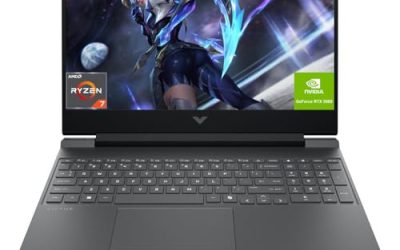
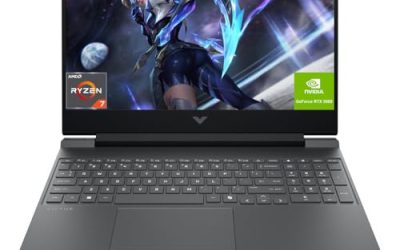
HP Victus 15
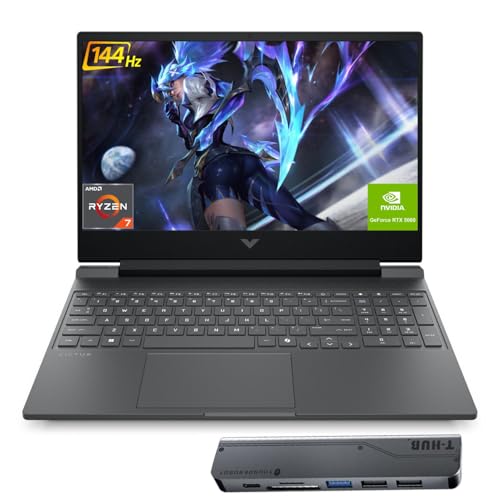
The Victus 15 is the most powerful machine in this guide, and its headroom shows in the numbers: a Ryzen AI 7 350 processor, an RTX 5060 graphics card with 8 GB of GDDR7 memory, and 32 GB of DDR5 memory are each several times the game’s recommended figures. For The Last Spell, that means turn calculations and large late-battle scenes are handled by hardware that is never close to its limits.
The 15.6-inch Full HD screen refreshes at 144 Hz, which keeps camera movement across the city grid feeling fluid, and the 1 TB SSD loads the game and its saves quickly. An RGB backlit keyboard with a numeric keypad, an Ethernet port, and a bundled 7-in-1 USB-C hub round out a desk-friendly setup.
Specs
- Processor: AMD Ryzen AI 7 350, up to 5.0 GHz as listed
- Graphics: NVIDIA GeForce RTX 5060, 8 GB GDDR7, dedicated
- Memory: 32 GB DDR5
- Storage: 1 TB SSD
- Display: 15.6-inch Full HD 1920×1080, 144 Hz
- Keyboard: RGB backlit with numeric keypad
- Ports: RJ-45 Ethernet; bundled Thunderobot 7-in-1 USB-C hub as listed
- Operating system: Windows 11 Home
- ASIN: B0G1N8R9Z4
Lenovo Legion 5 Gen 10

The Legion 5 Gen 10 pairs a Ryzen 7 260 processor with an RTX 5060 graphics card, matching the Victus on graphics while standing out for its display. The 15.1-inch OLED panel runs at 2560×1600 with 500 nits of brightness as listed, a step up in sharpness and contrast that suits the game’s dark, moody battlefields and small interface text.
Memory is 16 GB of DDR5-5600, double the recommended amount, and storage is a 1 TB PCIe Gen4 SSD. Ports include USB4, HDMI 2.1, and Ethernet, so the machine doubles as a capable everyday laptop long after a run ends.
Specs
- Processor: AMD Ryzen 7 260, 3.8 GHz up to 5.1 GHz as listed
- Graphics: NVIDIA GeForce RTX 5060 Laptop GPU, 8 GB GDDR7, dedicated
- Memory: 16 GB DDR5-5600
- Storage: 1 TB SSD M.2 PCIe Gen4
- Display: 15.1-inch WQXGA OLED 2560×1600, 500 nits, non-touch
- Keyboard: 24-zone RGB backlit
- Ports: USB4, HDMI 2.1, Ethernet (RJ-45)
- Operating system: Windows 11 Home
- ASIN: B0FXMY8FYW
Acer Nitro V 15 (ANV15-51-99XD)

The Nitro V 15 ANV15-51-99XD takes a different route to the same destination, pairing an Intel Core i9-13900H with an RTX 4060 graphics card. Both sit far above the game’s recommended Core i5-8400 and GTX 660 pairing, so the processor has ample capacity for the arithmetic behind each enemy turn.
Its 15.6-inch Full HD IPS screen refreshes at 180 Hz, the fastest panel in this guide, and the 16 GB of DDR5 memory can be expanded to 32 GB later thanks to its two slots. Thunderbolt 4, HDMI 2.1, and Ethernet cover docking and wired networking needs.
Specs
- Processor: Intel Core i9-13900H
- Graphics: NVIDIA GeForce RTX 4060 Laptop GPU, dedicated
- Memory: 16 GB DDR5, two slots, 32 GB maximum as listed
- Storage: 1 TB PCIe Gen 4 SSD
- Display: 15.6-inch FHD IPS, 180 Hz
- Connectivity: Wi-Fi 6, Thunderbolt 4, HDMI 2.1, Ethernet (RJ-45)
- Keyboard: Backlit
- Operating system: Windows 11 Home
- ASIN: B0D8JTYXQM
MSI Katana 15 (B13VEK-277US)

The Katana 15 B13VEK-277US is the most modest dedicated-graphics pick here, and it still clears the recommended block comfortably: a Core i7-13620H processor and an RTX 4050 with 6 GB of GDDR6 memory are newer and stronger than the i5-8400 and GTX 660 the store page names. That is plenty for a turn-based game with a 2 GB install size.
The 15.6-inch Full HD IPS screen runs at 144 Hz, memory is 16 GB of DDR5-4800, and storage is a 1 TB NVMe SSD. If your library leans toward strategy and indie titles like this one, the Katana covers them without overspending on power you will rarely use.
Specs
- Processor: Intel Core i7-13620H
- Graphics: NVIDIA GeForce RTX 4050, 6 GB GDDR6, dedicated
- Memory: 16 GB DDR5-4800
- Storage: 1 TB NVMe SSD
- Display: 15.6-inch Full HD IPS, 144 Hz
- Model: B13VEK-277US
- Color: Black
- Operating system: Windows 11 Home
- ASIN: B0BZBN3857
ASUS Zenbook 14 OLED (UM3406HA)

The Zenbook 14 OLED is the portable outlier in this lineup. Its Ryzen 7 8840HS processor is a modern eight-core chip, but its Radeon 780M graphics are integrated rather than a separate card, and they sit below every dedicated GPU in this guide. Judged against the game’s own published figures, though, the 780M lands above the minimum GTX 650-class requirement on paper, and the store page’s recommended cards are older designs still.
What the Zenbook gives back is portability and screen quality: a 14-inch WUXGA OLED touchscreen at 1920×1200, a 75 Wh battery, and a chassis that weighs roughly 2.8 pounds as listed. It suits players who want The Last Spell in a carry-everywhere machine rather than a desk-bound one.
Specs
- Processor: AMD Ryzen 7 8840HS, up to 5.1 GHz as listed
- Graphics: AMD Radeon 780M, integrated
- Memory: 16 GB LPDDR5X
- Storage: 512 GB M.2 NVMe PCIe 4.0 SSD
- Display: 14-inch WUXGA OLED touchscreen, 1920×1200
- Battery: 75 Wh
- Connectivity: Wi-Fi 6E
- Operating system: Windows 11 Home
- Color: Jade Black
- ASIN: B0DFWZ77LB
Comparison Table
| Product | Best for | Key spec |
|---|---|---|
| HP Victus 15 | Most headroom | RTX 5060 with 32 GB DDR5 memory |
| Lenovo Legion 5 Gen 10 | Sharpest display | 15.1-inch WQXGA OLED, RTX 5060 |
| Acer Nitro V 15 | Fastest panel | 180 Hz FHD IPS, Core i9-13900H |
| MSI Katana 15 | Leaner gaming pick | RTX 4050, 144 Hz FHD IPS |
| ASUS Zenbook 14 OLED | Portability | Radeon 780M integrated graphics, 75 Wh battery |
FAQ
Can I play The Last Spell on a Mac or Linux laptop?
Not through a native edition. The Steam store page publishes a Windows requirements block only, with no macOS or Linux block, so the five picks in this guide are all Windows 11 laptops. The game is listed as Steam Deck Verified, which covers Valve’s own handheld, but Mac and Linux laptop owners should check the store page’s current notes before buying.
How much memory does the game need?
The published minimum is 4 GB of RAM and the recommended figure is 8 GB. Every laptop in this guide carries 16 GB or more, so each one clears the recommended line with headroom for other apps running at the same time.
Will a faster laptop make my defenders stronger?
No. Hardware changes how the game loads, renders, and responds, but it cannot change unit attributes, enemy behavior, or how any battle plays out. Those outcomes rest on the decisions you make during each day and night cycle.
Conclusion
Each of these five laptops clears The Last Spell’s published requirements by a wide margin, so the choice comes down to the screen, size, and hardware you want for the rest of your library. Pick the Victus or Legion for the strongest hardware, the Nitro for its fast panel and Intel processor, the Katana for a leaner dedicated-graphics option, or the Zenbook when portability matters most.
More from Amazon
Programs that pair well with the guide above. Offers and eligibility are set by Amazon and may change.
A free business account with business pricing and bulk-buying tools for work, shop or home office.
Create a business accountFree shipping on eligible items, Prime Video and more. Eligible new members can start with a free trial.
Start a Prime free trialAudiobooks and podcasts to listen to on the go. Eligible new members can start with a free trial.
Try Audible freeAd-free music streaming. Eligible new subscribers can start with a free trial.
Try Music Unlimited freeAs an Amazon Associate we earn from qualifying purchases.
Write Your Review
No reviews yet. Be the first to share your experience!