
Stata work has a rhythm: load a dataset, clean and recode variables, run regressions, then study the output tables and graphs. A good laptop keeps the Data Editor, the Do-file Editor, and the Results window feeling quick through all of it, even with millions of observations in play.
The five laptops below were picked for that work: fast chips for estimation commands, 32GB or 64GB of memory, sharp screens for wide output tables, and fast SSD storage. Numeric keypads are called out honestly — two of the five have a verified one, and each section says so. As an Amazon Associate, we earn from qualifying purchases.
How to Choose a Laptop for Stata
Start with the processor. Estimation commands — regress, logit, mixed, and panel routines — lean on the CPU, and editions of Stata that spread work across cores reward chips with more of them. A modern eight-core chip handles everyday analysis well; the 24-core workstation below suits analysts whose do-files chain long estimation sequences. No honest shortlist can promise how fast a command will finish — that depends on your data and your code — so judge by core count and clock speed.
Memory is the second call. Stata holds your dataset in RAM, so big files want room: 16GB covers coursework and modest surveys, 32GB is the comfortable target for professional datasets, and the 64GB machine below suits the heaviest local files.
Then check the keyboard and screen with clear eyes. A numeric keypad speeds up data entry and hand-checking values, but only two of these five confirm one — the Dell Latitude 5550 and the Dell Precision 7680. The ThinkPad T14 Gen 5 and the MacBook Air 13 have none, and the ZBook Firefly’s listing does not clearly state one, so plan on a USB keypad if number entry fills your day. A taller 16:10 screen shows more rows of an output table than an older 1080p panel, and a 1TB SSD keeps big .dta files opening quickly.
Dell Latitude 5550

The Latitude 5550 is the balanced pick for everyday Stata work. Its Intel Core Ultra 7 155U, 32GB of DDR5 memory, and 1TB PCIe SSD handle survey datasets, recodes, and regression runs without drama, and the 15.6-inch Full HD screen leaves room for wide output tables beside the Do-file Editor.
The keyboard is its standout feature: the listing names a backlit keyboard with a numeric keypad, so entering figures stays fast without an extra accessory. A fingerprint reader covers sign-in, two Thunderbolt 4 ports handle docks and drives, and Windows 11 Pro fits office IT policies. For analysts who type numbers as often as commands, this is the straightforward pick.
Specs
– Processor: Intel Core Ultra 7 155U (12 cores, up to 4.8GHz as listed)
– Memory: 32GB DDR5
– Storage: 1TB PCIe NVMe SSD
– Display: 15.6-inch FHD (1920 x 1080)
– Keyboard: Backlit keyboard with numeric keypad, as listed
– Security: Fingerprint reader as listed
– Ports: 2x Thunderbolt 4, HDMI, USB-A as listed
– Operating system: Windows 11 Pro
– ASIN: B0GHPL8F6K
Dell Precision 7680

The Precision 7680 is the heavy lifter here, built for the largest datasets and the longest do-files. Its listed configuration pairs a 24-core Intel Core i9-13950HX with 64GB of LPCAMM2 DDR5 memory and a 2TB SSD, so merging big survey waves and running demanding estimation sequences stays smooth.
Dell’s specification for the model also confirms the second numeric keypad in this roundup: a backlit keyboard with a 10-key numeric keypad. The NVIDIA RTX 2000 Ada graphics card is more than Stata asks for, though it helps graph-heavy work in other tools. This is a desk-first workstation — and the strongest Stata laptop here.
Specs
– Processor: Intel Core i9-13950HX vPro (24 cores, up to 5.5GHz as listed)
– Graphics: NVIDIA RTX 2000 Ada Generation, 8GB GDDR6
– Memory: 64GB LPCAMM2 DDR5
– Storage: 2TB SSD
– Display: 16-inch FHD+ (1920 x 1200)
– Keyboard: Backlit keyboard with 10-key numeric keypad, as listed
– Operating system: Windows 11 Pro
– ASIN: B0GMQ4D131
Lenovo ThinkPad T14 Gen 5

The ThinkPad T14 Gen 5 is the portable analyst’s pick. Its AMD Ryzen 7 PRO 8840U, 32GB of DDR5 memory, and 1TB SSD cover Stata work comfortably, and its 14-inch WUXGA IPS touchscreen shows output tables in the taller 16:10 shape while staying easy to carry between office and field sites.
Be clear about the trade-off: this 14-inch deck has no numeric keypad, and its specification sheets mark the keypad as absent. If your work is mostly writing do-files and reading output, that takes nothing away; if you key in raw data by hand, add a USB keypad.
Specs
– Processor: AMD Ryzen 7 PRO 8840U (8 cores, up to 5.1GHz as listed)
– Graphics: AMD Radeon 780M integrated
– Memory: 32GB DDR5
– Storage: 1TB PCIe NVMe SSD
– Display: 14-inch WUXGA (1920 x 1200) IPS touchscreen
– Keyboard: Backlit keyboard, no numeric keypad
– Ports: Thunderbolt 4, HDMI 2.1, USB-A as listed
– Operating system: Windows 11 Pro
– ASIN: B0DGKBYSL2
HP ZBook Firefly 16 G11

The ZBook Firefly 16 G11 gives you a 16-inch screen in a workstation that still travels well. It runs an Intel Core Ultra 7 155U with 32GB of DDR5 memory and a 1TB SSD — plenty for Stata datasets and do-files — and its WUXGA IPS panel shows wide tables without constant sideways scrolling.
One honest note on the keyboard: this listing describes a backlit keyboard and does not clearly state a numeric keypad, so do not count on one — confirm the layout with the seller, or plan on a USB keypad. A fingerprint reader and two Thunderbolt 4 ports make it a tidy pick for researchers splitting time between desk and fieldwork.
Specs
– Processor: Intel Core Ultra 7 155U (12 cores, up to 4.8GHz as listed)
– Graphics: Intel integrated graphics
– Memory: 32GB DDR5 SO-DIMM
– Storage: 1TB SSD
– Display: 16-inch WUXGA (1920 x 1200) IPS
– Keyboard: Backlit keyboard, numeric keypad not clearly stated on the listing
– Security: Fingerprint reader as listed
– Ports: 2x Thunderbolt 4 as listed
– Operating system: Windows 11 Pro
– ASIN: B0DVWR2JLD
Apple MacBook Air 13 (M4)

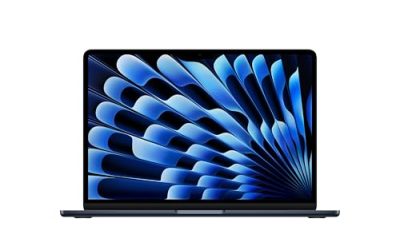
The MacBook Air 13 is the light pick for Stata users in the Apple ecosystem — Stata runs on macOS, and the M4 chip with 16GB of unified memory handles everyday datasets and estimation commands without fuss. At 2.73 pounds as listed, it disappears into a bag between lectures and site visits.
Two honest limits: there is no numeric keypad, and the 256GB SSD is the smallest storage here, so large data archives will live on an external drive or network storage. Its 13.6-inch Liquid Retina screen and 12MP Center Stage camera suit write-ups and research calls, and Touch ID covers sign-in. Choose it for portability, not for keypad work or huge local files.
Specs
– Processor: Apple M4 (10-core CPU as listed)
– Memory: 16GB unified memory
– Storage: 256GB SSD
– Display: 13.6-inch Liquid Retina (2560 x 1664)
– Camera: 12MP Center Stage camera as listed
– Security: Touch ID
– Weight: 2.73 lb as listed
– Color: Midnight, as listed
– ASIN: B0DZD9S5GC
Comparison Table
| Product | Best for | Key spec |
|---|---|---|
| Dell Latitude 5550 | Everyday Stata work with a keypad | Numeric keypad as listed, 32GB DDR5 |
| Dell Precision 7680 | The largest datasets | 64GB LPCAMM2 DDR5, 24-core i9 |
| Lenovo ThinkPad T14 Gen 5 | Portable analysis | 32GB DDR5, 14-inch WUXGA touch |
| HP ZBook Firefly 16 G11 | Big screen that still travels | 16-inch WUXGA, 32GB DDR5 |
| Apple MacBook Air 13 (M4) | Lightest carry for macOS users | M4 chip, 2.73 lb as listed |
FAQ
How much memory does Stata need on a laptop?
For coursework and small surveys, 16GB is workable. For professional work — large survey waves and merged files — 32GB is the comfortable target, and the 64GB Precision 7680 covers the heaviest local datasets.
Do any of these laptops have a numeric keypad?
Two do, verified against their listings and model specifications: the Latitude 5550 and the Precision 7680. The ThinkPad T14 Gen 5 and the MacBook Air 13 do not have one, and the ZBook Firefly’s listing does not clearly state one — so heavy data entry on those three calls for a USB keypad.
Can Stata run on a MacBook?
Yes. Stata is published for macOS as well as Windows, and the MacBook Air 13 with the M4 chip runs it for everyday analysis. Check that your license covers the macOS version, and keep the Air’s two limits in mind: no numeric keypad, and a 256GB SSD that fills quickly with large data archives.
Conclusion
Match the laptop to your data. If number entry fills your day, the Latitude 5550’s verified numeric keypad and 32GB of memory make it the straightforward pick, while the Precision 7680 adds 64GB of memory and a 24-core chip for the biggest files. The ThinkPad and ZBook Firefly trade keypad certainty for portability and screen room, and the MacBook Air 13 is the light macOS option — plan around a USB keypad and external storage.
More from Amazon
Programs that pair well with the guide above. Offers and eligibility are set by Amazon and may change.
A free business account with business pricing and bulk-buying tools for work, shop or home office.
Create a business accountFree shipping on eligible items, Prime Video and more. Eligible new members can start with a free trial.
Start a Prime free trialAudiobooks and podcasts to listen to on the go. Eligible new members can start with a free trial.
Try Audible freeAd-free music streaming. Eligible new subscribers can start with a free trial.
Try Music Unlimited freeAs an Amazon Associate we earn from qualifying purchases.

Write Your Review
No reviews yet. Be the first to share your experience!