
A database administrator’s laptop juggles two kinds of work. One moment it runs a local test instance holding a restored copy of a production database; the next it sits in a meeting room or at home while its owner writes queries, checks overnight jobs, and updates permission lists. The machine has to be powerful enough for the first job and comfortable enough for the second.
This guide compares five laptops that fit that mix. Each pick was chosen for memory headroom, fast storage, screen clarity, and lab-friendly ports. Keyboard layouts differ more than model names suggest, so every entry states plainly whether a numeric keypad is present.
As an Amazon Associate, we earn from qualifying purchases.
How to Choose a Laptop for Database Administration
Memory is the first thing to check. A local test instance shares the machine with a query editor, documentation, and often a container or two. Configurations with 32GB handle that load comfortably, and 64GB gives headroom for larger restored datasets and several instances side by side.
Storage comes next. Data files, logs, backups, and restore images grow quickly, so a fast 1TB NVMe SSD is the sensible starting point. Drive speed matters during restores and index rebuilds. Admins keeping several environment snapshots should look at 2TB configurations.
Keyboards and screens shape the desk work. A numeric keypad speeds up data entry and ID-heavy edits, but only some models include one, and the same model name can ship with different layouts, so verify the exact listing. A 16:10 screen shows more rows of a result set than an older 16:9 panel. A built-in Ethernet port is still valuable for wired lab networks, alongside Thunderbolt for docks and dual monitors.
Dell Precision 7680

The Precision 7680 is the heavy lifter of this group. The verified configuration pairs a 24-core Intel Core i9-13950HX with 64GB of LPCAMM2 DDR5 and a 2TB SSD: enough headroom to run a restored production copy, a second test instance, and a container stack at once.
It also answers the keyboard question directly: the listing names a numeric keypad among its special features, so data entry and ID work stay on the main deck. The 16-inch FHD+ screen leaves room for a query editor beside a results grid, and Ethernet covers lab networks. The trade-off is size; this is a desk-first machine.
Specs
– Processor: Intel Core i9-13950HX, 24 cores, up to 5.5 GHz
– Graphics: NVIDIA RTX 2000 Ada, 8GB GDDR6
– Memory: 64GB LPCAMM2 DDR5
– Storage: 2TB PCIe NVMe SSD
– Display: 16-inch FHD+ (1920 x 1200) anti-glare
– Keyboard: Backlit, with numeric keypad
– Ports: 2 x Thunderbolt 4, HDMI, USB-A, RJ-45 Ethernet, SD card reader
– Wireless: Wi-Fi 6E, Bluetooth
– Operating system: Windows 11 Pro
– ASIN: B0GMQ4D131
Lenovo ThinkPad T14 Gen 5

The ThinkPad T14 Gen 5 is the portable option that still takes test work seriously. The verified AMD configuration pairs a Ryzen 7 PRO 8840U with 32GB of DDR5 memory and a 1TB SSD: enough for a local instance, a couple of containers, and the usual editor and browser load. At 14 inches it travels between office, home, and server room easily.
Two honest notes apply. The 14-inch keyboard has no numeric keypad, so admins who key in long ID lists may want a USB keypad at the desk. The built-in Ethernet port, a feature many slim laptops have dropped, suits wired lab work. The WUXGA touch screen is sharp for scripts and result grids, and a fingerprint reader speeds up sign-in.
Specs
– Processor: AMD Ryzen 7 PRO 8840U, 8 cores, up to 5.1 GHz
– Graphics: AMD Radeon 780M integrated
– Memory: 32GB DDR5
– Storage: 1TB PCIe NVMe SSD
– Display: 14-inch WUXGA (1920 x 1200) IPS touch
– Keyboard: Backlit, no numeric keypad
– Security: Fingerprint reader
– Ports: 2 x Thunderbolt 4, USB-A, HDMI, RJ-45 Ethernet
– Battery: 52.5Wh
– Operating system: Windows 11 Pro
– ASIN: B0DGKBYSL2
Dell Latitude 5550

The Latitude 5550 is the balanced desk machine of the five. Its listing states a backlit 99-key keyboard with a numeric keypad, a natural pick for admins whose day includes long stretches of data entry and permission tables. The Core Ultra 7 155U and 32GB of memory keep query editors, consoles, and calls running together without fuss.
Storage is a 1TB PCIe SSD, roomy enough for backups and test data, and the 15.6-inch Full HD screen sits comfortably under office lighting. A fingerprint reader works with Dell Control Vault 3+, Thunderbolt 4 covers docking, and an RJ-45 port covers wired networks. It gives up the Precision’s raw core count, so very large local restores run slower, but for mixed admin work it is a well-judged package.
Specs
– Processor: Intel Core Ultra 7 155U, 12 cores, up to 4.8 GHz
– Memory: 32GB DDR5
– Storage: 1TB PCIe SSD
– Display: 15.6-inch FHD (1920 x 1080) anti-glare
– Keyboard: Backlit, 99-key, with numeric keypad
– Security: Fingerprint reader, Control Vault 3+, TPM 2.0
– Ports: 2 x Thunderbolt 4, USB-A, HDMI, RJ-45 Ethernet
– Wireless: Wi-Fi 6, Bluetooth 5.3
– Operating system: Windows 11 Pro
– ASIN: B0GHPL8F6K
HP ZBook Studio 16 G11

The ZBook Studio 16 G11 brings workstation hardware in a slimmer shell. The verified listing combines a Core Ultra 7 165H vPro with 32GB of DDR5 memory, a 1TB SSD, and NVIDIA RTX 1000 Ada graphics: quick restores, responsive virtual machines, and plenty of capacity for local test servers, in a machine easier to carry between sites than a full-size workstation.
The 16-inch screen runs at 2560 x 1600 with 400 nits of brightness, which makes long scripts and wide result sets easy to read. The spill-resistant backlit keyboard is comfortable, though it has no numeric keypad, and there is no built-in Ethernet port, so wired lab access means a dock or adapter. A fingerprint reader covers sign-in.
Specs
– Processor: Intel Core Ultra 7 165H vPro, 16 cores, up to 5.0 GHz
– Graphics: NVIDIA RTX 1000 Ada, 6GB GDDR6
– Memory: 32GB DDR5-5600
– Storage: 1TB PCIe SSD
– Display: 16-inch (2560 x 1600) IPS, anti-glare, 400 nits
– Keyboard: HP Premium Quiet Keyboard, spill-resistant, backlit, no numeric keypad
– Security: Fingerprint reader
– Ports: 2 x Thunderbolt 4, USB-A, HDMI, SD card reader
– Weight: Starting at 3.81 lb as HP states
– Operating system: Windows 11 Pro
– ASIN: B0FHJ5NQDN
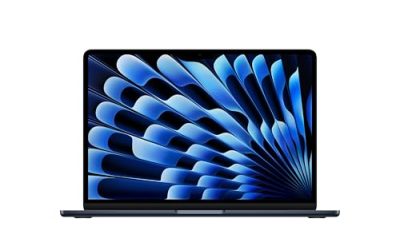
Apple MacBook Pro 14 (M4 Pro)

The MacBook Pro 14 with M4 Pro suits admins whose estates are driven from the command line and the browser. The verified configuration carries 48GB of unified memory and a 1TB SSD behind a 14-core CPU, so local containers, test instances, and a terminal full of sessions run smoothly, and the 14.2-inch Liquid Retina XDR screen is the clearest here for long days in a query editor.
The compromises are plain. There is no numeric keypad and no built-in Ethernet port, so desk setups lean on a dock or adapter, and memory is fixed at purchase, since it is part of the chip package. Admins who rely on Windows-only tools will need a Windows machine or remote session for those tasks. Battery life is the reward: Apple states up to 22 hours of video streaming.
Specs
– Processor: Apple M4 Pro, 14-core CPU, 20-core GPU
– Memory: 48GB unified memory
– Storage: 1TB SSD
– Display: 14.2-inch Liquid Retina XDR (3024 x 1964)
– Camera: 12MP Center Stage
– Ports: 3 x Thunderbolt 4 (USB-C), HDMI, SDXC card slot, MagSafe 3
– Battery: Up to 22 hours video streaming as Apple states
– Keyboard: Backlit Magic Keyboard with Touch ID, no numeric keypad
– Operating system: macOS
– ASIN: B0DTMBKJ3N
| Product | Best for | Key spec |
|---|---|---|
| Dell Precision 7680 | Heavy local test servers | 64GB memory, 2TB SSD |
| Lenovo ThinkPad T14 Gen 5 | Portable admin work | 32GB memory, Ethernet port |
| Dell Latitude 5550 | Data entry and desk work | Numeric keypad, 32GB memory |
| HP ZBook Studio 16 G11 | Workstation power on the move | RTX 1000 Ada, 2560 x 1600 screen |
| Apple MacBook Pro 14 (M4 Pro) | Command-line and browser estates | 48GB unified memory |
FAQ
How much memory does a database administrator need on a laptop?
For one local test instance with an editor and browser alongside, 32GB is a comfortable level. Admins who restore large production copies or run several instances and containers at once should step up to 48GB or 64GB.
Do I need a numeric keypad for database work?
It depends on the mix of work. Keypads speed up data entry, ID lists, and permission tables; two of the five picks include one, the Dell Precision 7680 and the Dell Latitude 5550. If your day is mostly scripting and monitoring, a compact keyboard is fine, and a USB keypad fills the gap at a fixed desk.
Can a laptop replace a proper test server?
For development, restore checks, and rehearsing changes, yes: the higher-memory picks run local instances and containers well. Production-sized load testing still belongs on server hardware; the laptop works best as a workstation and portable test bench.
Conclusion
Match the machine to the heaviest thing you run locally. If that is a full restored copy of a production database, the Precision 7680 and its 64GB of memory lead the list. If the work travels with you, the ThinkPad T14 Gen 5 and MacBook Pro 14 keep generous memory in a bag-friendly frame, while the Latitude 5550 and ZBook Studio 16 G11 cover the desk-first and workstation roles.
More from Amazon
Programs that pair well with the guide above. Offers and eligibility are set by Amazon and may change.
A free business account with business pricing and bulk-buying tools for work, shop or home office.
Create a business accountFree shipping on eligible items, Prime Video and more. Eligible new members can start with a free trial.
Start a Prime free trialAudiobooks and podcasts to listen to on the go. Eligible new members can start with a free trial.
Try Audible freeAd-free music streaming. Eligible new subscribers can start with a free trial.
Try Music Unlimited freeAs an Amazon Associate we earn from qualifying purchases.

Write Your Review
No reviews yet. Be the first to share your experience!