

Key takeaways
- Razer Pro Type Ultra: best for a premium full-size wireless mechanical board with a wrist rest.
- Best Alternative for Quiet Offices: Logitech MX Mechanical, a low-profile board with tactile quiet switches.
- Best Non-Mechanical Alternative: Logitech MX Keys S, slim, quiet and strong on battery life.
- Best Compact Razer Alternative: Razer DeathStalker V2 Pro TKL, a low-profile optical tenkeyless board.
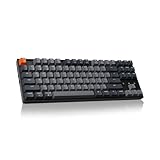
- Best Mac-Friendly Compact Pick: Keychron K2, a 75% wireless mechanical keyboard that works across Mac and Windows.
The Razer Pro Type Ultra is a full-size wireless mechanical keyboard built for office work: quiet-leaning linear switches, a detachable wrist rest, and connection to up to four devices through 2.4 GHz HyperSpeed, Bluetooth or USB-C. It is a good fit if you type all day, share a workspace and want a premium white keyboard that looks calm on a desk. If you want a quieter low-profile board, the Logitech MX Mechanical is the closest rival, and if you want a non-mechanical slim board, the Logitech MX Keys S is the safer choice. This guide explains who the Pro Type Ultra suits, where it falls short, and which four keyboards to consider instead.
We did not personally use these products. This guide is research-based, built from manufacturer specification pages, listing details and independent reviews named at the end. Where sources disagree, for example on weight and battery life, we give the range and say so. Where a detail is missing, we write “not listed”.
Top Picks at a Glance
- Razer Pro Type Ultra: best for a premium full-size wireless mechanical board with a wrist rest.
- Best Alternative for Quiet Offices: Logitech MX Mechanical, a low-profile board with tactile quiet switches.
- Best Non-Mechanical Alternative: Logitech MX Keys S, slim, quiet and strong on battery life.
- Best Compact Razer Alternative: Razer DeathStalker V2 Pro TKL, a low-profile optical tenkeyless board.
- Best Mac-Friendly Compact Pick: Keychron K2, a 75% wireless mechanical keyboard that works across Mac and Windows.
Quick Comparison Table
| Product | Best for | Key specs | Watch for | Price tier |
|---|---|---|---|---|
| Razer Pro Type Ultra | Office typing, premium look | Full-size 104 keys, Razer Yellow linear switches, 2.4 GHz, Bluetooth, USB-C, 4 devices | Reviewers dispute how quiet it is; white only | Premium |
| Logitech MX Mechanical | Quiet low-profile typing | Kailh Choc V2 low-profile switches, 3 devices, USB-C, about 828 g | Some reviewers still find it noisy | Premium |
| Logitech MX Keys S | Quiet slim typing | 10 days or 5 months with backlight off, 3 devices, about 810 g | Not mechanical | Mid-range |
| Razer DeathStalker V2 Pro TKL | Compact and fast | Low-profile optical linear, 2.8 mm travel, about 744 g, 2.4 GHz, Bluetooth, USB-C | No number pad | Premium |
| Keychron K2 | Mac and Windows compact board | 75%, 84 keys, Bluetooth 5.1, USB-C, 3 devices | Smaller layout | Mid-range |
Who the Razer Pro Type Ultra Is For
Razer designed the Pro Type Ultra as a productivity board, not a gaming board. There is no RGB colour show: the backlight is white, and the styling is understated. The company positions it as a keyboard for people who type for hours and want mechanical feel without bright gaming looks. That makes it suitable for writers, analysts, programmers and anyone who wants a wireless board that can switch between a work laptop, a personal computer and a tablet.
It is less suited to people who sit next to someone who is sensitive to noise, because independent reviewers disagree with the “silent” marketing. Tom’s Hardware published a review that criticised its loudness for office use, while other reviewers praised the sound-dampening foam. Both can be true: linear switches avoid the click of a blue switch, but a full-size board can still produce bottoming-out thuds on a hard desk. If silence is your top priority, a membrane-style board such as the MX Keys S is the safer choice.
Pro Type Ultra specifications we could confirm
- Layout: full-size, 104 keys
- Switches: Razer Yellow linear, 3.5 mm travel, 1.2 mm actuation point, rated up to 80 million presses
- Connectivity: HyperSpeed 2.4 GHz wireless, Bluetooth and wired USB-C, up to 4 devices
- Battery: Razer claims about 13 hours with the backlight on, and up to about 214 hours on Bluetooth or 207 hours on HyperSpeed with the backlight off; some retailers list lower figures
- Dimensions: about 439 by 131 by 40 mm
- Weight: sources list between about 0.97 kg and 1.11 kg depending on whether the wrist rest is counted
- Extras: detachable wrist rest, sound-dampening foam, white backlighting, white colour only
1. Razer Pro Type Ultra: Best for a Premium Wireless Office Board
- Full-size layout with number pad
- Razer Yellow linear switches with 1.2 mm actuation
- Connects to 4 devices: 2.4 GHz HyperSpeed dongle, Bluetooth and wired
- Detachable wrist rest and foam-dampened body
- Fully programmable keys through Razer software; no onboard memory per reviews
Best for: people who type for hours, want a mechanical feel and move between devices. Skip if: you need a truly silent keyboard or you want hot-swappable switches.
The strongest part of the Pro Type Ultra is its balance. A linear switch with a short 1.2 mm actuation point responds quickly, and the 3.5 mm travel is long enough to feel mechanical. The wrist rest is firm and detachable, so you can remove it for a flatter profile. The device switching works through keyboard shortcuts, which is a time saver if you juggle work and personal machines.
The weak spots are battery behaviour and noise. With the backlight on, Razer’s own estimate is about 13 hours, which is short for a keyboard at this tier, so most owners turn the backlight off or rely on the cable when needed. The extremely long off-light figures (over 200 hours) apply only when the backlight is off. Charging takes about two hours, and you can type while it charges over the cable.
Compared with similar boards, the Pro Type Ultra gives you a premium chassis and plenty of connections, but you pay for the Razer design and you cannot swap the switches. If you want to tinker, a hot-swap board such as the Keychron K2 (hot-swappable version) offers that freedom at a lower price.
Pros: mechanical feel; four-device connection; wrist rest; understated style; fast wired option. Cons: short battery life with backlight on; reviewers dispute its noise level; premium tier; not hot-swappable.
2. Logitech MX Mechanical: Best Quiet Low-Profile Alternative
- Low-profile Kailh Choc V2 switches; variants include clicky, linear and tactile quiet (the listing is for the tactile version)
- Bluetooth LE or Logi Bolt USB receiver, pairs with 3 devices
- USB-C rechargeable; up to 15 days with backlight, up to 10 months with it off per the maker
- Smart backlight that reacts to your hands
- About 828 g, 433.8 by 131.5 by 26.1 mm for the full-size model
Best for: people who want a mechanical feel with a laptop-like height. Skip if: you want a hot-swap board or a colourful look.
The MX Mechanical is the keyboard most buyers compare with the Pro Type Ultra. It is lower profile, with only 3.2 mm of travel and 1.3 mm of pre-travel, and its actuation force is around 45 g for the tactile version. It has a longer stated battery life, a more familiar office style and flexible multi-device pairing. Independent reviewers describe it as comfortable and sleek, though PCWorld felt it was louder than the “quiet” label suggested. A white backlight that switches on as your hands approach helps save power.
The trade-off is that the switches are not hot-swappable and are limited to Logitech’s choices. The Pro Type Ultra has a wrist rest and an optional 2.4 GHz dongle, while the MX Mechanical relies on Bluetooth or the Logi Bolt receiver. If you already own Logitech’s MX Master mouse, Logi Options+ lets you share settings.
Pros: low profile; long battery life; strong multi-device pairing; tactile quiet option. Cons: not hot-swappable; still audible in quiet rooms; no wrist rest included.
3. Logitech MX Keys S: Best Non-Mechanical Alternative
- Low-profile scissor-style keys with spherical dishes
- Bluetooth and Logi Bolt USB receiver; pairs with 3 devices
- USB-C rechargeable; up to 10 days with backlight, up to 5 months with it off per the maker
- Smart illumination adjusts to the room
- About 810 g, 430.2 by 131.6 by 20.5 mm
Best for: quiet, steady typing in shared spaces. Skip if: you love the feel of mechanical switches.
If your goal is a premium wireless keyboard that is quiet and stable, the MX Keys S is the easier recommendation. It is thinner than either mechanical board, the key travel is shallow, and typing noise is lower than most mechanical keyboards. It is not a mechanical keyboard, so you give up the sharp key response of a switch. There is also no wrist rest.
Battery life is longer in practice than the Razer’s. Logitech’s own figure of 10 days with the backlight on and 5 months off is repeated by independent reviewers, with real-world use landing between those numbers because the backlight only turns on when your hands are close. If you pair it with a mouse like the MX Master 3S, the two share Logitech’s Bolt receiver.
Pros: quiet; thin; long battery life; multi-device and multi-OS. Cons: not mechanical; no wrist rest; premium tier relative to simple wireless boards.
4. Razer DeathStalker V2 Pro TKL: Best Compact Razer Alternative
- Tenkeyless layout, about 357 by 139 by 26 mm and 744 g
- Low-profile optical switches, linear version with 1.2 mm actuation; 2.8 mm key travel; 70 million presses
- HyperSpeed 2.4 GHz, Bluetooth and USB-C
- Battery: about 50 hours on TKL with RGB at moderate brightness; up to 200 hours with lighting off per Razer’s claim
- 5052 aluminum top plate, media roller and button
Best for: people who want a Razer wireless board without the number pad. Skip if: you need numbers for spreadsheets.
This is a better-looking, more compact board than the Pro Type Ultra for gaming and typing. The optical switches register keypresses with light instead of a metal contact, and the low profile reduces wrist angle. The DeathStalker line has RGB lighting and a wrist-friendly height. Note that the listing uses a white colour and linear switches. It is a more gaming-oriented product, so it is not an exact office replacement.
For battery life, the TKL figure of about 50 hours with lighting on is better than the Pro Type Ultra’s 13 hours. It costs a similar premium tier, so choose it if the layout fits your needs.
Pros: compact; low profile; long battery; aluminum top plate. Cons: no number pad; RGB look; no hot-swap.
5. Keychron K2: Best Compact Mac-and-Windows Board
- 75% layout with 84 keys
- Bluetooth 5.1 and USB-C, pairs with up to 3 devices
- Listing includes Silent K Pro Red switches and white LED backlight
- Maker lists a 4000 mAh battery; up to 240 hours with backlight off, about 72 hours with it on per third-party reports
- Weight about 794 g (aluminum frame) or 663 g (plastic frame)
Best for: compact desks, Mac users and anyone who wants a mechanical board for less. Skip if: you need a number pad.
The K2 is a very different answer to the same question. It is a compact 75% board with arrow keys and function keys but no number pad, so it fits a small laptop desk. Bluetooth 5.1 and three-device pairing cover most work setups. The keyboard has Mac and Windows key sets, which makes it popular with MacBook users. Battery life is much longer than the Razer’s, especially if you leave the backlight off.
Compared with the Pro Type Ultra, it lacks a 2.4 GHz dongle in this version and does not include a wrist rest, but it costs less and offers more layout flexibility. It is not low profile, so a wrist rest bought separately may help.
Pros: compact; Mac and Windows compatible; long battery life; multi-device. Cons: no number pad; no 2.4 GHz dongle; no wrist rest.
Also Consider
- AULA F99: a wireless tri-mode hot-swap mechanical keyboard with pre-lubed linear switches; a value option for tinkering.
- RK Royal Kludge S98: a 96% wireless mechanical board with a small display and knob; a way to keep a number pad in a smaller body.
- Keychron K4 Ultra: a 96% wireless hot-swappable board with an 8,000 Hz polling rate and 600 hours of claimed battery life.
Pro Type Ultra vs the Alternatives: A Decision Table
| If you care most about | Choose |
|---|---|
| A number pad plus mechanical feel plus a wrist rest | Razer Pro Type Ultra |
| Longest battery life | Logitech MX Keys S or MX Mechanical |
| Quietest typing | Logitech MX Keys S |
| Smallest footprint | Keychron K2 or Razer DeathStalker V2 Pro TKL |
| Lowest height on the desk | Logitech MX Keys S |
| Mac-first layout | Keychron K2 |
| Razer ecosystem and lighting | Razer DeathStalker V2 Pro TKL |
Ownership Realities: What Wears First
A white keyboard shows hand oils sooner than a black one. Over several months, keycap tops can pick up a slight shine or a yellow tint, particularly on the keys you use most. The Pro Type Ultra is sold in white only, so plan on regular wiping with a slightly damp microfibre cloth. Avoid strong solvents on printed legends. If you share a desk with others, a keycap puller and a brush make deep cleaning easier, though you should check Razer’s guidance before removing caps on a board that is not designed for it.
Wireless dongles are the next weak point. The HyperSpeed dongle is small, so it is easy to lose when travelling; keep it in a laptop bag pocket or use Bluetooth as a backup. Batteries in rechargeable keyboards lose capacity slowly over years, so a board that lasts about 13 hours with lighting on today may last somewhat less after a few years of daily charging. Turning the backlight off in daylight, or using the wired connection while charging, is the simplest way to reduce wear.
Switch life is rarely the problem. Razer rates the Yellow switches for up to 80 million presses, the DeathStalker V2 Pro optical switches for 70 million, and other brands list similar figures. At 8,000 words of typing a day, you would press roughly 50,000 keys, which means a rated switch could last for decades. Keycaps, stabilizers on long keys such as the spacebar and wrist rest foam wear sooner than the switches themselves.
Desk Fit: A Worked Example for Full-Size Wireless Boards
The Pro Type Ultra measures about 439 mm wide and 131 mm deep without the wrist rest, so its footprint is close to the Logitech MX Mechanical at about 434 mm, and wider than a tenkeyless board such as the DeathStalker V2 Pro TKL at about 357 mm. On a 120 cm desk, a full-size board plus a mouse zone of 20 cm leaves about 56 cm of free width. The same desk with a TKL board leaves about 64 cm, enough for a notebook or a second device. On a 100 cm desk, the full-size option leaves only 36 cm, so a compact layout is worth considering.
Height matters for wrists. The Pro Type Ultra is 40 mm thick at its tallest point, while the MX Keys S is about 20.5 mm. A taller board raises your hands, which is why a wrist rest helps. Check that your desk or keyboard tray lets your forearms rest level with the keys, and consider a thin desk mat if the surface is glossy, because it reduces both noise and sliding.
How We Chose
We started with the Pro Type Ultra, then looked for wireless keyboards that people compare with it: productivity-focused boards with multi-device pairing, from low-profile mechanical to quiet non-mechanical. We compared layouts, switch types, battery claims and connectivity using manufacturer pages, retailer listings and reviews from publications such as Tom’s Hardware and PCWorld. We did not personally use these products. We limited each brand to two main picks and noted disagreements between sources.
Buying Guide
Mechanical, low-profile or membrane
Full-height mechanical switches like the Pro Type Ultra’s give the most distinct feel, with 3.5 mm of travel. Low-profile mechanical switches such as Logitech’s or Razer’s optical versions reduce height and travel to about 2.8 to 3.2 mm. Scissor-style membrane keys like the MX Keys S are the quietest and thinnest. Choose by what you want your fingers to feel and what noise your room can tolerate.
Layout
A full-size board has a number pad, which matters for finance and data entry. Tenkeyless removes the pad and saves about 10 cm of width. A 75% layout like the K2 keeps arrow and function keys but shrinks further. If your mouse sits close to your keyboard, a compact layout can reduce shoulder reach.
Wireless options and battery
2.4 GHz dongles are fast and stable; Bluetooth saves a USB port. Battery claims depend on backlight. Compare the numbers with the backlight on, since this is how most people use them. For example, 13 hours on the Pro Type Ultra, 10 days on the MX Keys S and about 50 hours on the DeathStalker TKL describe very different ownership experiences.
Wrist rests and ergonomics
A detachable rest is helpful if your desk is high or you type for long periods. If a keyboard has none, a separate rest of 1 to 2 cm height is a common choice. For persistent pain, speak to a medical professional and check your chair and desk setup.
Software
Razer Synapse and Logitech Options+ manage keys and lighting. If you dislike background software, look for a board with onboard memory or one that works without an app.
Common Mistakes to Avoid
- Assuming a “quiet” label means silent in an open office.
- Comparing battery claims without checking the backlight setting.
- Forgetting that wrist rests add to width and depth.
- Choosing white or light colours without planning to clean them regularly.
Frequently Asked Questions
Is the Razer Pro Type Ultra good for typing?
Yes, many reviewers like its comfort and feel, but some find it louder than the marketing suggests, so it is best for people who do not need absolute silence.
Is the Razer Pro Type Ultra wireless?
Yes. It supports 2.4 GHz HyperSpeed wireless, Bluetooth and a wired USB-C connection, and can connect to up to four devices.
How long does the Razer Pro Type Ultra battery last?
Razer claims about 13 hours with the backlight on and over 200 hours with it off, though retailers and reviewers list different figures. Expect it to depend on your lighting habits.
Can I change the switches on the Pro Type Ultra?
No. The switches are not hot-swappable. If you want to change switches, consider a hot-swap board such as the AULA F99 or Keychron K4 Ultra.
Is the Pro Type Ultra better than the Logitech MX Mechanical?
It depends. The Razer gives a full-height mechanical feel and a wrist rest, while the Logitech is lower profile with longer battery life. Choose by your noise tolerance and desk height.
What is the best alternative for a quiet office?
The Logitech MX Keys S is generally the quieter choice because it uses low-profile membrane-style keys rather than mechanical switches.
Does the Pro Type Ultra work with Mac?
Razer markets it for productivity across systems, and the board has Bluetooth and 2.4 GHz connections, but check Razer’s compatibility notes for specific shortcut and key mapping behaviour.
Which One Should You Buy?
Buy the Razer Pro Type Ultra if you want a premium full-size wireless mechanical keyboard with a wrist rest and you can accept a short battery life with backlight on. Buy the Logitech MX Mechanical for a lower-profile mechanical alternative, the MX Keys S for the quietest and thinnest option, the Razer DeathStalker V2 Pro TKL for a compact Razer board, and the Keychron K2 for a compact Mac-friendly board.
Sources
- Razer Pro Type Ultra and DeathStalker V2 Pro product pages
- Logitech MX Mechanical and MX Keys S product pages
- Keychron K2 product page
- Tom’s Hardware and PCWorld keyboard reviews
- Retailer listing details for each model
Last updated: October 2026


Write Your Review
No reviews yet. Be the first to share your experience!