
Disciples Liberation is short for the full game name, Disciples: Liberation, a dark fantasy strategy RPG built around a long campaign, a home base you grow over time, and turn-based battles fought on hex maps. You recruit units, level up your hero, and make story choices between fights, so the laptop needs a clear screen for reading maps and menus, plus memory and storage headroom for long sessions. As an Amazon Associate, we earn from qualifying purchases.
This guide gathers five Windows laptops that fit the game’s published requirements in different ways. Some carry dedicated graphics cards with plenty of headroom, one leans on integrated graphics in a slim body, and each gives a screen that keeps armies and battle grids easy to follow.
How to Choose a Laptop for Disciples Liberation
Start with the platform, because it settles the whole list: Disciples: Liberation is a Windows-only game on PC. The published requirements list Windows 10 64-bit and nothing else, and there is no macOS edition, so every pick below runs Windows and MacBooks are left out on purpose. The minimum block names an Intel Core i5-6402P or AMD Ryzen 1300X processor, 8 GB of memory, and a GeForce GTX 960 or Radeon R9 380 card with 4 GB of video memory. The recommended block steps up to a Core i5-7600K or Ryzen 1700, 16 GB of memory, and a GTX 1660 Ti or RX 590.
Beyond the basics, think about the screen first. Battles play out on hex grids with small unit icons and dense menus, so a sharp panel makes long campaign evenings easier on the eyes. Storage is simple: the game asks for 8 GB of free space, so any modern SSD holds it easily. A backlit keyboard helps for evening play, and a wired Ethernet port gives a steady connection for downloads.
Lenovo Legion 5 Gen 10

The Legion 5 Gen 10 is the strongest all-round pick here, pairing an AMD Ryzen 7 260 processor with a dedicated NVIDIA GeForce RTX 5060 Laptop GPU and 8 GB of GDDR7 video memory. That combination sits well above the game’s recommended hardware block, and the 16 GB of DDR5-5600 memory matches the recommended figure exactly. The 1 TB SSD leaves room for the game and a wide library besides.
Its 15.1-inch WQXGA OLED screen is the highlight for this game: the 2560 x 1600 resolution keeps hex grids and unit markers crisp, the listing names 500 nits of brightness, and the 165Hz refresh keeps panning across battle maps fluid. A 24-zone RGB backlit keyboard, USB4 port, HDMI 2.1, and Ethernet RJ-45 jack round out a desk-friendly setup.
Specs
– Processor: AMD Ryzen 7 260, up to 5.1 GHz as listed
– Graphics: NVIDIA GeForce RTX 5060 Laptop GPU, 8 GB GDDR7
– Memory: 16 GB DDR5-5600
– Storage: 1 TB SSD M.2 PCIe Gen4
– Display: 15.1-inch WQXGA OLED, 2560 x 1600, 500 nits, 165Hz
– Ports: USB4 40Gbps, USB-C 10Gbps, HDMI 2.1, Ethernet RJ-45
– Keyboard: 24-zone RGB backlit
– Operating system: Windows 11 Home
– ASIN: B0FXMY8FYW
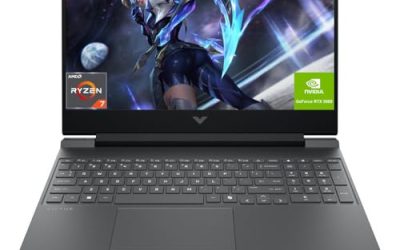
HP Victus 15

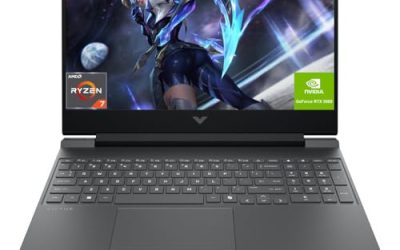
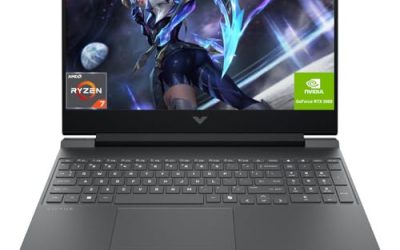
The Victus 15 takes a value-minded route to the same recommended tier, built around an AMD Ryzen AI 7 350 processor and an NVIDIA GeForce RTX 5060 graphics card. This configuration carries 32 GB of DDR5 memory, double the game’s recommended figure, which suits players who keep a browser and game guide open beside the campaign. The 1 TB SSD covers the install many times over.
The 15.6-inch Full HD IPS panel runs at 144Hz with an anti-glare finish, a practical match for reading quest text under room lighting. The listing names an RGB backlit keyboard and fast charge support, plus everyday ports for a mouse and headset. It is a sensible main machine for someone whose gaming time centers on strategy titles.
Specs
– Processor: AMD Ryzen AI 7 350
– Graphics: NVIDIA GeForce RTX 5060, 8 GB GDDR7
– Memory: 32 GB DDR5
– Storage: 1 TB SSD
– Display: 15.6-inch Full HD IPS, 1920 x 1080, 144Hz, anti-glare
– Keyboard: RGB backlit
– Operating system: Windows 11 Home
– ASIN: B0G1N8R9Z4
Acer Nitro V 15

The Nitro V 15, model ANV15-51-99XD, leans on a 13th Gen Intel Core i9-13900H processor and an NVIDIA GeForce RTX 4060 Laptop GPU, a pairing that clears the recommended block with room to spare. It carries 16 GB of DDR5 memory across two slots, with the listing noting support up to 32 GB, and a 1 TB PCIe Gen 4 SSD with a second M.2 slot for expansion.
The 15.6-inch Full HD IPS screen runs at 180Hz, the fastest refresh figure in this group, and the port selection is generous for a home desk: Thunderbolt 4, HDMI 2.1, Ethernet RJ-45, and three USB Type-A ports alongside Wi-Fi 6. Dual fans handle cooling during long battles, and the backlit keyboard keeps late sessions comfortable.
Specs
– Processor: Intel Core i9-13900H, 13th Gen
– Graphics: NVIDIA GeForce RTX 4060 Laptop GPU
– Memory: 16 GB DDR5, two slots, up to 32 GB as listed
– Storage: 1 TB PCIe Gen 4 SSD, two M.2 slots
– Display: 15.6-inch FHD IPS, 180Hz
– Ports: Thunderbolt 4, HDMI 2.1, Ethernet RJ-45, USB 3.2
– Wireless: Wi-Fi 6, backlit keyboard
– Operating system: Windows 11 Home
– ASIN: B0D8JTYXQM
MSI Katana 15

The Katana 15 B13VEK-277US is the lightest gaming build in this lineup at 4.96 lb as listed, which helps if the laptop moves between rooms. Inside, an Intel Core i7-13620H processor works with an NVIDIA GeForce RTX 4050 graphics card carrying 6 GB of GDDR6 video memory, above the 4 GB figure in the game’s minimum block. Memory is 16 GB of DDR5-4800, matching the recommended amount.
Its 15.6-inch Full HD IPS display runs at 144Hz, giving battle maps and menus a clear, steady presentation. A USB Type-C port sits alongside the usual connections for a mouse and headset. For a player who wants a dedicated graphics card in a machine that still travels easily, the Katana makes a tidy case.
Specs
– Processor: Intel Core i7-13620H, 13th Gen
– Graphics: NVIDIA GeForce RTX 4050, 6 GB GDDR6
– Memory: 16 GB DDR5-4800
– Storage: 1 TB NVMe SSD
– Display: 15.6-inch Full HD IPS, 144Hz
– Weight: 4.96 lb as listed
– Operating system: Windows 11 Home
– ASIN: B0BZBN3857
ASUS Zenbook 14 OLED

The Zenbook 14 OLED is the slim, quiet option for players who prefer a light machine and are happy to keep graphical settings modest. It runs an AMD Ryzen 7 8840HS processor with integrated Radeon 780M graphics rather than a dedicated card, so treat it as the portable route: the published minimum names a dedicated GTX 960 with 4 GB of video memory, and this pick trades that headroom for thinness. It carries 16 GB of LPDDR5X memory and a 512 GB SSD.
What it gives back is the screen and the carry. The 14-inch WUXGA OLED touchscreen at 1920 x 1200 shows the game’s maps and artwork with deep contrast, the body weighs about 2.65 lb as listed, and the 75Wh battery suits a laptop that also handles everyday work. If your campaign sessions happen on the sofa rather than at a gaming desk, this is the comfortable pick.
Specs
– Processor: AMD Ryzen 7 8840HS, up to 5.1 GHz as listed
– Graphics: Integrated AMD Radeon 780M
– Memory: 16 GB LPDDR5X
– Storage: 512 GB M.2 NVMe PCIe 4.0 SSD
– Display: 14-inch WUXGA OLED touchscreen, 1920 x 1200
– Battery: 75Wh
– Wireless: Wi-Fi 6E, Bluetooth 5.3
– Color: Jade Black
– Operating system: Windows 11 Home
– ASIN: B0DFWZ77LB
Comparison Table
| Product | Best for | Key spec |
|---|---|---|
| Lenovo Legion 5 Gen 10 | Sharpest screen and strongest hardware | 15.1-inch WQXGA OLED, RTX 5060 |
| HP Victus 15 | Memory headroom for multitasking | 32 GB DDR5, RTX 5060 |
| Acer Nitro V 15 | Fast screen and upgrade room | 180Hz FHD IPS, RTX 4060 |
| MSI Katana 15 | Light gaming build | RTX 4050 6 GB, 4.96 lb |
| ASUS Zenbook 14 OLED | Slim portable play | 14-inch OLED touchscreen, Radeon 780M |
FAQ
Does Disciples: Liberation run on a Mac?
No. The published system requirements list Windows 10 64-bit only, and there is no macOS edition, which is why every laptop in this guide runs Windows. Mac owners would need a Windows machine to play this one.
How much storage and memory does the game need?
The published requirements ask for 8 GB of available storage, and the recommended block names 16 GB of memory. Every pick here meets or passes the memory figure, and even the smallest SSD holds the game many times over.
Is a dedicated graphics card required?
The minimum block names dedicated cards, the GeForce GTX 960 or Radeon R9 380 with 4 GB of video memory, and the recommended block steps up to a GTX 1660 Ti class card. Four picks here carry dedicated NVIDIA graphics; the Zenbook relies on integrated Radeon 780M graphics and is the light, portable option with modest settings.
Conclusion
Disciples: Liberation rewards a clear screen, 16 GB of memory, and hardware at or above its recommended block, and all five laptops here are honest ways to get there on Windows. Choose the Legion 5 Gen 10 for the finest display, the Victus 15 for memory headroom, the Nitro V 15 for its fast screen, the Katana 15 for lighter carry, or the Zenbook 14 OLED when slim portability matters most.
More from Amazon
Programs that pair well with the guide above. Offers and eligibility are set by Amazon and may change.
A free business account with business pricing and bulk-buying tools for work, shop or home office.
Create a business accountFree shipping on eligible items, Prime Video and more. Eligible new members can start with a free trial.
Start a Prime free trialAudiobooks and podcasts to listen to on the go. Eligible new members can start with a free trial.
Try Audible freeAd-free music streaming. Eligible new subscribers can start with a free trial.
Try Music Unlimited freeAs an Amazon Associate we earn from qualifying purchases.

Write Your Review
No reviews yet. Be the first to share your experience!