
Pillars of Eternity and Pillars of Eternity II: Deadfire are isometric, party-based RPGs from Obsidian, built around paused real-time combat, long conversations, and hand-painted scenes you explore one map at a time. Both games ask very little of modern hardware, which makes them a comfortable fit for thin laptops. As an Amazon Associate, we earn from qualifying purchases. This guide picks five current laptops that suit the series, from two MacBooks that play the real Mac editions to Windows machines with room for a wider library.
The through line is simple: a clear screen for pages of dialogue text, enough memory for the game plus a browser of notes, and storage that holds both games without a shuffle. Every pick below clears the published requirements of both titles by a wide margin on paper, and each one is a machine you can also use for work, study, and everyday tasks between sessions in Eora.
How to Choose a Laptop for Pillars of Eternity
Start with the platform facts. Both games run on Windows, macOS, and Linux, and both are sold on Steam and GOG, so Mac owners play a genuine Mac edition rather than a workaround. One honest detail: the published Mac requirements are older blocks from the Intel era — the first game names OS X 10.6.3 and an Intel Core i5-540M, and Deadfire names OS X 10.12.6 Sierra and an Intel Core i5 — so if you use an Apple silicon Mac, check the store page for its current guidance before you buy either game.
The hardware bar is low. The first game lists a minimum of 4 GB of memory and 14 GB of storage, with 8 GB of memory recommended; Deadfire lists 4 GB minimum and 8 GB recommended, with 45 GB of storage. Any laptop in this guide doubles or quadruples the memory figures and holds both games on one drive. A dedicated graphics card is not on the required list for either title, so integrated graphics on a current laptop covers the published minimums; the gaming pick at the end simply adds headroom for newer games.
Because the series is text-heavy, screen quality matters more than raw power. A bright panel with a tall aspect ratio keeps dialogue boxes and journal pages readable, and OLED panels make the darker dungeon scenes easy to follow. A precise trackpad or a mouse suits the point-and-click interface. Battery figures quoted by makers are their own numbers, so treat them as a guide for unplugged sessions at home rather than a promise.
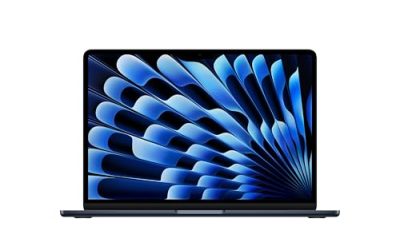
Apple MacBook Air 13 M4

The 13-inch MacBook Air is the natural starting point for Mac players. It plays the Mac editions of both games, and its M4 chip and 16GB of unified memory sit far above the published Mac minimums, which name Intel processors from another era. The fanless design keeps it silent during long reading stretches.
The 13.6-inch Liquid Retina screen renders the painted backdrops and small interface text cleanly, and the 512GB SSD holds both games — 14 GB and 45 GB as the store pages list them — with room left for the rest of your library. Touch ID, a backlit keyboard, and two Thunderbolt 4 ports round out a tidy travel setup.
Specs
– Chip: Apple M4
– Memory: 16GB unified memory
– Storage: 512GB SSD
– Display: 13.6-inch Liquid Retina, supports one billion colors as listed
– Camera: 12MP Center Stage camera
– Ports: 2x Thunderbolt 4, MagSafe charging port, headphone jack
– Wireless: Wi-Fi 6E, Bluetooth 5.3
– Battery: up to 18 hours as listed
– Color: Silver
– ASIN: B0DZD89BFV
Apple MacBook Air 15 M4

Choose the 15-inch Air if you want the same Mac editions on a larger canvas. The 15.3-inch Liquid Retina display gives dialogue trees, character sheets, and the world map more room to breathe, which suits a series that keeps several panels open at once.
This configuration pairs the M4 chip with 24GB of unified memory and a 512GB SSD, so the game, a notes app, and a browser can stay open together. Six speakers with Spatial Audio carry the voiced scenes, and the maker lists up to 18 hours of battery life for days that mix work and play.
Specs
– Chip: Apple M4
– Memory: 24GB unified memory
– Storage: 512GB SSD
– Display: 15.3-inch Liquid Retina, supports one billion colors as listed
– Camera: 12MP Center Stage camera
– Audio: six speakers with Spatial Audio
– Ports: 2x Thunderbolt 4, MagSafe charging port, headphone jack
– Wireless: Wi-Fi 6E, Bluetooth 5.3
– Battery: up to 18 hours as listed
– Color: Sky Blue
– ASIN: B0DZD8BT7N
Lenovo Yoga Slim 7x

The Yoga Slim 7x is the Windows pick for readers who want an OLED screen. Its 14.5-inch 3K OLED touch panel shows the darker scenes of the series with deep contrast, and the slim body weighs 2.82 lb as the listing states, so it travels easily between rooms or on trips.
One honest note: this laptop runs on a Snapdragon X Elite chip, so the standard Windows builds of the two games run through the built-in translation layer rather than a native build. Check the store page’s current ARM guidance before choosing it for these games. The 32GB of memory and 1TB SSD are generous for a large library.
Specs
– Processor: Snapdragon X Elite X1E-78-100, up to 3.4 GHz as listed
– NPU: Hexagon NPU, up to 45 TOPS as listed
– Memory: 32GB LPDDR5X, soldered
– Storage: 1TB SSD
– Display: 14.5-inch 3K OLED touch, 2944 x 1840, up to 1000 nits peak as listed
– Battery: 70Wh
– Weight: 2.82 lb as listed
– Wireless: Wi-Fi 7, Bluetooth 5.4
– Operating system: Windows 11 Pro
– Color: Cosmic Blue
– ASIN: B0FBMMMMWX
ASUS Zenbook 14 OLED

The Zenbook 14 OLED is a compact Windows option with a Ryzen 7 8840HS and Radeon 780M integrated graphics, a pairing that sits well above the published minimums of both games. Its 14-inch WUXGA OLED touchscreen keeps text sharp and adds a touch option alongside the trackpad.
At 16GB of LPDDR5X memory and a 512GB SSD, it holds both games and a working set of everyday files. Wi-Fi 6E and the Jade Black finish make it an easy desk companion for players who split time between Eora and ordinary tasks.
Specs
– Processor: AMD Ryzen 7 8840HS, up to 5.1 GHz as listed
– Graphics: AMD Radeon 780M integrated
– Memory: 16GB LPDDR5X
– Storage: 512GB M.2 NVMe PCIe 4.0 SSD
– Display: 14-inch WUXGA OLED touchscreen, 1920 x 1200
– Wireless: Wi-Fi 6E, Bluetooth 5.3
– Operating system: Windows 11 Home
– Model: UM3406HA
– Color: Jade Black
– ASIN: B0DFWZ77LB
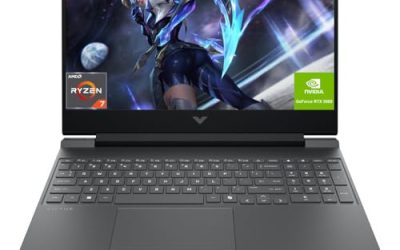
HP Victus 15

The Victus 15 is the pick for players who want one Windows laptop for this series and for newer games besides. Its Ryzen AI 7 350 and RTX 5060 graphics sit far beyond anything the two Pillars games list, and the 15.6-inch FHD screen, listed at 144Hz, gives the interface plenty of room.
The 32GB of DDR5 memory and 1TB SSD hold both games, their expansions, and a much larger library besides. An RGB backlit keyboard, as the listing describes it, and a wired Ethernet port suit a fixed desk setup at home, where this heavier machine will mostly live.
Specs
– Processor: AMD Ryzen AI 7 350, up to 5.0 GHz as listed
– Graphics: NVIDIA GeForce RTX 5060, 8GB GDDR7
– Memory: 32GB DDR5
– Storage: 1TB SSD
– Display: 15.6-inch FHD, 1920 x 1080, 144Hz as listed
– Keyboard: RGB backlit keyboard as listed
– Ports: Ethernet RJ-45 as listed
– Operating system: Windows 11 Home
– Color: Black
– ASIN: B0G1N8R9Z4
Comparison Table
| Product | Best for | Key spec |
|---|---|---|
| Apple MacBook Air 13 M4 | Mac players who travel | 16GB unified memory, 512GB SSD |
| Apple MacBook Air 15 M4 | Mac players who want a bigger screen | 24GB unified memory |
| Lenovo Yoga Slim 7x | OLED fans on Windows | 14.5-inch 3K OLED touch display |
| ASUS Zenbook 14 OLED | Compact Windows play | Ryzen 7 8840HS, OLED touchscreen |
| HP Victus 15 | A wider gaming library | RTX 5060 graphics |
FAQ
Can I play Pillars of Eternity on a Mac?
Yes. Both games have Mac editions on Steam and GOG, so the MacBooks in this guide play the real thing. The published Mac requirements are older Intel-era blocks, so check the store page’s current guidance if your Mac uses Apple silicon.
How much storage do the two games take?
The store pages list 14 GB for the first game and 45 GB for Deadfire. A 512GB SSD holds both, their expansions, and plenty of other titles, so storage is an easy box to tick on any current laptop.
Do I need a gaming laptop for Pillars of Eternity?
No. The published minimums name 4 GB of memory and older entry-level graphics, so a modern thin laptop covers the listed requirements. A gaming laptop like the Victus 15 only earns its place if you also play newer, heavier games.
Conclusion
Any of these five laptops will carry you through both Pillars of Eternity games. Mac players can start with either MacBook Air and play the genuine Mac editions, Windows readers get two slim OLED options, and the Victus 15 stands by for a broader library. Pick the screen size you enjoy reading on, keep 16GB of memory or more, and settle in for a long journey through Eora.
More from Amazon
Programs that pair well with the guide above. Offers and eligibility are set by Amazon and may change.
A free business account with business pricing and bulk-buying tools for work, shop or home office.
Create a business accountFree shipping on eligible items, Prime Video and more. Eligible new members can start with a free trial.
Start a Prime free trialAudiobooks and podcasts to listen to on the go. Eligible new members can start with a free trial.
Try Audible freeAd-free music streaming. Eligible new subscribers can start with a free trial.
Try Music Unlimited freeAs an Amazon Associate we earn from qualifying purchases.


Write Your Review
No reviews yet. Be the first to share your experience!